

What Can You Expect During a Gorilla Habituation Experience?
What Happens During a Gorilla Habituation Experience? Your day begins early in Bwindi Impenetrable National Park and develops into an extended journey through the rainforest with Uganda Wildlife Authority guides, trackers, researchers and habituators as they locate and observe a mountain gorilla family that is gradually becoming accustomed to controlled human presence. Unlike ordinary gorilla trekking, which focuses on visiting an already habituated family for a maximum of one hour after reaching it, the Gorilla Habituation Experience allows a maximum of four hours of viewing once you encounter the gorillas. Uganda Wildlife Authority defines the experience as an opportunity for visitors to accompany researchers and habituators into the forest and participate in the process of habituating gorillas to human presence, making the activity considerably more conservation-focused and immersive than a conventional wildlife sighting.
The experience does not mean that you walk directly from the park office to a group of gorillas waiting nearby. Mountain gorillas remain completely wild and move freely through Bwindi’s steep, densely vegetated landscape according to their own feeding, resting and social patterns. The location where the family is found can therefore change from one day to another. Your morning may involve hiking for a relatively short period before locating them, or the trackers may need to follow the family’s movements for several hours before direct observation begins. This uncertainty is not a weakness of the experience but one of its defining qualities because you are entering the natural habitat of free-ranging mountain gorillas rather than visiting animals contained within a predictable tourism setting.
Your Gorilla Habituation Day Begins Earlier Than Ordinary Trekking
One of the first things you notice about Gorilla Habituation is how early the day begins. Uganda Wildlife Authority‘s current management guidelines state that the Gorilla Habituation Experience operates from around 6:30 a.m. until visitors return to the briefing location for debriefing, while ordinary gorilla tracking begins from around 8:00 a.m. The earlier departure gives the professional team enough time to follow the gorilla family and accommodate the longer viewing period that distinguishes habituation from conventional tracking.
For you as a traveller, this means the previous evening becomes part of successful preparation. You should normally sleep near the correct Bwindi activity area rather than attempting a long road transfer on the morning of the experience. Bwindi is a large mountainous forest with different access areas, and road distances can take longer than expected because of terrain. An early breakfast, suitable trekking clothing, drinking water, a packed meal and prepared camera equipment allow you to leave the lodge without unnecessary stress. A good tour operator will also coordinate your accommodation with the confirmed permit location so that you are not crossing a large section of southwestern Uganda before sunrise simply because the wrong lodge was selected.
The early hour also adds atmosphere to the experience. Bwindi can still be covered in morning mist when you leave your lodge, and the forest gradually becomes more active as daylight strengthens. Bird calls, moisture on vegetation and cool mountain air create a very different setting from the open savannah landscapes found elsewhere in Uganda. Before you even see a gorilla, the environment itself begins establishing why conserving an intact rainforest is essential to the survival of the animals you have come to observe.
Permit Verification and the Morning Briefing
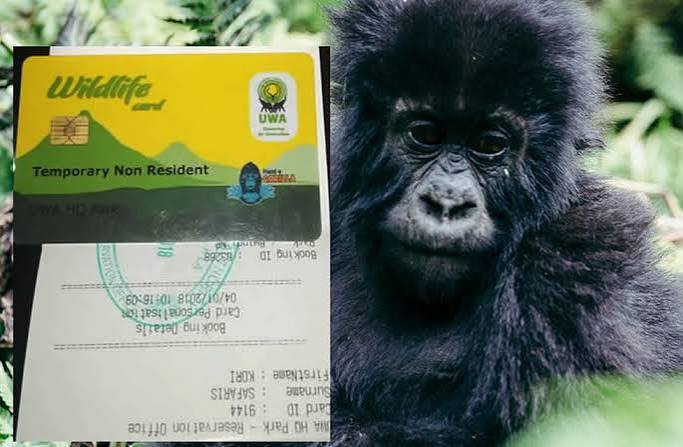
Before entering the forest, your permit and visitor details are checked through the official Uganda Wildlife Authority system. Gorilla tourism is tightly regulated, and visitors must use authorised entry points, valid permits and official guides rather than independently entering gorilla habitat. UWA’s guidelines state that permits are associated with dates and designated entry points, while visitors are allocated to specific gorilla family groups operationally rather than simply choosing any family they want to visit.
The briefing prepares you for both the physical and behavioural aspects of the day. Your guide explains what to expect from the forest, how tracking works and how you should behave once the gorillas are reached. This information matters because Gorilla Habituation is not a casual forest walk. You are approaching wild great apes whose welfare has to remain more important than photography, excitement or personal curiosity.
Uganda Wildlife Authority also sets the minimum age for tracking and viewing gorillas at 15 years. The age limit forms part of UWA’s official management framework rather than merely being a recommendation made by individual safari companies. Families planning Gorilla Habituation should therefore confirm the age of every participant before paying for permits, especially when the Uganda safari includes teenagers or younger children.
The briefing is also where expectations become realistic. Your guide cannot promise that the gorillas will be fifteen minutes away, that the weather will remain dry or that every individual will sit in clear view for photographs. What can be promised is a professionally managed search conducted by people with intimate knowledge of Bwindi and the gorilla families living there.
Entering Bwindi Impenetrable National Park
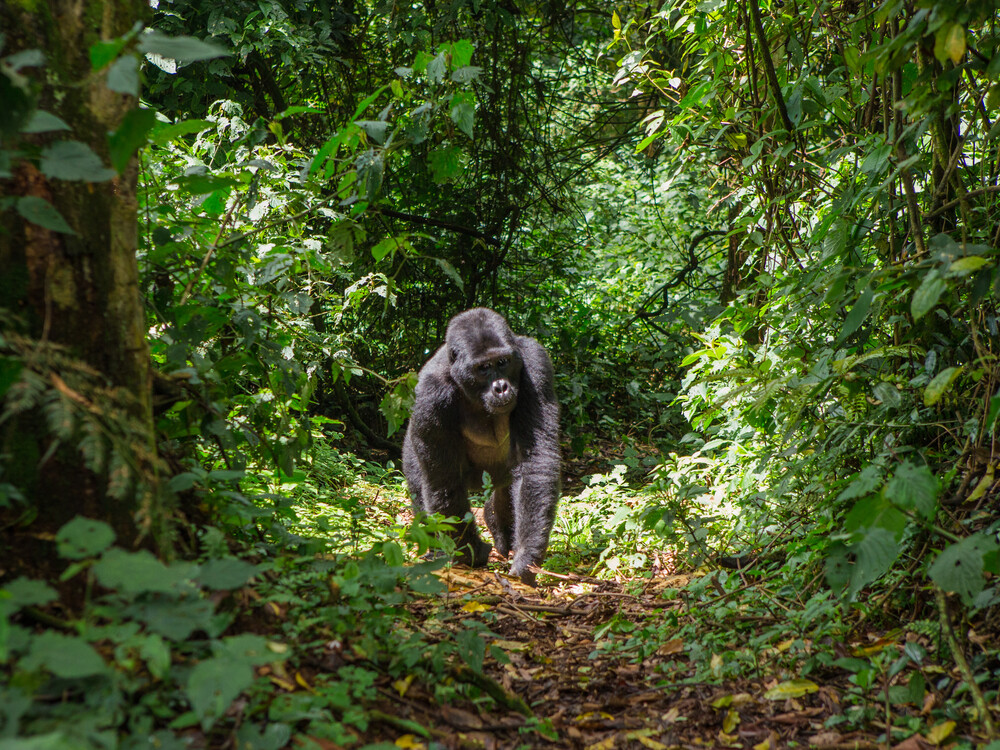
After briefing, you begin walking into the forest with the professional team. The physical environment quickly explains why Gorilla Habituation should be considered an active wildlife experience rather than passive sightseeing. Bwindi’s landscape includes steep slopes, valleys, streams, thick undergrowth and sections where vegetation can make movement slow. Recent rain can turn paths muddy and slippery, while a dry morning can still involve wet vegetation because moisture remains trapped beneath the dense forest canopy.
You may begin on a recognisable trail, but tracking wild gorillas sometimes requires moving beyond straightforward paths. The professional team leads the way, and you follow at a manageable pace. A porter can be extremely useful because carrying drinking water, a packed lunch, camera equipment and personal items becomes increasingly tiring as the hours pass. Porter assistance is separate from the official permit, but many travellers find that hiring one allows them to conserve valuable energy for the gorilla encounter itself.
The walk also introduces you to Bwindi as an ecosystem rather than simply a backdrop for gorillas. The forest is alive with birds, insects, primates and an extraordinary variety of vegetation. Even if mountain gorillas are the main purpose of your journey, moving through their habitat helps you understand that conserving the species depends on conserving a much larger biological system.
How the Trackers Find the Gorilla Family
Finding a free-ranging mountain gorilla family requires skill and accumulated knowledge. Trackers do not simply walk randomly through the forest hoping to encounter gorillas. They use information from previous observations, knowledge of nesting areas and signs left by the family as it moved through the vegetation.
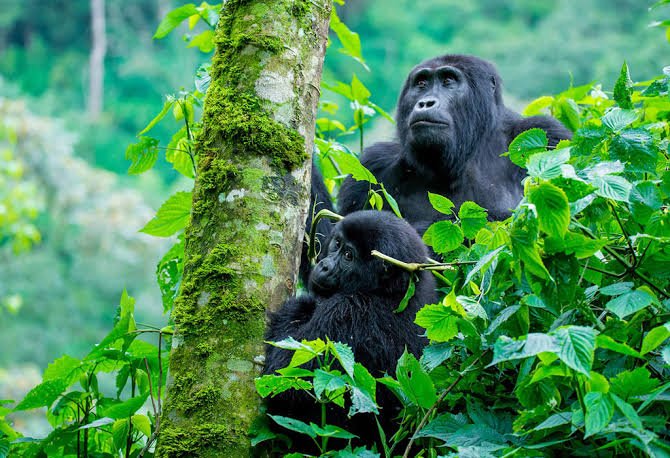
The gorillas may leave behind feeding remains, bent vegetation, footprints, dung or nests that help the professional team interpret their direction of travel. Experienced trackers recognise details that most visitors would walk past without noticing. The process becomes particularly fascinating when you begin seeing how the forest contains evidence of gorilla activity long before the animals themselves become visible.
The time required to locate the family can vary widely. Some mornings the gorillas may remain relatively near the area where they were previously observed, while on another day they may have travelled considerable distances. Mountain gorillas do not remain in one place for tourism convenience. They move according to food availability, social dynamics and their own natural behaviour.
This tracking period does not reduce the four-hour viewing allowance. UWA specifically distinguishes tracking time from viewing time. Tracking time covers the entire experience from after briefing until your return for debriefing, whereas viewing time begins only when you actually reach the gorillas. The Gorilla Habituation Experience provides a maximum of four hours of viewing after that encounter begins.
The Moment You Realise the Gorillas Are Close
One of the most memorable parts of Gorilla Habituation can occur before you clearly see a gorilla. The behaviour of the tracking team may change as evidence becomes fresher. Conversations become quieter, movement becomes more deliberate and guides may begin reminding visitors of the rules that will apply during the encounter.
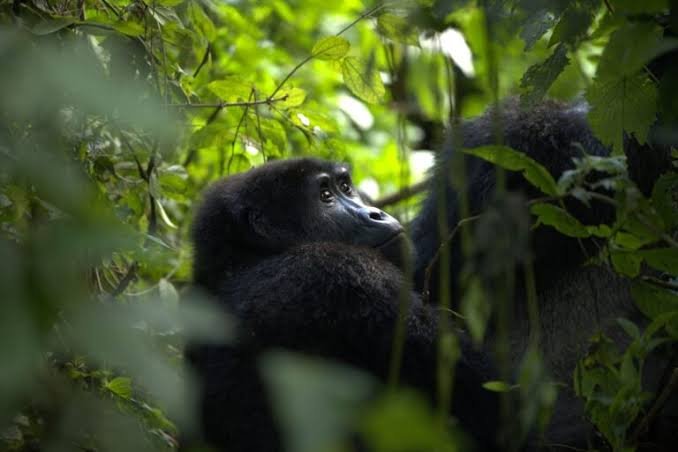
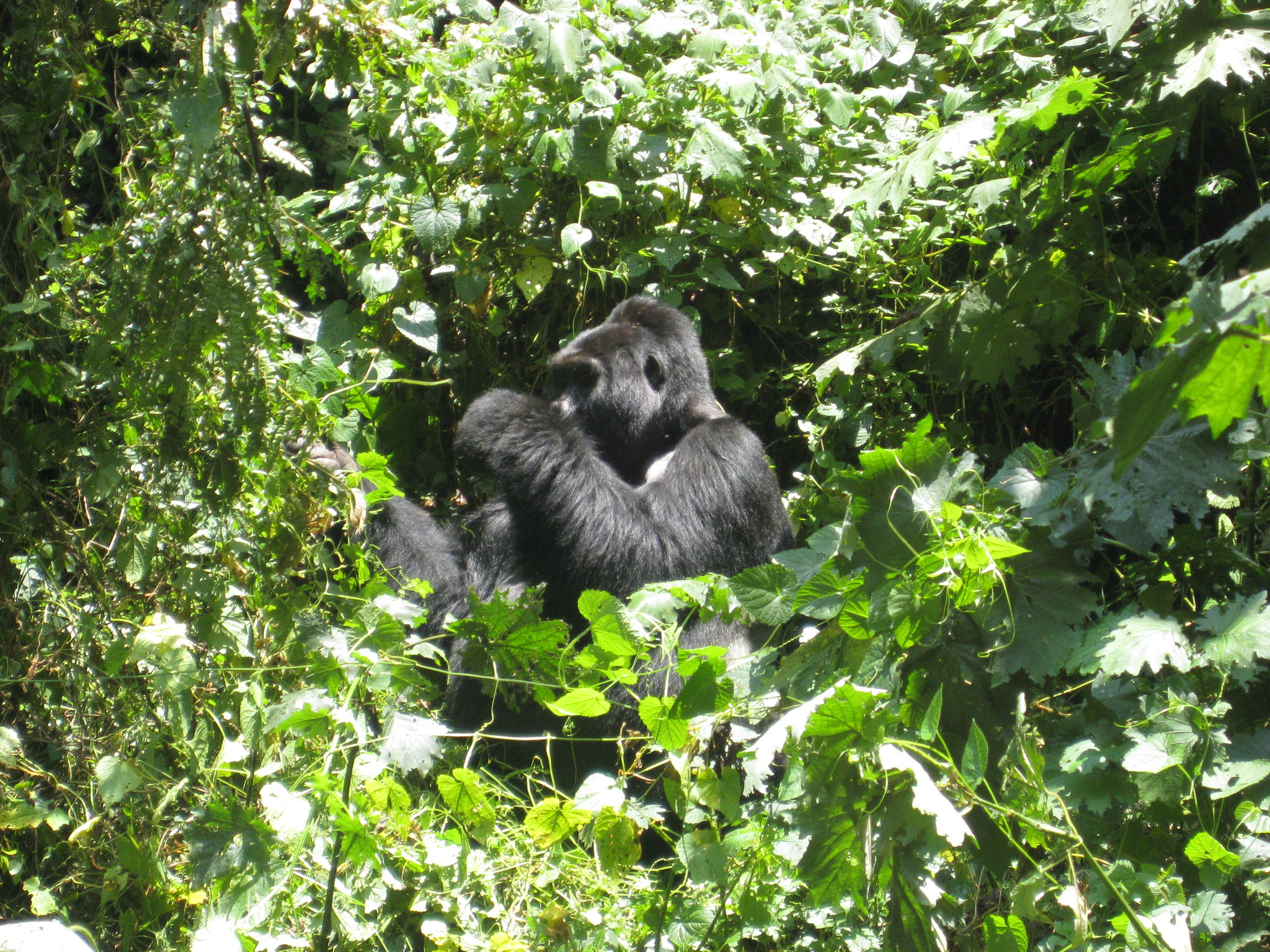
You may hear vegetation moving before seeing the animal responsible. Sometimes the first visible gorilla appears only partially through leaves. You may notice a dark shape, then a hand pulling vegetation toward a mouth, before the full body becomes visible. On another day, the first animal you see might be a large silverback sitting in relatively open vegetation.
This transition from searching to observing can be emotionally powerful because the gorillas are not presented to you. You have travelled through the forest to find them where they naturally chose to be.
Once the encounter begins, the four-hour viewing period starts under the management of the professional team. UWA defines viewing time as the duration visitors remain with the primates after reaching them, and the official maximum for the Gorilla Habituation Experience is four hours.
What Happens During the First Hour With the Gorillas?
The first hour often passes remarkably quickly. Many travellers initially experience a mixture of excitement, disbelief and concentration as they try to understand where each gorilla is positioned and what is happening within the family.
You may find several gorillas feeding quietly while others remain partly hidden by vegetation. The dominant silverback may be immediately visible or may sit farther from the most active members of the group. A mother may be holding an infant close to her body, while juveniles move more freely through vegetation and sometimes appear far more curious about their surroundings.
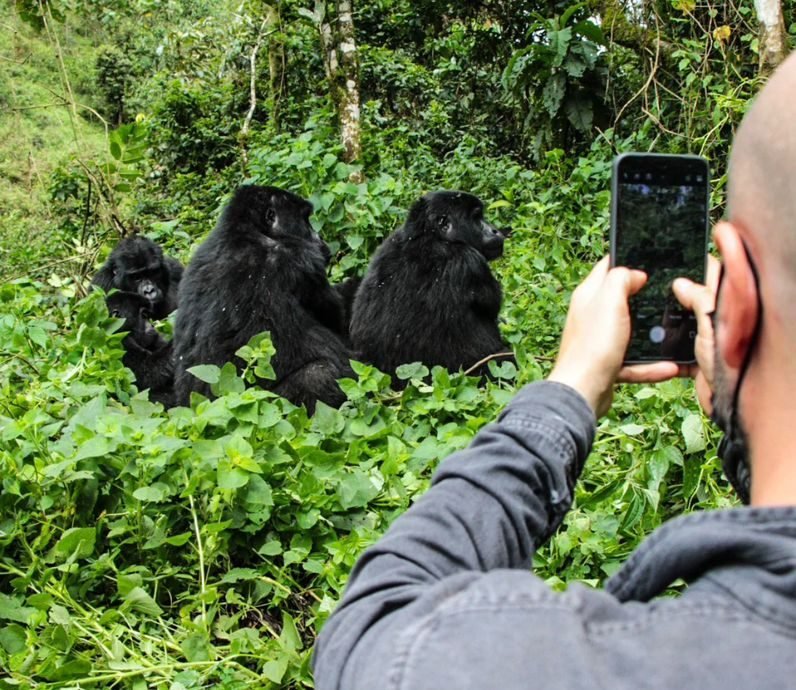
During habituation, the family is still involved in the process of becoming accustomed to controlled human presence. This does not mean every gorilla will appear nervous or aggressive, but it does mean the professional team pays close attention to behavioural responses. The animals remain wild, and the purpose is not to force them to accept visitors more quickly than is appropriate.
Uganda Wildlife Authority describes Gorilla Habituation specifically as accompanying researchers and habituators in the process of familiarising gorillas with human presence. Your role is therefore primarily observational. You are witnessing and participating in a controlled conservation process rather than training the gorillas yourself.
What Researchers and Habituators Do During the Experience
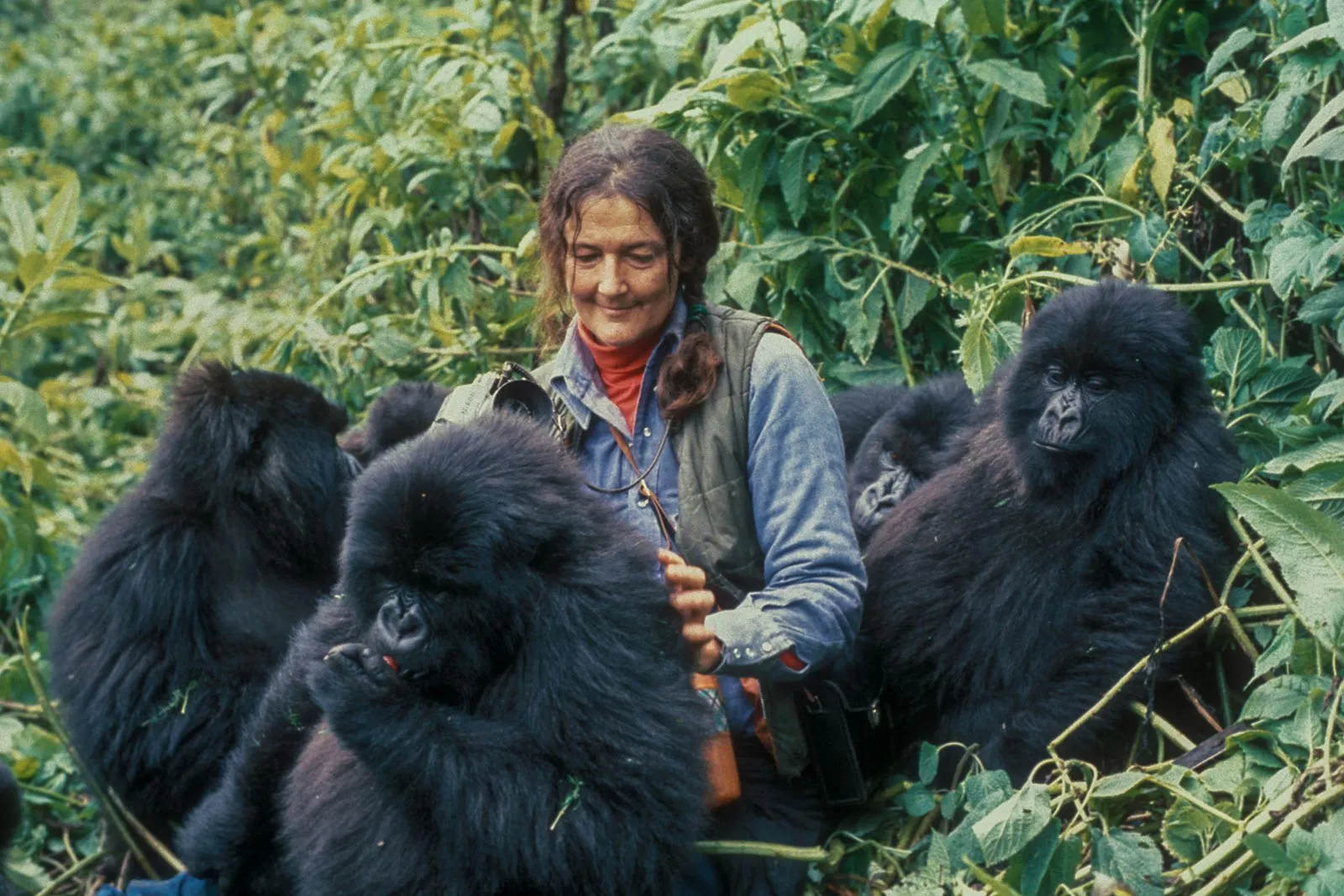
The presence of researchers and habituators gives Gorilla Habituation a different character from ordinary trekking. These professionals have often spent substantial time monitoring the family and learning to identify individuals, relationships and behavioural patterns.
Habituation develops gradually through repeated controlled exposure. The objective is for the gorillas to become sufficiently comfortable with carefully managed human observers that researchers can monitor them effectively and, eventually, controlled tourism can occur without causing unacceptable disturbance.
This work requires patience because individual gorillas respond differently. A mature silverback may react one way to human presence while an adult female with a young infant behaves differently. Younger gorillas can sometimes show curiosity, while others may prefer to keep greater distance.
Researchers observe these responses rather than forcing interaction. Over time, they build a detailed understanding of the family, which makes identification and health monitoring easier.
As a visitor, listening to professionals explain these behaviours can transform what initially looks like simple feeding or resting into a much more meaningful observation of family relationships and conservation progress.
Gorilla Habituation Does Not Mean Making Gorillas Tame
One of the most important misconceptions to avoid is the idea that habituation means taming gorillas. It does not. Mountain gorillas remain wild animals throughout the habituation process.
They are not taught tricks, fed to encourage them to approach tourists or trained to stay in a particular location. They continue deciding where to travel, what vegetation to eat, when to rest and how to interact with other members of their family.
Habituation simply means that the gorillas gradually become familiar with the presence of carefully controlled humans and no longer respond to every human encounter as an immediate threat.
This difference is fundamental to the ethics of the experience. A habituated mountain gorilla is still a powerful wild great ape. Visitors must continue respecting the instructions of UWA guides, maintaining appropriate behaviour and understanding that the gorilla’s welfare takes priority over the desire for a closer photograph.
What Happens During the Second and Third Hours?
The middle portion of Gorilla Habituation is often when the experience begins feeling very different from standard one-hour trekking. The initial excitement settles, and you have time to observe instead of simply trying to capture everything before the clock runs out.
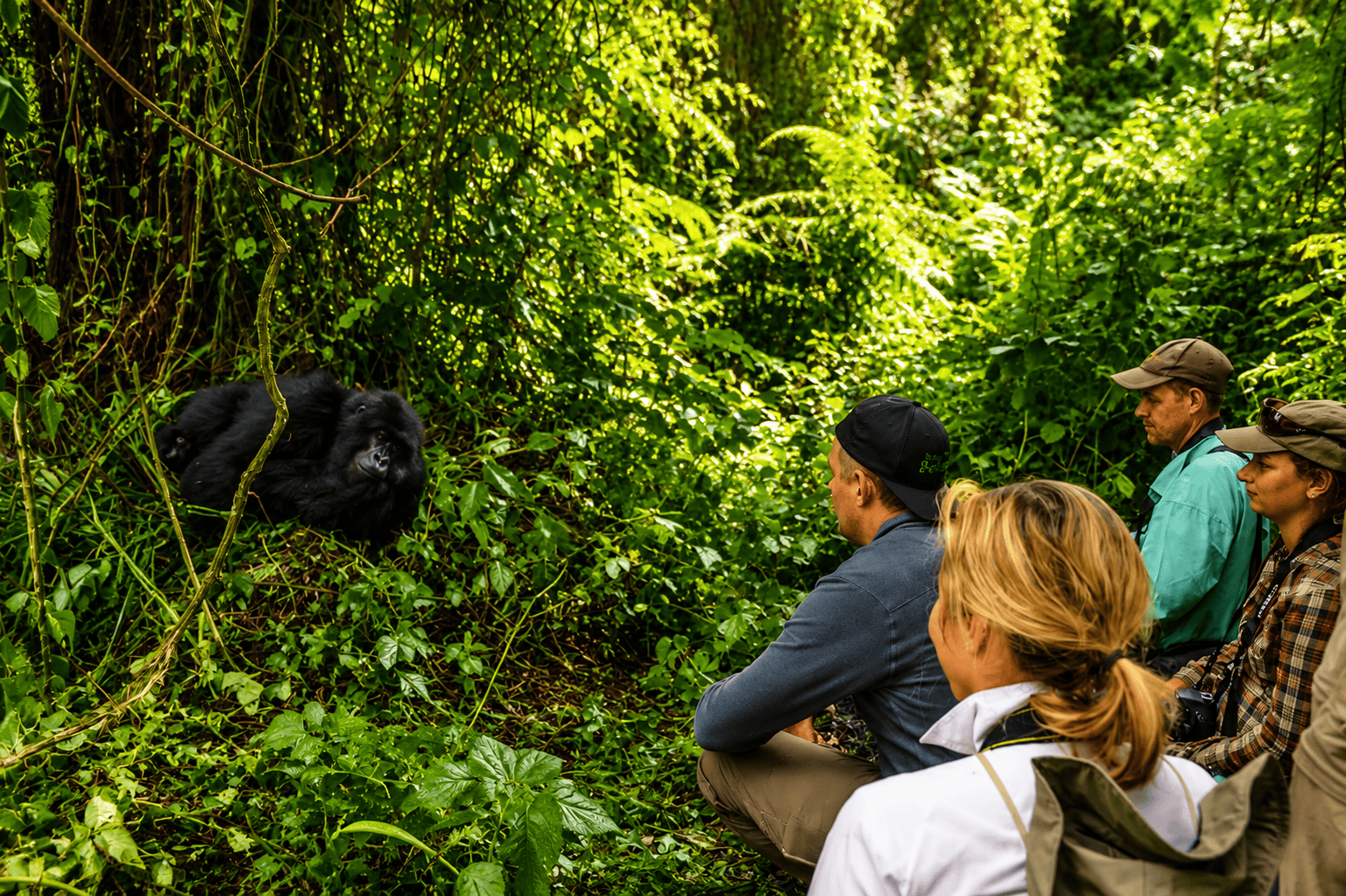
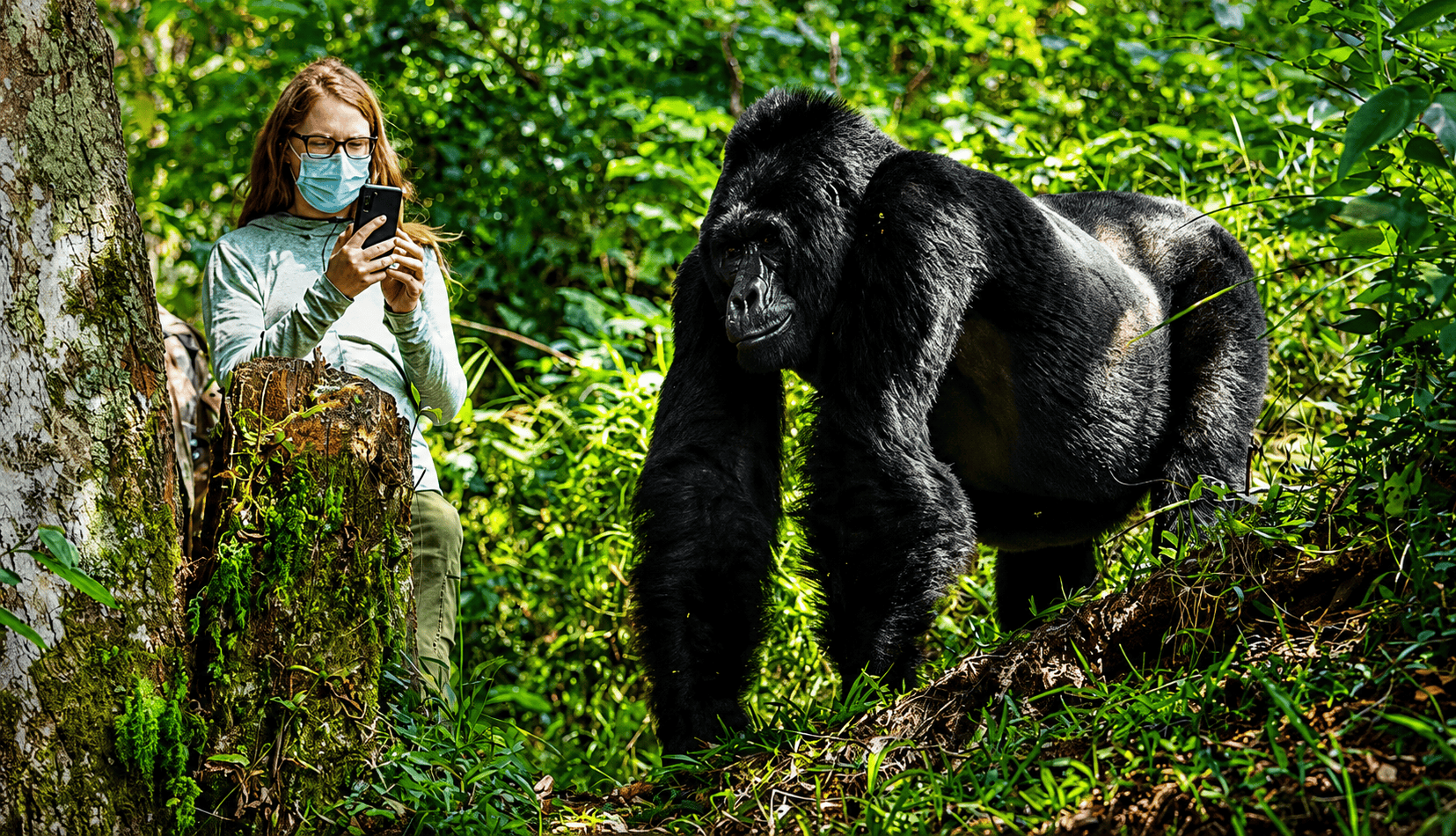
A gorilla family that was feeding when you first arrived may begin moving. An adult that was hidden behind vegetation may emerge into a clearer area. Juveniles may begin playing after a quiet period, or a mother may reposition herself and reveal an infant that had previously been difficult to see.
You may begin recognising individual animals instead of seeing the family as one general group. The silverback becomes more than simply the largest gorilla. You start noticing where he positions himself, which individuals remain close to him and how the family responds when he moves.
The longer viewing time can also make quiet behaviour more interesting. Watching a gorilla calmly strip leaves from vegetation for twenty minutes may initially seem less dramatic than seeing a juvenile climb a tree, but prolonged observation allows you to notice the strength, dexterity and deliberate movements involved in feeding.
This slower rhythm is one of the greatest advantages of habituation. You are not constantly waiting for a spectacular moment. Ordinary behaviour itself becomes fascinating.
What Happens if the Gorilla Family Starts Moving?
Mountain gorillas frequently move while being observed, and the experience can become mobile. You may follow carefully as the family moves through vegetation, always under the direction of the professional team.
This means reaching the gorillas does not necessarily mark the end of physical exertion. During the four-hour viewing period, you may still climb, descend, carefully step through dense vegetation or reposition yourself several times.
The professional team manages how visitors move because chasing or surrounding gorillas would undermine responsible tourism. Sometimes the correct response is to remain still and allow the animals to move away before following at an appropriate distance.
For photographers, movement can create both challenges and opportunities. A position with poor visibility may suddenly improve, while an excellent view can disappear within seconds. The advantage of having four hours is that one difficult photographic period does not define your entire experience.
How Close Are You to the Gorillas?
Uganda Wildlife Authority publishes gorilla tracking rules designed to protect both visitors and gorillas. The current UWA conservation tariff material instructs visitors to maintain distance from gorillas, avoid visiting when suffering from an infectious illness, avoid flash photography and follow other protective measures.
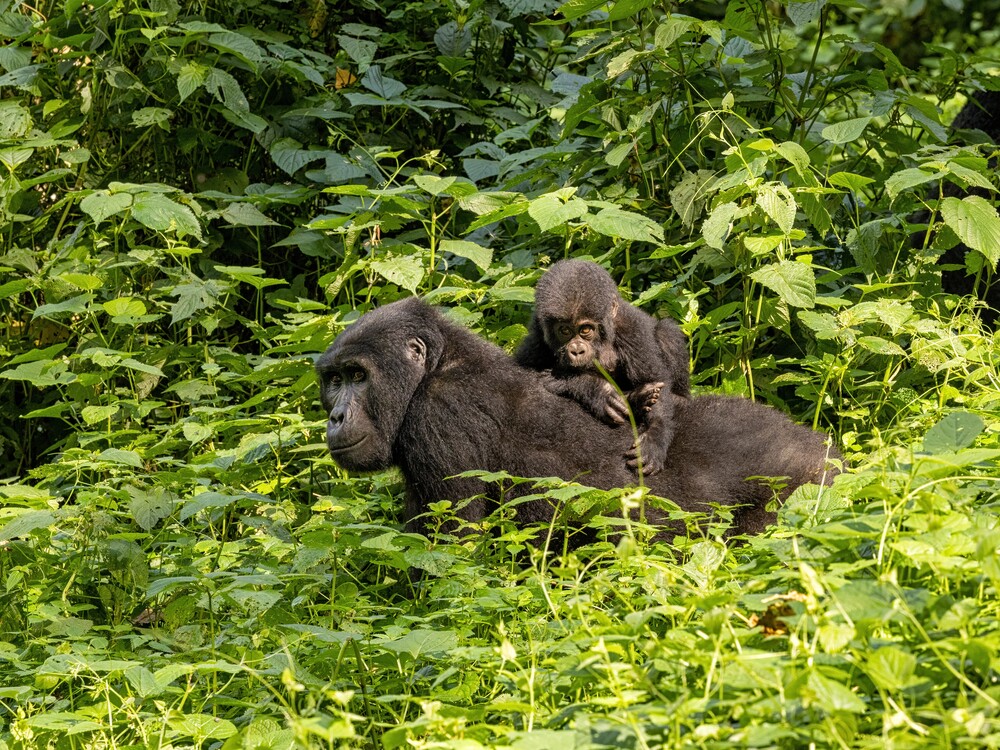
In practice, wild gorillas may sometimes move in ways that make the distance difficult to maintain perfectly. A juvenile may cross nearby or the family may move toward the area where visitors are positioned. When this happens, you should not attempt to touch the animal or move closer for a photograph. You follow the instructions of the guide.
The possibility that a gorilla may approach does not turn the encounter into physical interaction. The goal remains observation with minimal disturbance.
What Happens if a Gorilla Approaches You?
If a gorilla moves closer, staying calm is essential. Your guide will tell you how to respond based on the animal’s behaviour and position. Sudden movement, reaching toward the gorilla or trying to take a close selfie can create unnecessary risk and should be avoided.
The fact that a gorilla chooses to approach is very different from you approaching the gorilla. Wildlife conservation rules are designed around allowing animals control over their own movements while limiting intrusive human behaviour.
A close natural encounter can become one of the most unforgettable moments of Gorilla Habituation precisely because it was not staged. You are seeing a wild animal making its own decisions within its habitat.
What Happens During the Final Hour?
By the final hour, many travellers have become much more comfortable observing the family. The camera may spend more time lowered because the urgency of documenting every second has disappeared.
This is often when small moments become particularly meaningful. You may notice how an infant watches another gorilla, how a juvenile moves between adults or how a silverback reacts to a sound deeper in the forest.
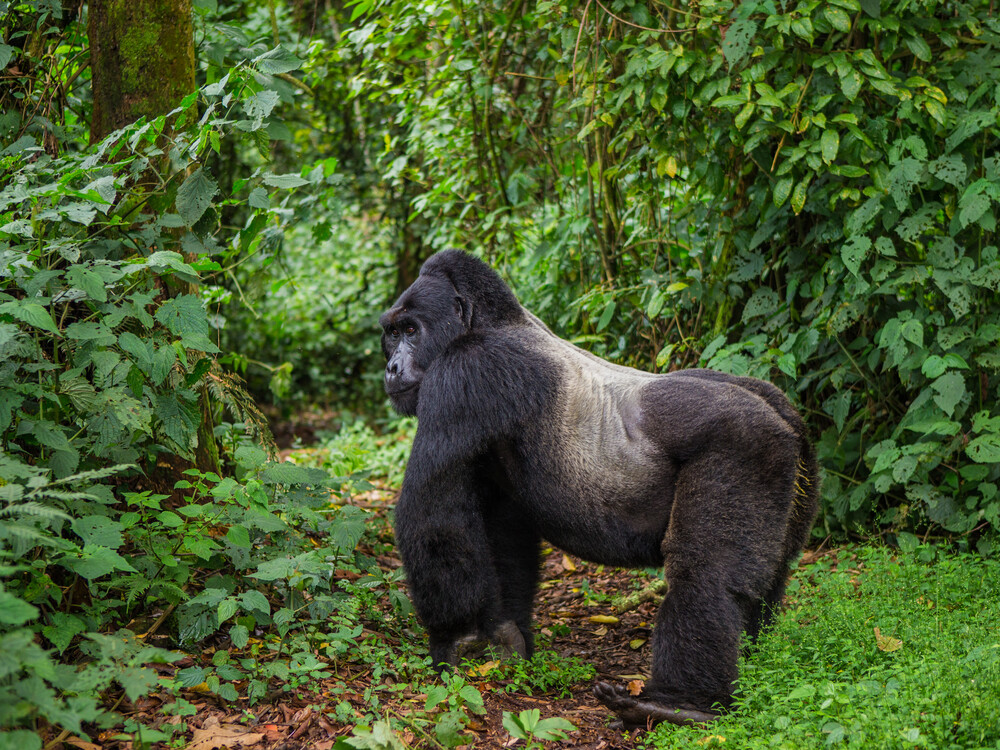
The four-hour experience allows you to develop a sense of familiarity without pretending that the animals have become familiar pets. You begin recognising individuals while remaining conscious that you are a temporary visitor.
As the official viewing period approaches its end, guides manage the conclusion of the encounter. You do not simply remain because the gorillas are providing good photographs. The four-hour maximum is part of the controlled tourism system and provides a clear boundary between an immersive experience and unrestricted wildlife access.
Photography During Gorilla Habituation
Photography is one of the major reasons travellers choose Gorilla Habituation. Four hours gives you considerably more opportunity to deal with the realities of rainforest photography than a one-hour trek.
Bwindi’s forest canopy can produce relatively low light, and the contrast between bright openings and dark vegetation can change rapidly. Gorillas also rarely sit exactly where photographers would prefer. Leaves, branches and other animals can block your view, while a gorilla facing away from you may remain in that position for a long period.
The additional time encourages patience. Instead of immediately filling a memory card with nearly identical frames, you can observe the family and wait for moments with stronger behaviour or composition.
Flash photography is prohibited under UWA gorilla tracking rules, so travellers should understand their camera’s available-light settings before arriving in the forest. Practising beforehand can help you spend more time watching the gorillas and less time trying to understand unfamiliar camera controls during one of the most important wildlife encounters of your journey.
What Happens if the Gorillas Rest or Sleep?
The gorillas may spend part of your four hours resting, and this should not be viewed as wasted time. Wild animals do not perform according to tourist expectations, and resting is an important part of normal gorilla behaviour.
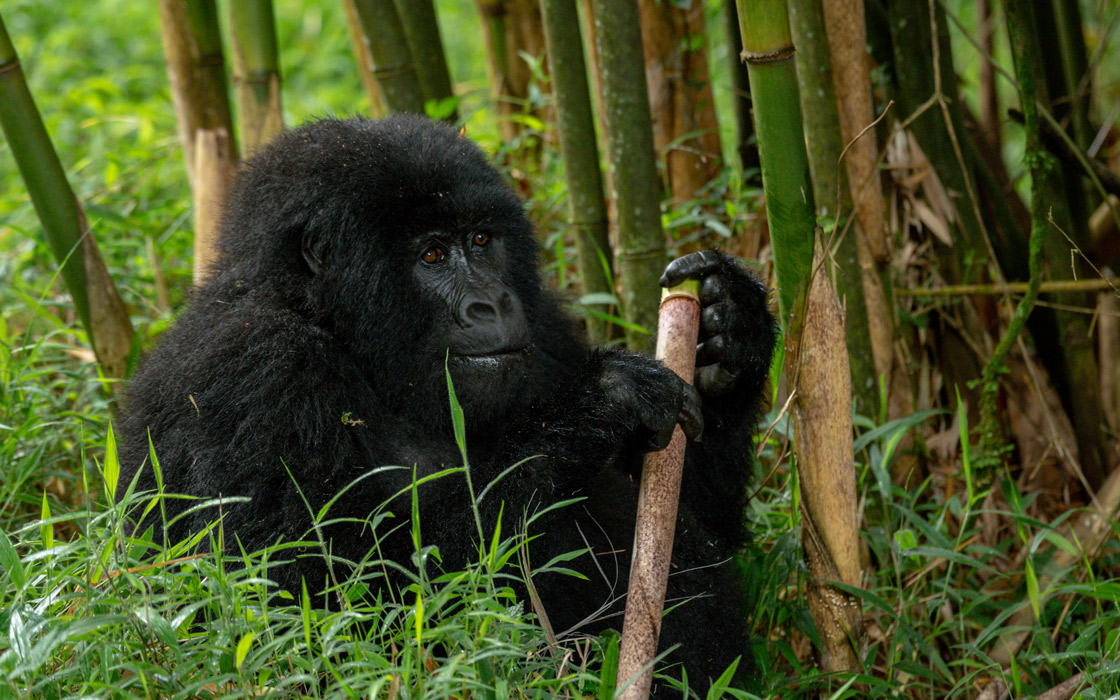
A quiet period can reveal social relationships in subtle ways. Mothers may keep infants close, younger gorillas may gradually become restless, or several animals may position themselves near one another while another remains slightly apart.
The longer habituation experience allows you to accept these slower periods because you are not dependent on every minute containing dramatic movement.
If the family later begins travelling or feeding again, you have witnessed a natural transition rather than arriving only for one short snapshot of its day.
What Happens if It Rains During Gorilla Habituation?
Rain is always possible in Bwindi because you are trekking inside a tropical rainforest. A shower can arrive even during months normally described as relatively dry.
The experience generally continues unless the professional team determines that conditions create a specific safety or management concern. Rain can make the forest floor slippery, increase the difficulty of slopes and create additional challenges for photography.
Proper preparation makes a major difference. Waterproof protection for your camera, suitable hiking footwear and a light rain layer can allow you to remain focused on the experience rather than becoming uncomfortable.
Rain can also transform the forest visually. Mist can move through the valleys, vegetation becomes intensely green and water collecting on gorilla fur can create memorable photographic conditions.
How Physically Demanding Is the Experience?
The physical difficulty depends mainly on where the gorillas are located and how they move during the day. You may face steep climbs, muddy ground, dense vegetation and a long return walk after completing your four-hour viewing period.
The overall activity should therefore be understood as more demanding than the number “four hours” suggests. The four hours refer only to maximum direct gorilla viewing. Tracking time starts after briefing and lasts until your group returns for debriefing.
Moderate fitness is beneficial. Regular walking before your safari, particularly on hills, can help you enjoy the day rather than simply endure it.
A porter is also worth considering even if you normally carry your own backpack. Saving energy during the approach can make the actual gorilla viewing far more comfortable.
What Happens With Food and Water During the Day?
Because Gorilla Habituation can take much of the day, your lodge or safari operator will normally help arrange drinking water and a packed meal. These are practical safari arrangements rather than part of the basic UWA permit.
Food should not be consumed around the gorillas, and you should follow your guide’s instructions about appropriate places and times for eating.
Carrying sufficient water is particularly important because hours of hiking through mountainous terrain can be tiring even when temperatures remain relatively cool.
The same applies to medication or personal necessities. Anything you genuinely need during a long forest day should be organised before leaving your lodge rather than assuming you can purchase supplies once tracking has begun.
Why Health Rules Matter So Much
Human health can directly affect gorilla conservation because great apes are susceptible to diseases that can be transmitted by people. UWA’s published gorilla rules state that visitors should not track gorillas when suffering from a cold or other infectious illness.
This can feel particularly difficult when you have spent substantial money and travelled thousands of kilometres for the experience, but protecting a gorilla family has to outweigh one individual’s tourism plans.
Honesty about illness is therefore part of responsible Gorilla Habituation. Attempting to conceal symptoms so that you do not miss your permit can place wildlife at unnecessary risk.
The health rules also illustrate why Gorilla Habituation is best viewed as conservation tourism rather than a simple commercial attraction. Your access exists only because it can be managed within conditions designed to protect the animals.
What Happens When the Four Hours End?
At the end of the maximum viewing period, your group begins leaving the gorillas and starts the journey back through the forest. The return does not happen instantly. Depending on where the family has moved during your observation, you may still face a substantial hike before reaching the briefing point.
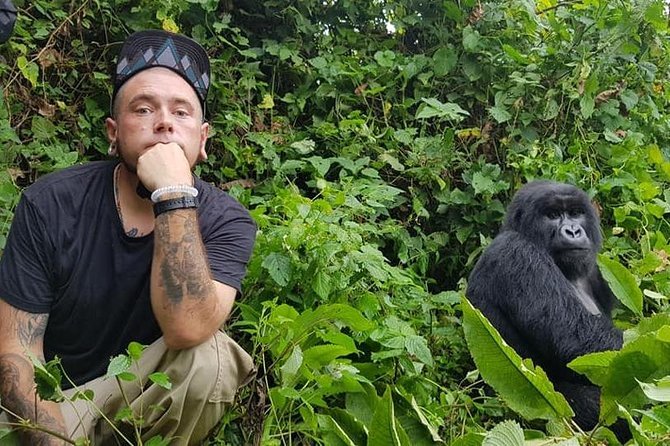
This is another reason you should avoid scheduling a strict afternoon flight or major activity immediately after Gorilla Habituation. Even when the experience begins at 6:30 a.m., there is no universal return time because tracking conditions vary.
The walk back often feels different emotionally from the walk into the forest. During the morning, attention is focused on finding the gorillas. On the return, you have time to process what you have seen.
A photograph may capture the appearance of a gorilla, but the memory of spending several hours quietly watching a family often becomes more important than any single image.
The Return and Debriefing
Uganda Wildlife Authority defines the full tracking period as continuing until visitors return to the briefing location for debriefing. This means the experience officially extends beyond the moment you leave the gorillas.
Returning to the starting area marks the completion of a long conservation-focused day. Depending on the safari arrangement, your driver-guide will normally take you back to the lodge where you can rest, have a late lunch or prepare for dinner.
It is usually better to spend the night in Bwindi after Gorilla Habituation rather than immediately begin a long road transfer. The physical and emotional intensity of the day deserves enough space in your itinerary.
What Does the Permit Cover During the Experience?
Under the UWA tariff used during the 2026 period, Gorilla Habituation has been priced at USD 1,500 for Foreign Non-Residents, USD 1,000 for Foreign Residents, USD 1,000 for Rest of Africa travellers and UGX 750,000 for eligible East African Community citizens. UWA states that the gorilla rates include the guide fee, park entrance fees for the activity day and a community development contribution.
The permit does not mean that your complete Uganda safari is included. Your accommodation, private vehicle, domestic flights, international travel, personal porter, travel insurance and other safari services remain separate unless a tour operator packages them together.
From 1 January 2027, Uganda Wildlife Authority has announced new Gorilla Habituation rates of USD 1,800 for Foreign Non-Residents, USD 1,600 for Foreign Residents, USD 1,000 for Rest of Africa visitors and UGX 750,000 for eligible East African Community citizens.
The same 2026 UWA notice also confirms that the former seven-day unpaid reservation window was suspended from 1 March 2026, with permits thereafter secured through full payment at booking. Travellers should therefore be ready to proceed when suitable availability is found rather than assuming the permit can be held unpaid for a week.
What Makes the Experience Different From Standard Gorilla Trekking?
The difference extends far beyond the extra three hours of viewing.
Standard gorilla trekking takes you to a family that has already become sufficiently habituated for routine tourism visits. Gorilla Habituation takes you into the ongoing conservation process and allows you to accompany the people who are helping a selected family gradually become familiar with controlled human presence. UWA explicitly distinguishes the two experiences in its management guidelines.
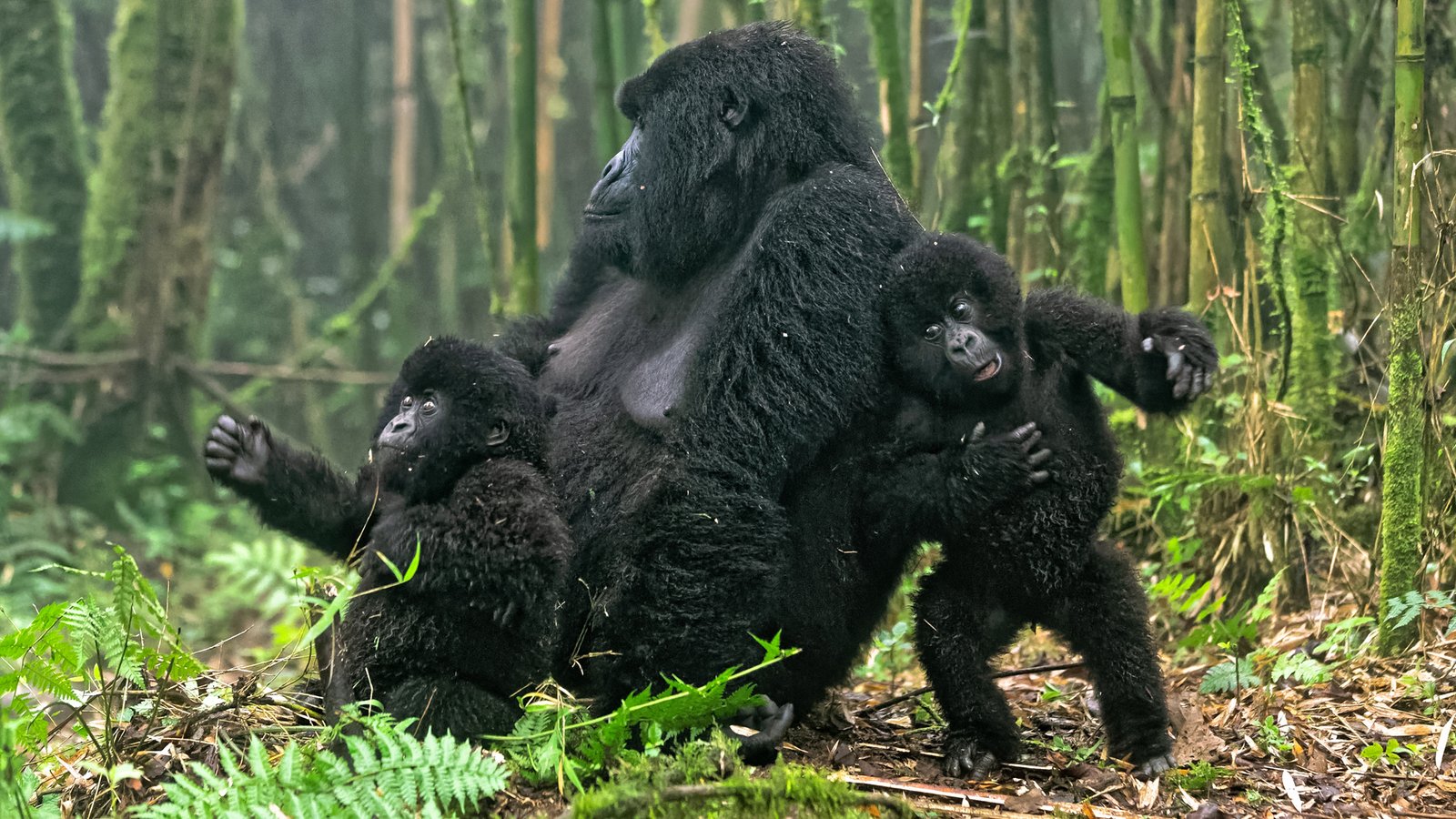
This gives habituation a more observational and research-oriented character. You may witness reactions that differ from those of a family that has received visitors for many years.
The extended time also allows you to understand how a gorilla family behaves across several hours rather than only within a single short window.
Standard trekking can be extraordinary and is the right choice for many travellers. Gorilla Habituation simply offers a different level of depth.
What Happens Emotionally During Gorilla Habituation?
The emotional experience often evolves during the day. Before reaching the gorillas, there is anticipation. When you first see one, excitement can dominate everything else. After an hour, that intensity often settles into fascination.
By the second or third hour, you may begin feeling less like someone collecting a wildlife sighting and more like a quiet observer of a family going about its daily life.
The extended time allows small details to become memorable. The way an infant watches its mother, how a juvenile tests branches before climbing or how a silverback remains still while the family moves around him may stay in your memory more strongly than a dramatic photograph.
This gradual shift from excitement to observation is one of the reasons many travellers describe Gorilla Habituation as more immersive than they expected.
What Happens if You Do Not See the Gorillas?
Professional tracking makes gorilla encounters highly organised, but mountain gorillas remain wild animals and no responsible wildlife experience should be described as an absolute sighting guarantee.
UWA maintains formal procedures for situations in which a visitor tracks but cannot access the gorillas, underscoring that wildlife tourism still involves natural uncertainty.
The existence of such management procedures does not mean sightings commonly fail. It simply acknowledges that wild animals cannot be controlled with complete certainty.
For travellers, the best approach is to enter the experience understanding that authenticity and unpredictability are connected.
Why Gorilla Habituation Matters for Conservation
Gorilla Habituation makes tourism possible without pretending that wild animals naturally accept human observers. Before a family can receive controlled visits, professionals invest substantial time monitoring its behaviour and gradually introducing human presence.
That process creates opportunities for research and long-term monitoring while also supporting a regulated tourism model that generates revenue from keeping gorillas and their forests protected.
The official permit itself incorporates park access, guiding and a community development contribution under UWA’s tariff structure. The experience therefore connects individual travellers with a much larger system of conservation management.
The most important thing to remember is that habituation is never supposed to eliminate the gorillas’ wild nature. The conservation achievement is not that gorillas become tame. It is that controlled observation becomes possible while the animals continue living naturally within their forest.
Who Will Enjoy Gorilla Habituation Most?
Gorilla Habituation is particularly rewarding for travellers who value wildlife behaviour, photography, conservation and patience. The experience gives you enough time to move beyond the initial excitement of seeing a gorilla and begin noticing how the family functions.
It also suits travellers who enjoy physically active safari experiences and do not mind spending much of a day inside a rainforest.
Someone who primarily wants to see mountain gorillas once may find standard trekking perfectly satisfying at a lower permit cost. Someone who wants extended time and a deeper conservation context is more likely to appreciate the additional investment required for habituation.
Neither activity needs to be presented as universally superior. The best choice depends on what you want from your Uganda safari.
What Happens During a Gorilla Habituation Experience From Beginning to End?
From beginning to end, Gorilla Habituation is a progression from preparation and anticipation to tracking, observation and reflection. You wake early near Bwindi, travel to the appropriate entry point, complete permit verification and receive your briefing before entering the forest. You then follow professional guides and trackers through terrain shaped by the gorillas‘ natural movements rather than by a predictable tourism schedule.
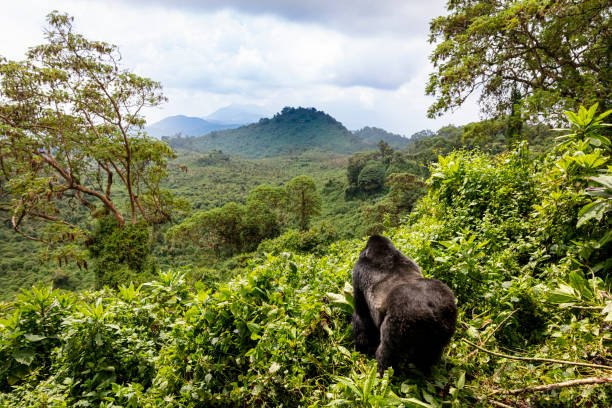
As signs of the family become fresher, the search becomes increasingly focused until the first gorilla appears through the vegetation. From that moment, the official viewing period begins, allowing a maximum of four hours with the family under controlled conditions.
During those hours, you may see the gorillas feeding, resting, moving, caring for infants and interacting socially. Researchers and habituators continue their professional work while explaining aspects of the process and managing how visitors observe the animals.
The family may move continually or remain relatively settled. Weather may change. Photography conditions may improve and deteriorate. Some moments may be exciting while others are extraordinarily quiet.
When the four-hour maximum is reached, you leave the family and begin hiking back through Bwindi. The activity officially continues until your return for debriefing, meaning your total forest time can be substantially longer than the direct observation period.
Final Answer: What Happens During a Gorilla Habituation Experience?
What Happens During a Gorilla Habituation Experience? You join an officially managed conservation activity in Uganda’s Bwindi Impenetrable National Park that takes you beyond ordinary gorilla viewing and into the gradual process through which selected wild mountain gorillas become familiar with carefully controlled human presence. Uganda Wildlife Authority describes the Gorilla Habituation Experience as allowing visitors to accompany researchers and habituators into the forest for this purpose.
Your day begins early, with UWA setting Gorilla Habituation from around 6:30 a.m. until visitors return to the briefing location for debriefing. You receive an orientation, enter the forest with professional guides and trackers, and follow signs of the gorilla family’s movements until the animals are located.
The search can take time because mountain gorillas remain wild and free-ranging. They are not waiting at a permanent viewing location, and the exact difficulty of the trek changes according to where they travelled after the previous day’s observations.
Once you reach the family, the maximum four-hour viewing period begins. This is direct gorilla viewing time rather than the total duration of your forest excursion. Standard gorilla tracking allows a maximum of one hour, making the four-hour habituation period substantially more immersive.
During the encounter, you observe the family under professional supervision. You may watch feeding, resting, travelling, interactions between adults, juvenile play, mothers caring for infants and the dominant silverback’s role within the group. There is no guarantee of constant dramatic action because the experience is based on natural behaviour rather than entertainment.
The researchers and habituators remain central to the day because you are entering an ongoing conservation process rather than merely visiting an already habituated tourism family. The gorillas remain completely wild throughout this process. Habituation means becoming accustomed to carefully managed human presence; it does not mean domestication.
You also remain subject to wildlife protection rules. Visitors must meet Uganda’s minimum gorilla tracking age of 15 years, should not participate when suffering from infectious illness and must follow the instructions of UWA staff throughout the encounter.
Photography can be exceptional because four hours gives you time to adapt to changing rainforest light and wait for the gorillas to naturally move into different positions. Flash photography is not permitted, and no photograph should take priority over the instructions of the professional team.
The day may also be physically demanding. You can spend several hours tracking before finding the gorillas, continue moving while observing them and then face another hike back after your viewing time ends. Gorilla Habituation should therefore be treated as a full forest day rather than a simple four-hour excursion.
For travellers participating during the 2026 period, the official Gorilla Habituation permit has been USD 1,500 for Foreign Non-Residents, USD 1,000 for Foreign Residents, USD 1,000 for Rest of Africa visitors and UGX 750,000 for eligible East African Community citizens, with the tariff including the guide fee, park entrance for the activity day and a community development contribution. From 1 January 2027, UWA has announced rates of USD 1,800 for Foreign Non-Residents, USD 1,600 for Foreign Residents, USD 1,000 for Rest of Africa travellers and UGX 750,000 for eligible East African Community citizens.
Yet the real value of Gorilla Habituation is difficult to express through the permit price or number of viewing hours alone. What makes the experience remarkable is the opportunity to remain long enough for the initial excitement to become genuine observation. Instead of simply seeing mountain gorillas, you begin recognising individuals, watching relationships and understanding how conservation professionals work with a wild family over time.
By the time you leave the gorillas and begin walking back through Bwindi, the experience has usually become far more than a wildlife sighting. You have spent a substantial part of your day inside the natural environment of one of the world’s most remarkable primates, witnessed the process that makes responsible gorilla tourism possible and experienced how carefully managed tourism can exist alongside research and conservation.
That is what happens during a Gorilla Habituation Experience: you enter the forest as a visitor hoping to see mountain gorillas, but you leave with a deeper understanding of their behaviour, their habitat and the enormous amount of careful conservation work required to make such a close encounter possible.