

What Distance Can You Keep From Gorillas During Gorilla Habituation?
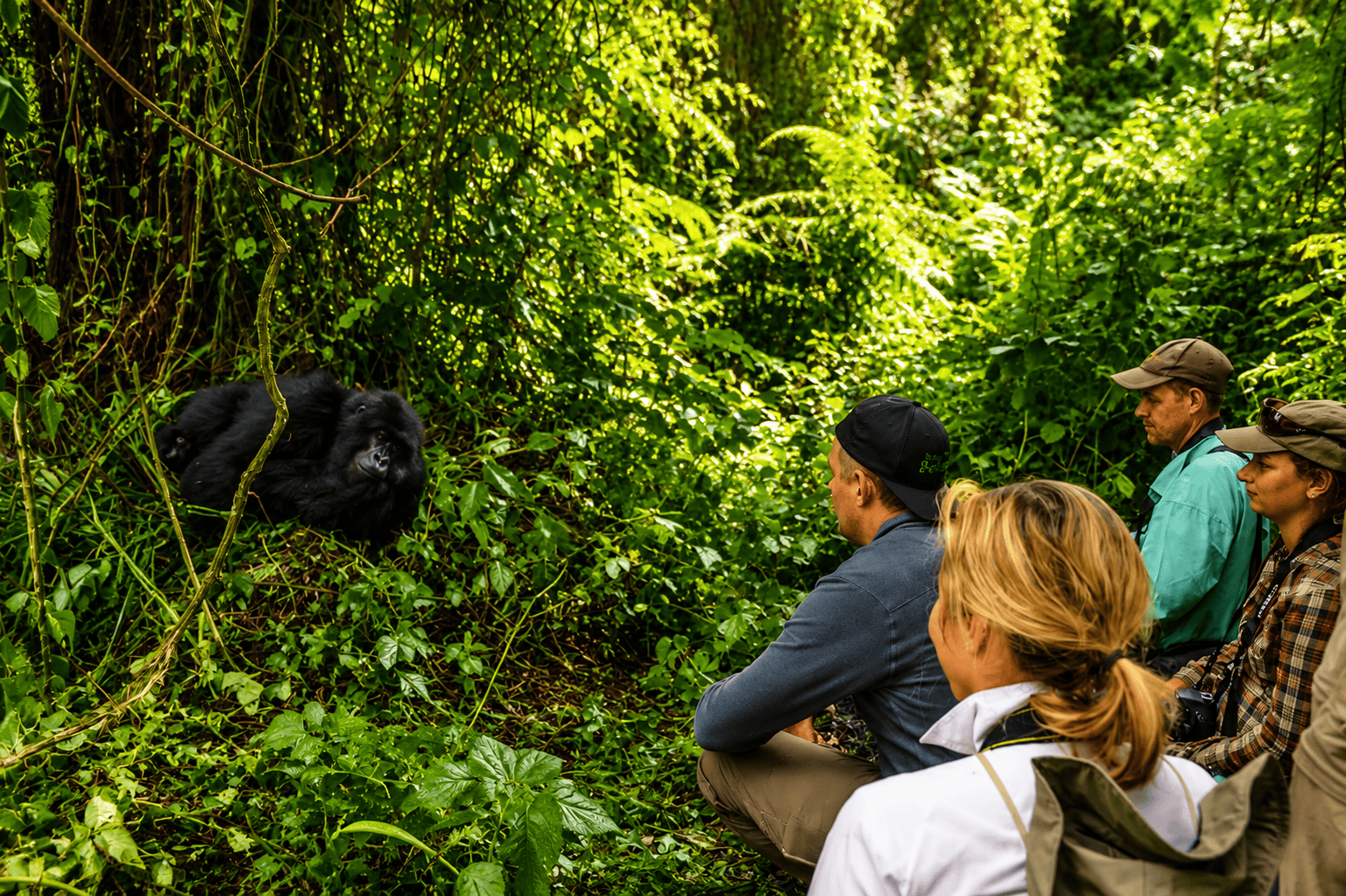
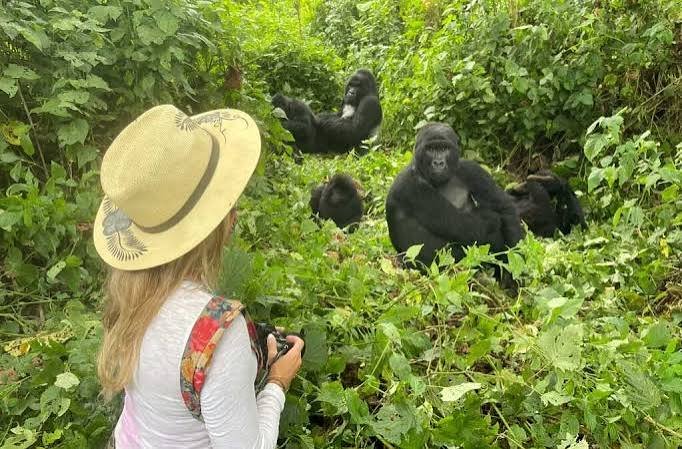
Gorilla Habituation Distance in Uganda is generally maintained at about 10 metres between visitors and mountain gorillas during the experience, following Uganda Wildlife Authority guidance de signed to protect both the gorillas and the people observing them. Gorilla Habituation does not allow you to deliberately move closer simply because the activity lasts longer or involves a gorilla family that is still becoming accustomed to controlled human presence. The experience is based on respectful observation, with Uganda Wildlife Authority guides, researchers and habituators managing how visitors approach, position themselves and respond if a gorilla moves closer. Although 10 metres may sound distant before your safari, the dense forest environment of Bwindi Impenetrable National Park and the large size of mountain gorillas can make the encounter feel remarkably close and personal.
Ten metres may sound far when you are planning your safari from home, but the experience inside Bwindi Impenetrable National Park can feel remarkably intimate. Mountain gorillas are large animals, and the dense rainforest environment creates a very different sense of distance from watching wildlife across an open savannah. At approximately ten metres, you can clearly observe facial expressions, feeding movements, interactions between family members and the impressive physical presence of a silverback. The encounter can therefore feel exceptionally close without requiring you to stand directly beside the animals. More importantly, the distance is not designed to reduce the quality of your experience. It is part of responsible gorilla tourism intended to protect both the mountain gorillas and the people visiting them.
The Official Gorilla Viewing Distance in Uganda
Uganda Wildlife Authority‘s published gorilla tracking rules state that visitors should maintain a 10-metre, or 32.8-foot, distance from a gorilla. The same rules also require visitors not to participate if they have a cold or another infectious illness, prohibit eating, drinking and smoking while with the gorillas, instruct visitors to turn away and cover their face if they need to cough or sneeze, and prohibit flash photography. These measures demonstrate that distance is part of a wider health and conservation system rather than simply a safety boundary between tourists and large wild animals.
The 10-metre guideline should therefore be taken seriously even when the gorillas appear calm. Habituated or partially habituated gorillas may tolerate controlled human presence, but they remain completely wild. A calm silverback feeding quietly does not become a domesticated animal simply because he appears comfortable with observers nearby. The purpose of habituation is to gradually allow selected gorilla families to become familiar with predictable and carefully managed human presence without losing their natural behaviour or independence.
During Gorilla Habituation, the professional team determines how visitors position themselves. You should not independently move closer because you think a better camera angle is available or because a gorilla appears relaxed. The forest can make estimating distance difficult, particularly when vegetation, slopes and trees lie between you and the animal, so the guides’ judgement is far more important than trying to measure the space yourself.
Why Ten Metres Can Feel Much Closer Than You Expect
Photographs can sometimes create unrealistic expectations about how close tourists stand to gorillas. A long lens compresses distance and can make an animal appear almost within touching range, even when the photographer has respected the official viewing distance. When travellers later read that the guideline is 10 metres, some worry that their experience will feel distant. In reality, mountain gorillas are large-bodied primates, and ten metres in dense rainforest is remarkably close for observing a wild animal.
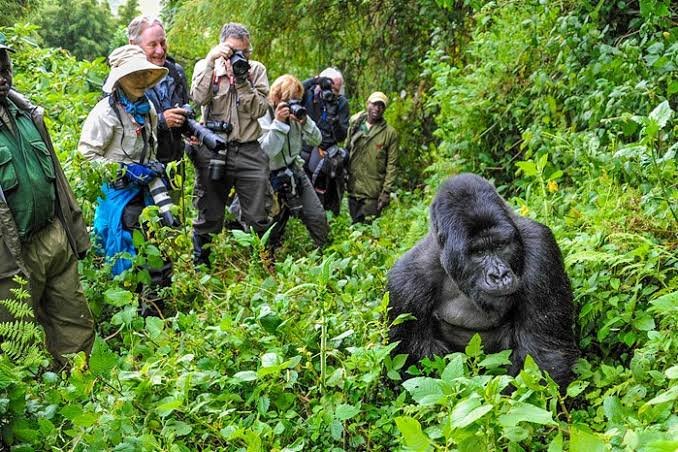
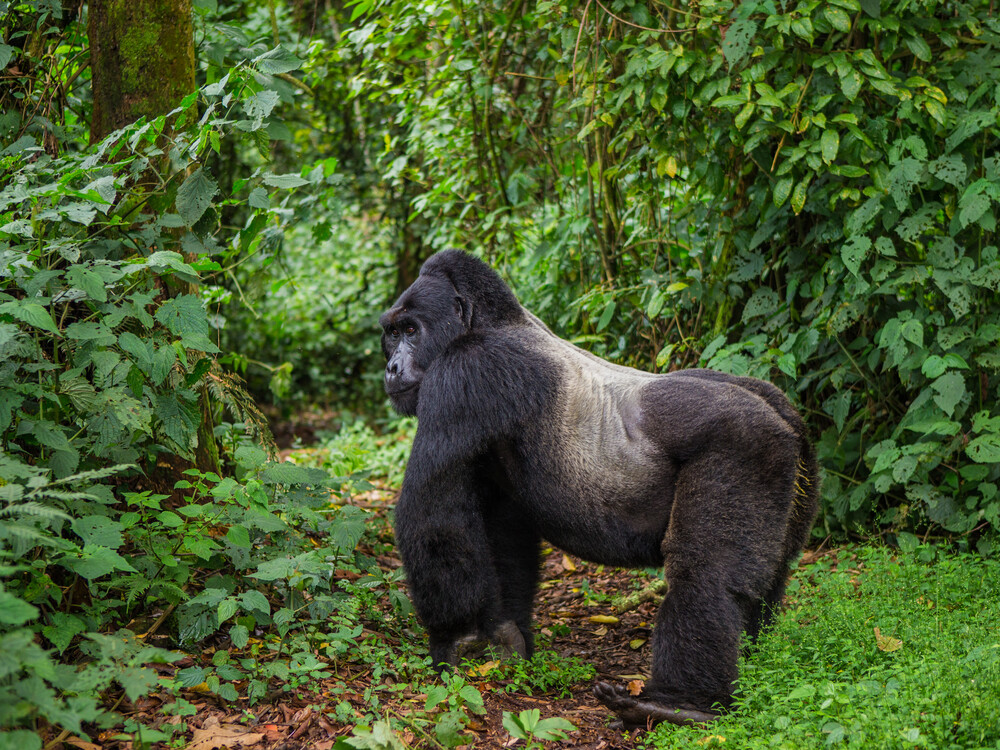
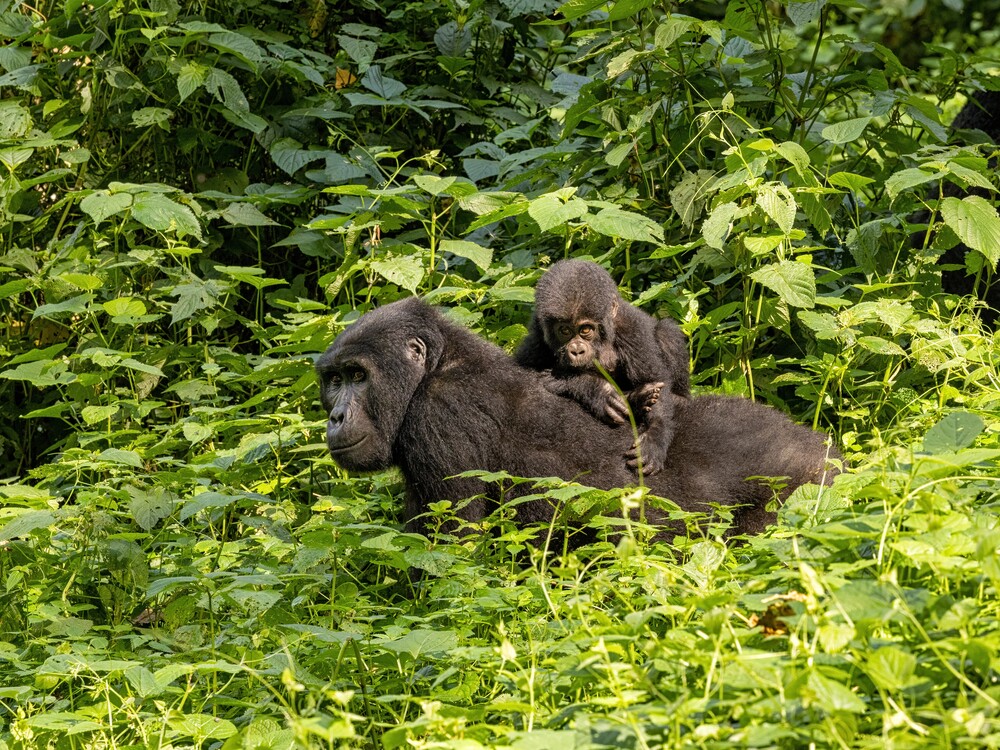
A mature silverback can dominate your field of view even when you are standing several metres away. You can see the texture of his fur, movements of his hands, changes in facial expression and the way he selects vegetation while feeding. A mother sitting with an infant can be equally fascinating because subtle interactions become visible once you stop thinking only about distance and begin paying attention to behaviour.
Bwindi’s vegetation also creates a feeling of enclosure. You are not looking across a huge plain through binoculars. You may be standing among ferns, vines, trees and thick undergrowth with gorillas occupying the same section of forest. The sound of vegetation being pulled, branches moving or a gorilla shifting position can make the encounter feel intensely immediate.
This is one reason Gorilla Habituation does not need to involve touching or standing beside gorillas to feel intimate. The combination of extended observation, rainforest surroundings and the size and behaviour of the animals makes the experience powerful even while the official distance is respected.
Does Gorilla Habituation Allow You to Get Closer Than Normal Gorilla Trekking?
Gorilla Habituation should not be interpreted as a special permit allowing visitors to ignore Uganda Wildlife Authority’s gorilla-distance rules. The main distinction is the nature and duration of the experience rather than permission to physically approach the animals more closely. UWA defines Gorilla Habituation as an experience in which visitors accompany researchers and habituators into the forest as part of the process of habituating gorillas to human presence. UWA also allows a maximum of four hours of viewing during the Gorilla Habituation Experience after the gorillas are reached, compared with a maximum of one hour during normal gorilla tracking.
That longer observation period can create a stronger feeling of closeness because you spend far more time watching the family. You may gradually recognise individual gorillas, notice how juveniles interact, follow a mother with her infant or understand where the silverback positions himself in relation to the group. Emotional and observational closeness therefore increases even though physical distance continues to be controlled.
This distinction is important for marketing Gorilla Habituation responsibly. The value of the activity should not be presented as an opportunity to “get closer” in the sense of stepping nearer to the gorillas. Its value comes from spending more time with them, observing a family involved in the habituation process and learning from professional researchers, guides and habituators.
What Happens if a Gorilla Comes Closer Than Ten Metres?
Mountain gorillas are free-ranging animals, which means humans cannot control every movement they make. Although visitors are expected to maintain the prescribed viewing distance, a gorilla may occasionally decide to move closer to where the group is positioned. A juvenile may cross through an area unexpectedly, an adult may travel past while feeding or the family may change direction while observers are standing still.
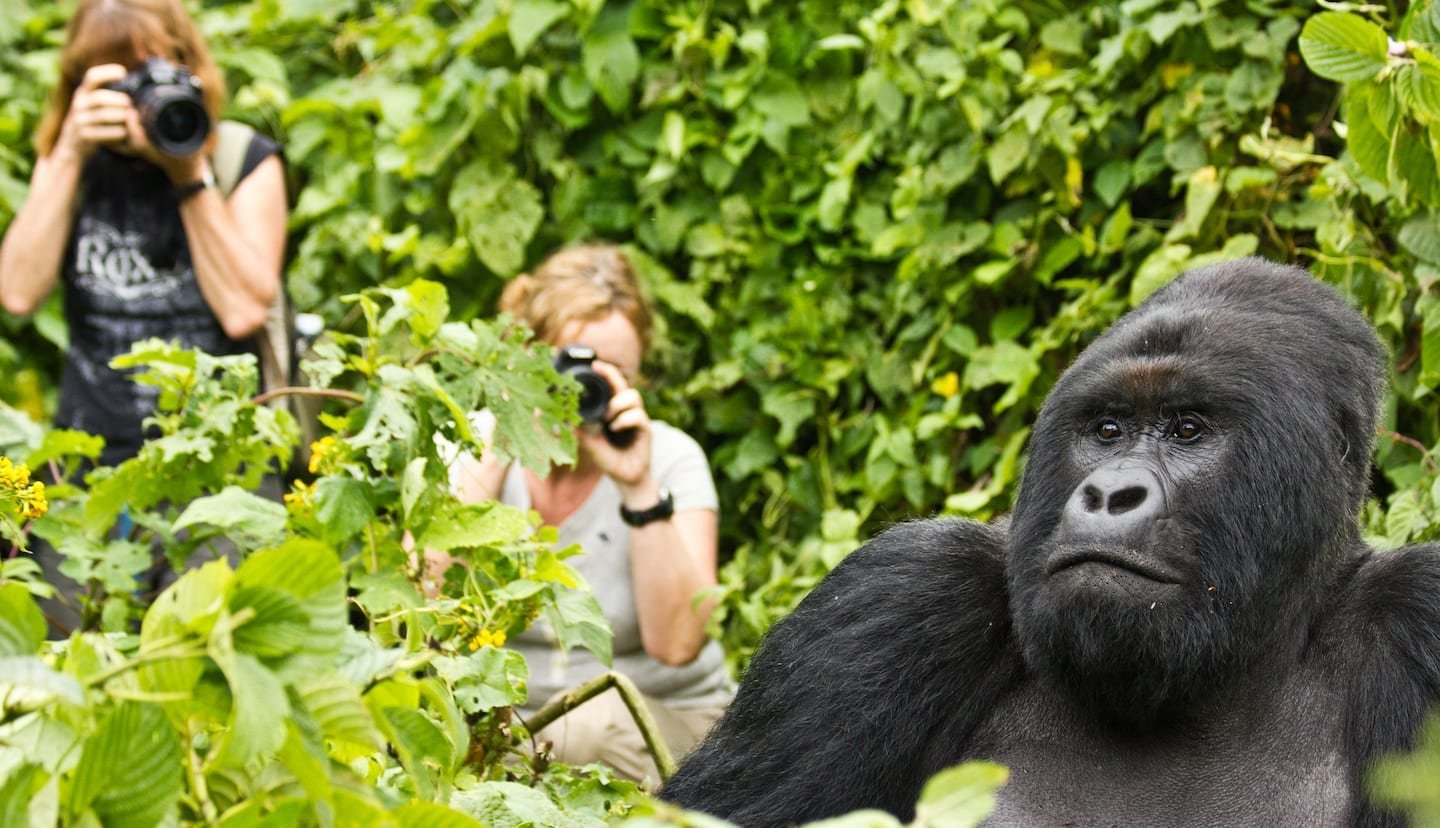
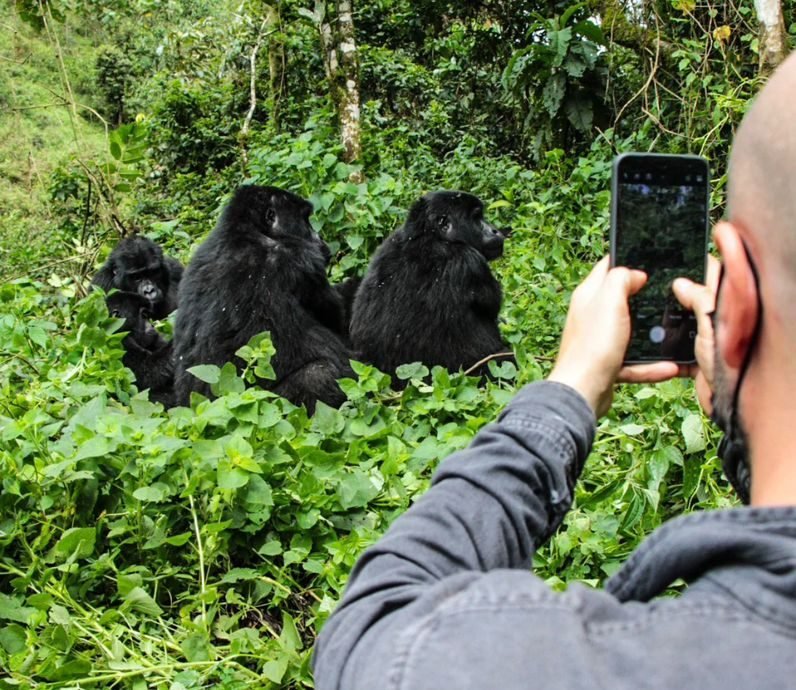
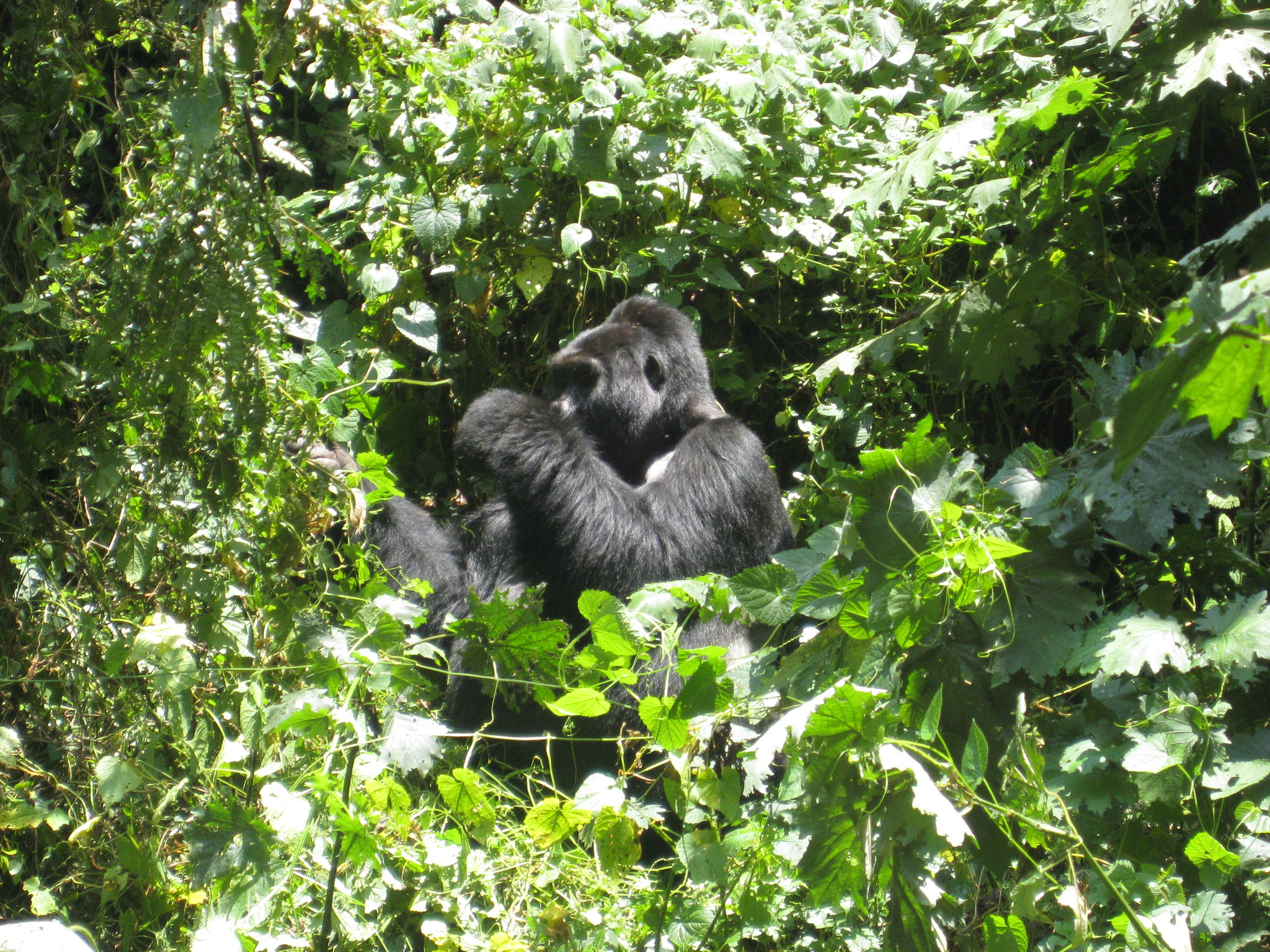
When this happens, the important difference is that the gorilla has reduced the distance rather than the visitor deliberately approaching the gorilla. You should remain calm, avoid trying to touch the animal and immediately follow the instructions given by the professional team. Guides and habituators understand the family far better than visitors do and will tell you whether you should remain still, reposition yourself or allow the animal to pass.
A close approach can be incredibly exciting, particularly when a gorilla moves within a few metres, but it is not an invitation to interact. You should not reach out, attempt a selfie, move toward the animal or block its path. The gorilla must remain free to decide where it wants to go.
This difference between allowing a wild animal to move naturally and deliberately approaching it is central to responsible gorilla tourism.
Why You Should Never Try to Touch a Gorilla
The desire to touch a gorilla may sound surprising before the safari, but extremely close encounters can generate intense excitement. Mountain gorillas share many visible characteristics with humans, and seeing their hands, eyes and expressions at close range can create a powerful emotional response. However, Gorilla Habituation is an observation experience rather than physical interaction.
Touching a gorilla would create unnecessary health and behavioural risks. Human beings can transmit respiratory illnesses to great apes, which is one reason Uganda Wildlife Authority instructs visitors not to participate when suffering from a cold or another infectious illness. UWA also specifically tells visitors to cover their face and turn away from gorillas when coughing or sneezing.
Physical contact would also undermine the controlled nature of the habituation process. The objective is for gorillas to become accustomed to predictable human presence, not to encourage them to seek contact with tourists.
Even when a curious juvenile appears interested in you, allowing interaction would be inappropriate. What may seem harmless from a visitor’s perspective could influence behaviour in ways that are undesirable for conservation management.
The best gorilla encounter is therefore one in which you feel extraordinarily close while still respecting the boundary between observer and wild animal.
Why the Viewing Distance Protects Gorillas From Human Disease
Disease prevention is one of the most important reasons for maintaining space between visitors and mountain gorillas. Great apes can be vulnerable to illnesses carried by humans, particularly respiratory infections. Uganda Wildlife Authority‘s rules therefore combine viewing distance with health requirements designed to reduce unnecessary exposure. Visitors with infectious illness should not participate, and anyone who needs to cough or sneeze while near gorillas is instructed to turn away and cover their face.
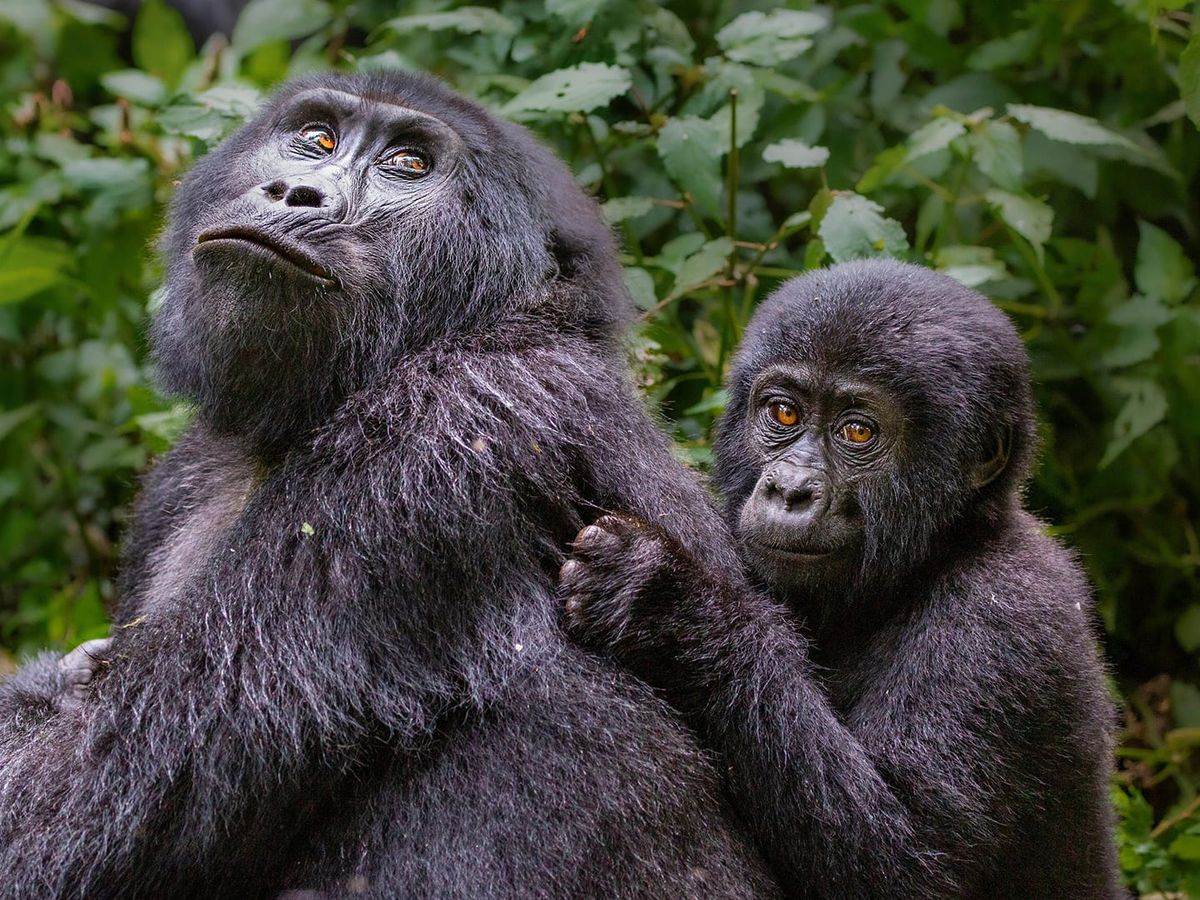
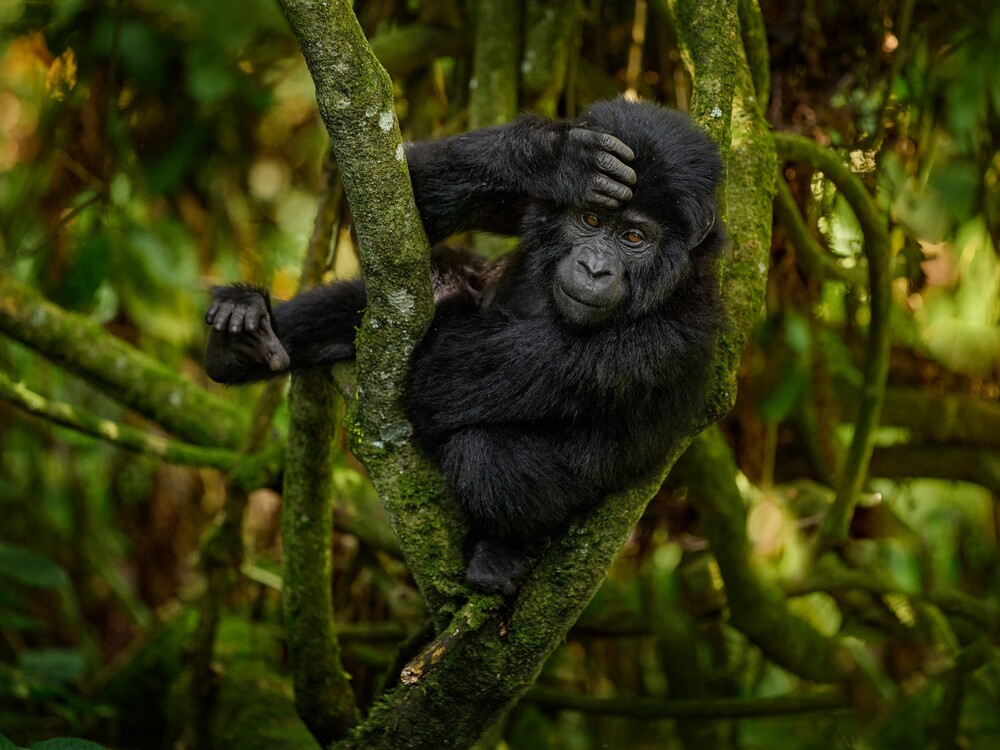
This health aspect becomes especially significant during Gorilla Habituation because you can remain in the vicinity of the family for considerably longer than during normal trekking. UWA’s management guidelines allow a maximum of four hours of viewing during Gorilla Habituation once the gorillas have been encountered.
Extended viewing is an extraordinary privilege, but it also increases the importance of disciplined visitor behaviour. You are not simply protecting yourself from a powerful wild animal; you are helping protect a vulnerable primate population from human influence.
Distance therefore represents respect for the biological relationship between people and gorillas. The closer our genetic relationship to other great apes, the more seriously disease transmission must be considered.
Why Distance Matters Even With a Calm Silverback
A mature silverback can appear extraordinarily peaceful. You may watch him sitting quietly, feeding on vegetation or resting while younger gorillas move around him. This calm behaviour sometimes causes visitors to forget just how powerful the animal is.
Habituation allows gorillas to become familiar with controlled human presence, but it does not remove their wild instincts. A silverback remains responsible for protecting his family and may respond to anything he perceives as unusual or threatening.
Respecting distance helps avoid creating unnecessary pressure. Visitors who remain where guides position them are far less intrusive than people constantly moving forward in search of closer photographs.
Your behaviour should remain calm even when the animal appears uninterested in you. The goal is for the gorillas to continue their normal activities without being forced to respond to tourists.
The most successful habituation encounter is therefore often one in which the family continues feeding, resting and interacting naturally while humans remain controlled observers.
Does a Gorilla Know You Are There at Ten Metres?
Yes. Maintaining the official viewing distance does not mean you are hidden from the gorillas.
A family undergoing habituation is specifically becoming accustomed to controlled human presence. The gorillas may see you, hear movement and recognise that people are nearby. Researchers and habituators carefully observe how individual gorillas respond to that presence over time.
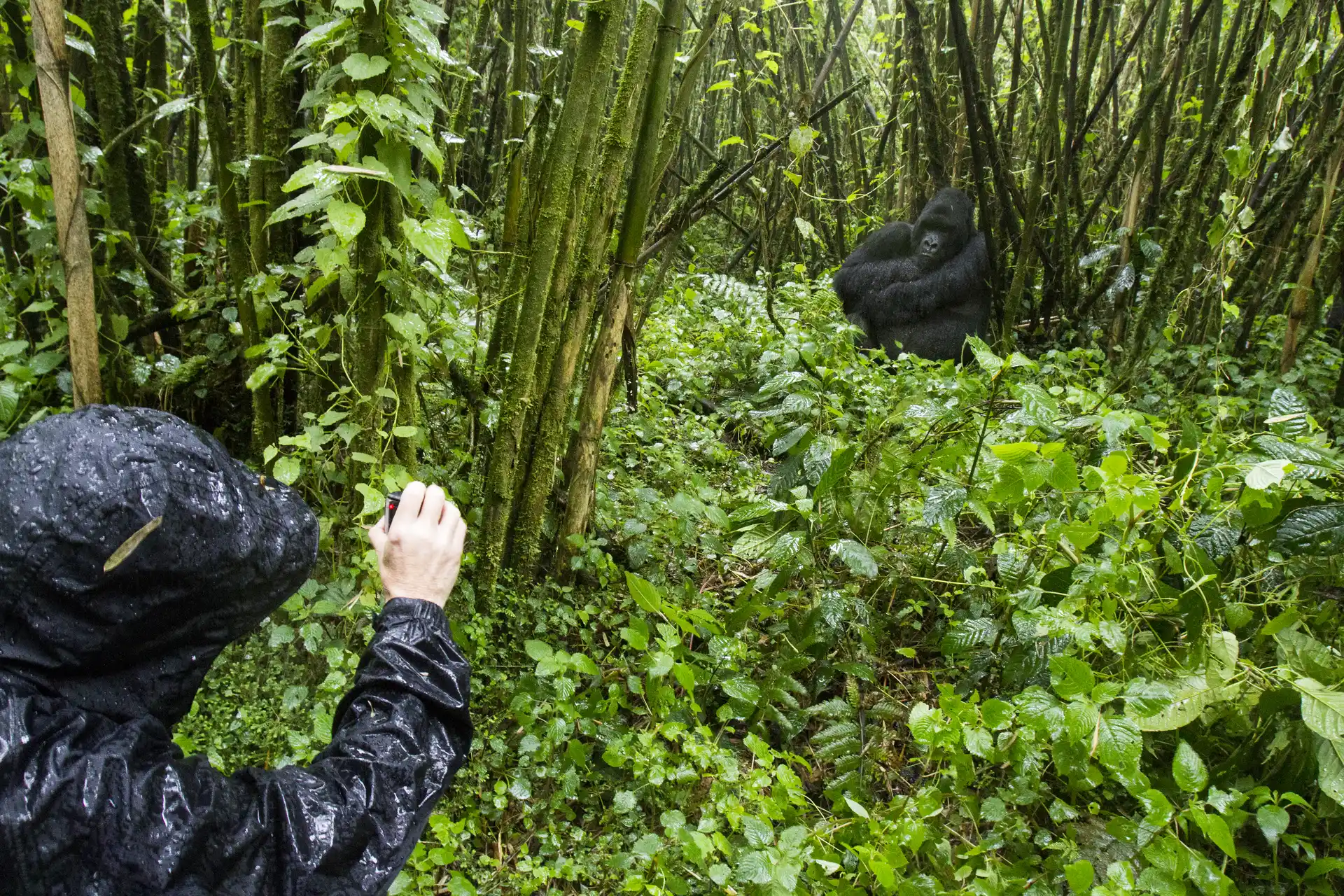
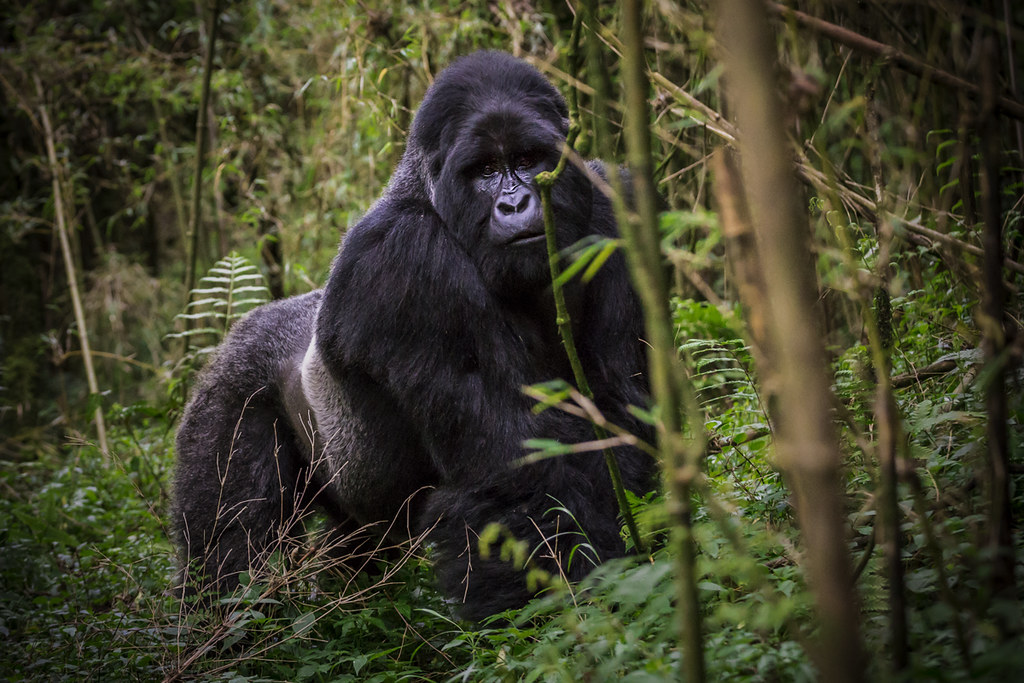
This awareness is what makes habituation such an interesting process. You are not secretly watching animals that do not know you exist. Instead, you are seeing how wild gorillas gradually learn that carefully managed observers are not an immediate threat.
Some gorillas may pay little visible attention to visitors. Others may look toward the group occasionally. Young animals may appear curious. Individual reactions can change as the habituation process develops.
Your responsibility is not to demand a reaction. You are there to observe whatever behaviour occurs naturally.
Can You Move Closer for a Better Photograph?
You should not intentionally reduce the official distance simply because a better photograph appears possible.
Photography must remain secondary to conservation management. Uganda Wildlife Authority expressly prohibits flash photography around gorillas. The same principle applies to positioning: the fact that you have expensive camera equipment or have travelled a long distance does not give you the right to move wherever you want.
Bwindi’s vegetation can be frustrating for photographers. A branch may cover the silverback’s face, an infant may disappear behind its mother or the light may be better from a position several metres ahead. During Gorilla Habituation, patience is usually more valuable than trying to force the situation.
You have up to four hours of viewing once the gorillas are reached, providing time for the animals to change position naturally. A poor angle during the first part of the encounter may improve later without you doing anything except waiting.
This is one of the greatest photographic advantages of habituation. Instead of trying to get physically closer, you have more time for a naturally better opportunity to appear.
How Close Will Gorillas Look Through a Camera?
A photograph can make a properly distanced gorilla appear extraordinarily close. Modern zoom lenses allow photographers to isolate a gorilla’s face, hands or upper body while remaining well outside touching distance.
This is why photographs on social media should not be used to estimate how close visitors are legally allowed to stand. Camera perspective can compress the apparent distance between photographer and subject.
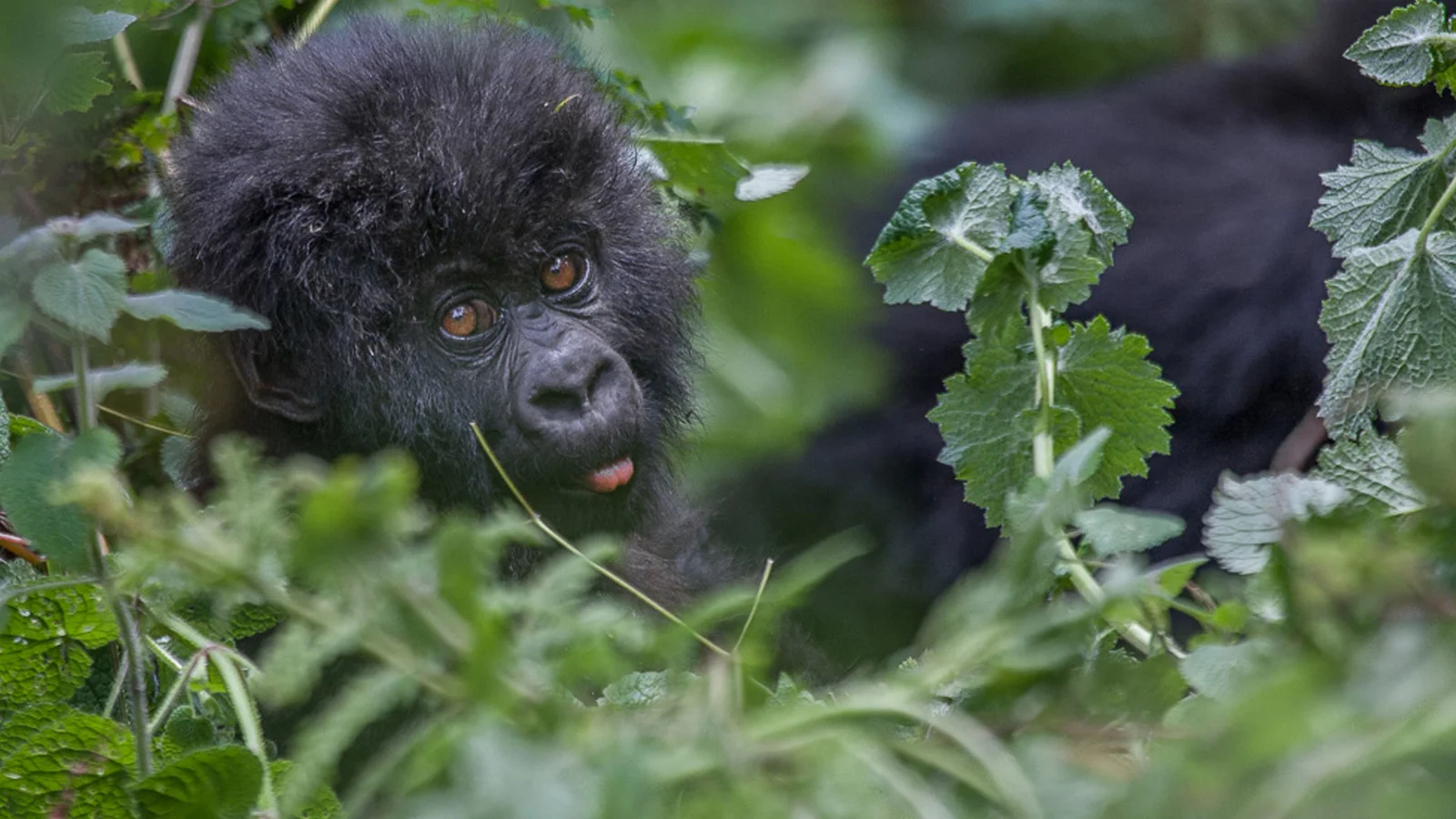
During Gorilla Habituation, a moderate telephoto or flexible zoom can be particularly useful because the viewing conditions change as the family moves. Sometimes a gorilla may remain at the normal viewing distance, while another may be farther away through vegetation.
The most important goal is not to fill the entire frame at all times. Wider photographs showing a gorilla within the dense green forest can sometimes communicate the character of Bwindi more effectively than an extremely tight portrait.
Photographers who accept the viewing rules and adapt their equipment accordingly generally enjoy the experience far more than those who spend the day wishing they could move closer.
Why Four Hours Makes Physical Distance Less Important
One of the most interesting aspects of Gorilla Habituation is that your perception of distance changes as the hours pass.
During the first encounter, you may be highly aware of exactly where the gorillas are in relation to you. You notice whether the silverback seems close and whether an infant is visible.
As you spend longer watching the family, physical distance becomes less important.
You begin paying attention to relationships, behaviour and movement. Instead of thinking primarily about how many metres separate you from a gorilla, you notice how a mother responds to her infant or how a juvenile follows another family member.
This shift is one of the reasons the extended experience can feel more intimate than an encounter in which tourists were physically closer for only a few minutes.
True wildlife intimacy is not created by reducing distance until an animal can be touched. It comes from having enough time to understand what you are watching.
How Guides Control Your Position Around the Gorillas
Your guides, trackers and habituators play a central role in maintaining appropriate positioning.
When you first approach the family, they identify an area where the visitor group can observe without unnecessarily disturbing the gorillas. Dense rainforest means this may not look like a neat viewing platform. You might stand on a slope, crouch behind vegetation or move carefully around trees as the professionals create suitable viewing opportunities.
If the family moves, the team decides how and when visitors follow.
You should never separate from the group in an attempt to obtain a private viewing angle. Doing so could place you in an inappropriate position relative to the gorillas and prevent the professionals from managing the encounter effectively.
This controlled movement is especially important during habituation because the family may be less accustomed to tourists than a fully habituated group used for routine trekking.
The professional team understands which individuals require more space and how the family has been responding to human observers.
What Happens if a Juvenile Gorilla Approaches You?
Young gorillas can sometimes appear curious, and a juvenile moving toward visitors may create one of the most exciting moments of the experience.
However, curiosity should not be encouraged through human interaction.
You should not extend your hand, attempt to stroke the animal or deliberately move closer. The fact that a young gorilla appears playful does not transform it into an animal that should interact physically with tourists.
Following the guide’s instructions allows the juvenile to make its own movement while preventing the encounter from becoming a form of human-gorilla play.
This is particularly important in habituation because researchers are trying to establish a predictable relationship between the family and controlled observers.
A gorilla learning that tourists provide physical interaction would be the opposite of the desired conservation outcome.
What if a Silverback Walks Toward You?
The sight of a silverback moving in your direction can be intimidating because of his size and obvious strength.
The appropriate response is not to run or make sudden independent decisions. Your professional guide will tell you how to behave.
Silverbacks move for many reasons, and movement in your direction does not automatically mean aggression. The animal may simply be following a route through the forest, repositioning within the family or accessing vegetation.
Remaining calm allows the professional team to manage the situation.
What matters is that you do not interpret the gorilla’s approach as permission to approach in return.
The silverback controls his own movement. You control yours by following the rules.
Can Gorillas Pass Very Close to You?
Yes, a free-ranging gorilla may occasionally pass closer than the normal viewing distance because the animal chooses to move through the area where visitors have been positioned.
These moments can feel extraordinary because there is suddenly very little physical separation between you and one of the world’s most impressive primates.
However, such proximity should be regarded as an unpredictable natural event rather than something promised by Gorilla Habituation.
No ethical safari company should sell the experience by guaranteeing that a gorilla will come within a few metres of you.
The official experience is built around controlled viewing, not guaranteed close approaches.
If a gorilla chooses to come closer, the correct response is calm observation under professional guidance.
Is Ten Metres Safer for Visitors?
The distance rule benefits both gorillas and visitors.
Although mountain gorillas are generally not hunting or viewing humans as prey, they are enormously powerful wild animals. Respectful space reduces the chance that tourist behaviour creates unnecessary tension.
Visitors can become unpredictable when excited. Someone may move suddenly, try to reposition for a photograph or accidentally block an animal’s route.
Maintaining an appropriate distance creates a buffer in which guides can better manage the group.
It also reminds visitors psychologically that they are observing wildlife rather than interacting with domesticated animals.
That mental boundary is extremely valuable.
Why the Distance Rule Makes Gorilla Habituation More Authentic
At first glance, some travellers assume that being allowed to touch or approach gorillas more closely would make the safari more authentic.
The opposite is true.
The authenticity of Gorilla Habituation comes from the fact that the gorillas remain wild.
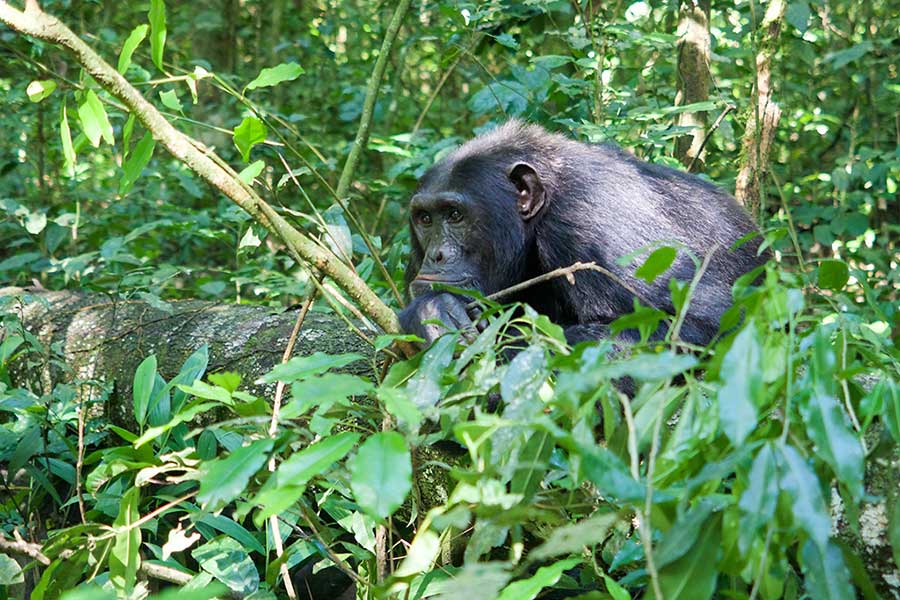
They have not been trained to pose, approach people for food or sit within touching distance.
You enter their natural habitat and accept the limits required to protect them.
The family continues deciding where to move and what to do.
That lack of human control is precisely what makes the experience different from seeing a gorilla in captivity.
Respecting distance preserves the distinction between wildlife tourism and animal entertainment.
Why Eating and Drinking Near Gorillas Is Restricted
Uganda Wildlife Authority’s gorilla rules state that smoking, eating and drinking are not permitted while visitors are with the gorillas.
This rule reinforces the controlled nature of close observation.
Food should never become part of the relationship between gorillas and visitors. Gorillas should not associate tourists with feeding opportunities or become interested in what visitors are carrying.
During the full Gorilla Habituation day, you may carry water and a packed meal because the experience can involve many hours in the forest, but your guides determine when and where it is appropriate to stop away from the gorillas.
The four-hour observation period does not give you permission to sit beside the family and have lunch.
Keeping food separate from the encounter helps preserve natural behaviour and reduces avoidable contamination or litter.
How Distance Affects Gorilla Photography
A respectful viewing distance can actually encourage better wildlife photography because it pushes you to think about composition rather than only proximity.
A portrait showing every wrinkle on a gorilla’s face can be powerful, but so can an image showing a silverback surrounded by the extraordinary vegetation of Bwindi.
Environmental photographs help explain where mountain gorillas live.
During habituation, the longer observation period allows you to alternate between detailed portraits and wider scenes as opportunities develop.
You may also have time to watch the animal before raising your camera, which can lead to stronger photographs because you understand the behaviour you are trying to capture.
The best photograph is rarely worth violating a conservation rule.
How Close Are Researchers and Habituators to the Gorillas?
Researchers and habituators are professionals working within established wildlife-management procedures, and their responsibilities should not be confused with the privileges of tourists.
Their work involves long-term monitoring, individual identification and understanding gorilla behaviour. They operate under institutional protocols connected to conservation rather than tourism photography.
Visitors participating in the Gorilla Habituation Experience accompany these professionals but do not acquire the same role or authority.
Seeing a professional take a position for conservation work should therefore never be interpreted as permission to copy that movement independently.
Your guide controls where you should stand.
Does Habituation Make Gorillas Less Wild?
No. Becoming accustomed to controlled human presence does not remove the gorillas‘ wild nature.
Uganda Wildlife Authority describes Gorilla Habituation as the process in which visitors accompany researchers and habituators for the purpose of habituating gorillas to human presence.
The gorillas continue feeding naturally, moving freely, building nests, raising young and maintaining their own social system.
No fence keeps them within a particular tourism area.
They may travel significant distances through the forest, which is why trackers have to locate them.
The fact that some gorillas become comfortable enough to pass near human observers should therefore be seen as the result of gradual familiarisation rather than domestication.
How the Rainforest Changes Your Sense of Proximity
Ten metres in Bwindi does not resemble ten metres in a car park.
The rainforest is layered with vegetation, uneven ground, trees and changing visibility.
At times you may see a gorilla completely. At other moments only the animal’s face or upper body is visible through foliage.
This environment makes the encounter feel dynamic.
A gorilla may disappear behind vegetation and reappear several metres away.
The visitor group may need to adjust position carefully as the family moves.
Instead of standing in one fixed viewing spot for four hours, you are often experiencing the changing relationship between the gorillas and the forest.
This environmental complexity contributes enormously to the sense of closeness.
Can You Sit Down Near the Gorillas?
Whether you stand, crouch or sit depends on the terrain, the gorillas‘ position and instructions from the professional team.
Some encounters may allow you to remain relatively still for extended periods if the family is resting or feeding in one area.
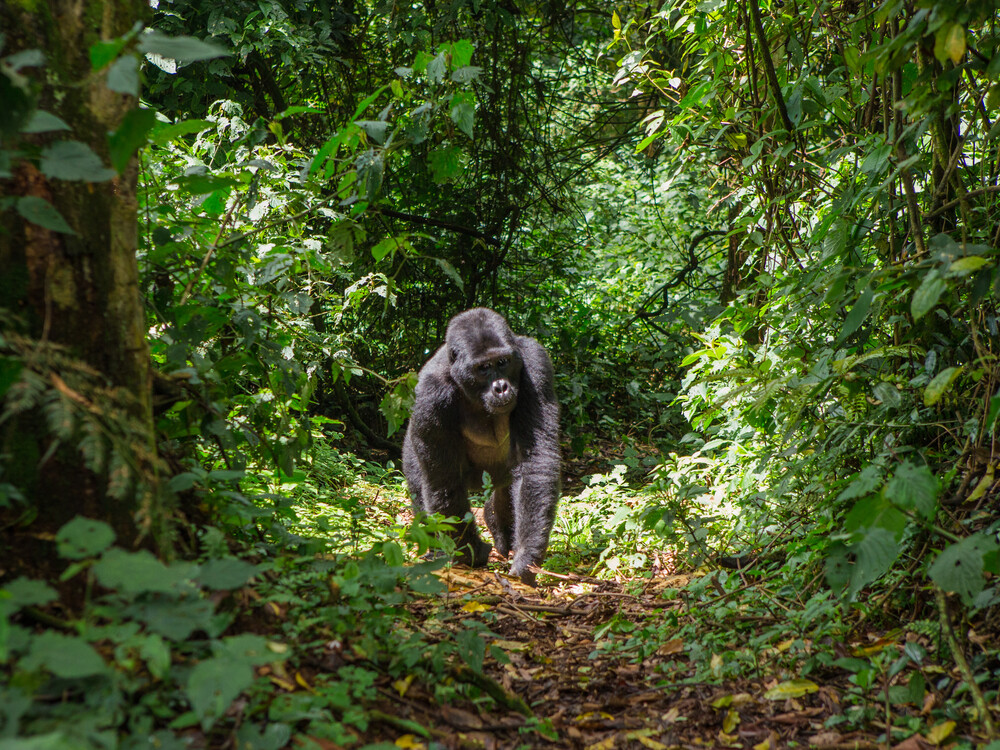
At other times, the gorillas may travel continuously and require the visitor group to move.
You should not decide to move into a closer position simply because sitting somewhere else appears more comfortable.
Your viewing position remains determined by conservation and safety considerations.
The unpredictability is part of what makes the experience genuine.
Does the Ten-Metre Rule Reduce the Value of Four Hours?
Not at all.
The value of four hours comes from observing behaviour over time rather than standing physically closer.
Uganda Wildlife Authority distinguishes tracking time from viewing time and allows a maximum of four hours of viewing during Gorilla Habituation once you reach the gorillas.
Four hours creates the opportunity to see the family in different situations.
The animals may feed, rest or travel. Young gorillas may become active after being quiet. Light conditions may change. Family members that were hidden may become visible.
This variety makes the experience immersive even when the viewing distance remains controlled.
Why Health Matters Before You Even Enter the Forest
The safest close encounter begins before you see the first gorilla.
Uganda Wildlife Authority instructs visitors not to visit gorillas when suffering from a cold or another infectious illness and sets the minimum age for gorilla tracking at 15 years.
These rules reflect the conservation sensitivity of bringing people into the habitat of endangered great apes.
A traveller may feel perfectly capable of hiking while experiencing a minor cold, but the issue is not simply whether the person feels physically strong enough.
The concern is potential exposure of the gorillas to human illness.
This is why responsible operators should prepare travellers for health restrictions before arriving in Bwindi rather than mentioning them only on the morning of the trek.
Do Face Masks Change How Close You Can Get?
Uganda Wildlife Authority has previously explained that masks were introduced as an additional safeguard for primate tracking and that strict distance guidelines are used to reduce close contact between humans and gorillas.
Protective measures should not be interpreted as substitutes for viewing distance.
Wearing a mask does not mean visitors can intentionally walk closer to a gorilla.
Disease prevention works through several layers of responsible behaviour, including health screening, distance and following the instructions of the professional team.
The precise operational procedures communicated during your briefing should always take priority because UWA may update field requirements.
Can You Take a Selfie With a Gorilla?
A properly managed gorilla experience is not designed around approaching an animal closely enough to create a conventional selfie.
Trying to position yourself beside a gorilla for a phone photograph would encourage exactly the type of unnecessary proximity the distance rule is intended to avoid.
You can certainly take photographs during the experience, provided you follow the rules and avoid flash, but the objective should be documenting wildlife rather than manufacturing physical closeness.
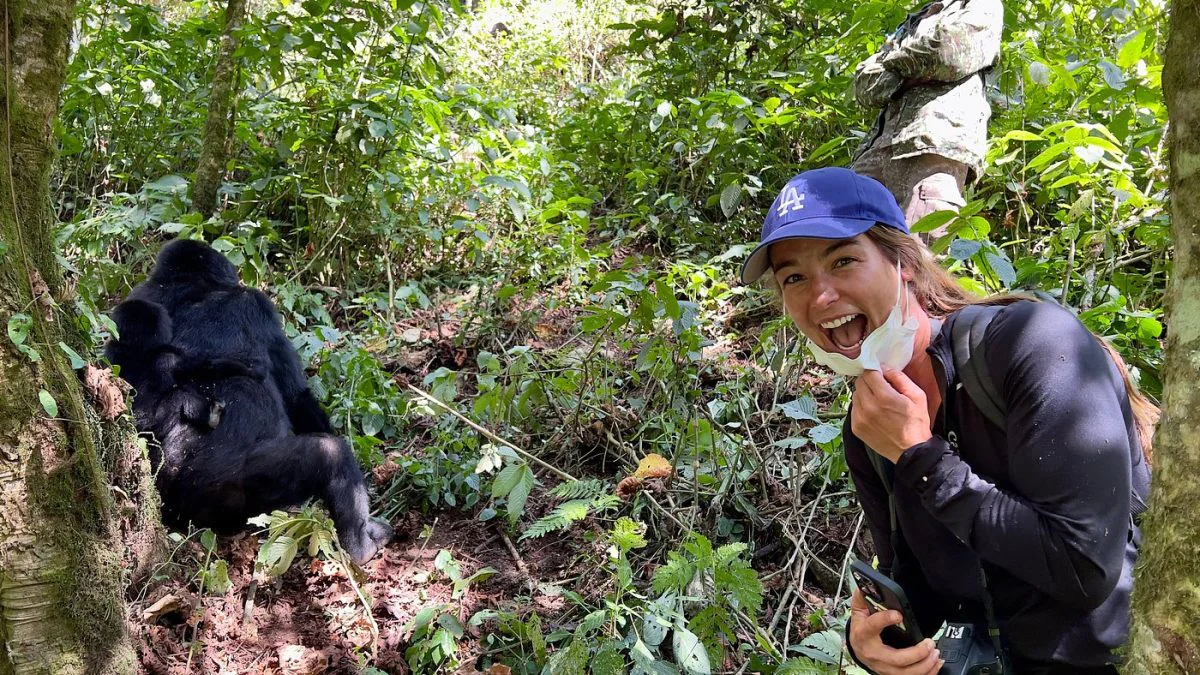
A photograph of you observing gorillas from the proper position can communicate the experience far more responsibly.
The Role of Patience During Close Gorilla Encounters
Patience is one of the most valuable qualities you can bring into Bwindi.
If a gorilla is hidden, wait.
If the silverback is facing away, continue observing.
If vegetation blocks your photograph, allow the situation to develop.
During a four-hour habituation encounter, there is often time for conditions to change without forcing them.
This patience helps protect the gorillas while also improving the quality of your experience.
Instead of spending the entire encounter searching for a closer position, you begin noticing natural behaviour.
Why a Close Encounter Should Never Be Guaranteed
When choosing a safari operator, be cautious of language suggesting that Gorilla Habituation guarantees extremely close physical contact with mountain gorillas.
Uganda Wildlife Authority publishes a clear 10-metre viewing guideline.
Wild gorillas may sometimes approach closer, but that is their decision and cannot ethically be promised in advance.
A responsible description of the experience should explain that you receive extended observation under professional supervision while respecting conservation rules.
The possibility of a naturally close approach adds excitement precisely because it is unpredictable.
How Close Can Children Get During Gorilla Habituation?
Gorilla tourism in Uganda has a minimum age requirement of 15 years under UWA’s published rules.
A younger child therefore cannot simply participate and remain farther away as a compromise.
The age restriction applies to the activity itself.
Families planning a Uganda safari should confirm participant ages before arranging permits and accommodation because gorilla activities often become the central anchor around which the entire itinerary is built.
Teenagers who meet the age requirement are still subject to the same distance and behavioural rules as adult visitors.
How Close Can You Get to a Mother With an Infant?
A mother carrying or caring for an infant can produce some of the most memorable observations of Gorilla Habituation, but the presence of a young gorilla is not a reason to move closer.
If anything, sensitive family situations reinforce the importance of allowing the professionals to determine appropriate positioning.
A mother should be free to feed, rest and move with her infant without feeling surrounded by people.
A good camera can capture intimate behaviour from an appropriate distance without requiring physical proximity.
The longer habituation viewing period also gives you time for the mother’s position to change naturally.
How Close Can You Get to a Silverback?
The same official distance principle applies when observing a silverback.
His enormous size can make even ten metres feel close.
You may be able to see his expressions, powerful shoulders and deliberate feeding movements clearly.
The temptation to move closer should be resisted regardless of how calm he appears.
The silverback’s acceptance of controlled observers is part of the habituation process, and respecting that relationship helps ensure tourism remains predictable rather than intrusive.
Does Vegetation Sometimes Make You Feel Farther Away?
Yes, and this is part of authentic rainforest wildlife observation.
Ten metres with a completely open view can feel extremely close. The same ten metres through thick foliage can feel more distant.
Guides and trackers often work carefully to position visitors where they can see without unnecessarily disturbing vegetation or the gorillas.
You should not expect every minute of your four-hour observation period to provide a perfectly clear view.
The gorillas live in a forest, and the vegetation is part of their habitat rather than an obstacle that should always be removed for tourists.
Why the Best Gorilla Experience Is Not About the Smallest Distance
The most meaningful gorilla encounter is rarely the one measured by how few metres separated you from an animal.
A traveller may have a gorilla unexpectedly pass nearby for thirty seconds, but another moment spent watching a mother care for her infant from the proper distance could become far more memorable.
Gorilla Habituation is valuable because it provides time.
You begin to understand behaviour, recognise individuals and observe the family within the environment that supports it.
Reducing the experience to physical proximity misses much of what makes it extraordinary.
How Gorilla Habituation Creates Emotional Closeness
During the first minutes, you are often overwhelmed simply by seeing a mountain gorilla.
After an hour, you begin settling into the experience.
As time continues, certain animals become familiar.
You may recognise the juvenile that repeatedly climbs through the vegetation or the female carrying an infant.
The silverback stops being simply “a silverback” and becomes an individual whose behaviour you have been watching for a significant part of the day.
This emotional familiarity can make the final part of the encounter feel much closer than the beginning, even though the physical viewing rules have not changed.
That is one of the most powerful qualities of Gorilla Habituation.
Is Gorilla Habituation Safe at This Distance?
Gorilla Habituation is conducted under Uganda Wildlife Authority management with professional guides, trackers, researchers and habituators involved in the forest experience. UWA’s permit guidelines describe Gorilla Habituation as accompanying researchers and habituators during the process of habituating gorillas to human presence.
Safety depends heavily on following their instructions.
A visitor who respects distance, behaves calmly and allows professionals to control the encounter is participating in a highly managed wildlife activity.
Trying to create independent contact would undermine that safety system.
The guides are therefore not merely there to help you locate the gorillas. They are responsible for helping manage the relationship between the visitor group and the animals.
Why Gorilla Habituation Still Feels Extraordinary From Ten Metres
Numbers do not fully communicate the experience.
Ten metres on paper may sound like a significant separation.
Ten metres inside a misty rainforest while a wild mountain gorilla looks toward you can feel astonishingly intimate.
You can hear the sounds of feeding. You can watch fingers manipulate vegetation. You can see changes in facial expression and the interactions between family members.
Then, because habituation provides much more time than a normal trek, you can remain long enough for the initial excitement to become deeper observation.
This combination of appropriate distance and extended time is what creates the experience.
Final Answer: How Close Can You Get to Gorillas During Gorilla Habituation?
How Close Can You Get to Gorillas During Gorilla Habituation? Uganda Wildlife Authority‘s published gorilla tracking rules instruct visitors to maintain a distance of 10 metres, approximately 32.8 feet, from gorillas. Gorilla Habituation does not remove this conservation principle or give you permission to deliberately approach mountain gorillas more closely because you have purchased a specialised permit.
The experience can nevertheless feel extraordinarily close. Mountain gorillas are large animals living within dense rainforest, and ten metres allows you to clearly observe their expressions, feeding behaviour, movement and interactions. During Gorilla Habituation, the maximum viewing period can extend to four hours after the gorillas are reached, providing much more time to understand individual animals and family behaviour.
A gorilla may occasionally choose to move closer than the normal viewing distance. Because the animals are wild and free-ranging, their movements cannot be controlled completely. If this occurs, you should remain calm, never attempt to touch the gorilla and follow the directions of the professional team. A gorilla voluntarily closing the gap is very different from a visitor deliberately approaching the animal.
The distance rule exists partly because mountain gorillas require protection from human health risks. Uganda Wildlife Authority instructs visitors not to track when suffering from a cold or other infectious illness and tells visitors to cover their face and turn away if they cough or sneeze near the gorillas. Flash photography, eating, drinking and smoking are also prohibited while visitors are with the animals.
The purpose of Gorilla Habituation is therefore not to create physical contact between humans and gorillas. It is to allow extended, carefully managed observation while selected gorilla families gradually become accustomed to predictable human presence.
For travellers, the most important mindset is to stop judging the quality of the experience according to how physically close they can stand. The true value comes from remaining with the family long enough to observe natural behaviour, recognise individual gorillas and understand how researchers and habituators manage the relationship between wildlife conservation and tourism.
You may occasionally experience a remarkably close natural moment when a gorilla walks past or changes position near you, but such encounters should remain entirely on the gorilla’s terms. You should never chase closeness, request that guides place you closer or treat a photograph as more important than the welfare of the animals.
A respectful ten-metre viewing distance can still produce one of the closest-feeling wildlife encounters of your life. The forest surrounds you, the gorillas remain clearly visible, and several hours of observation gradually replace the need for physical proximity with something far more meaningful: the feeling that, for a short part of the day, you have been allowed to quietly observe the natural life of a wild mountain gorilla family.