

Why Does Gorilla Habituation Take Place in Bwindi Impenetrable National Park?
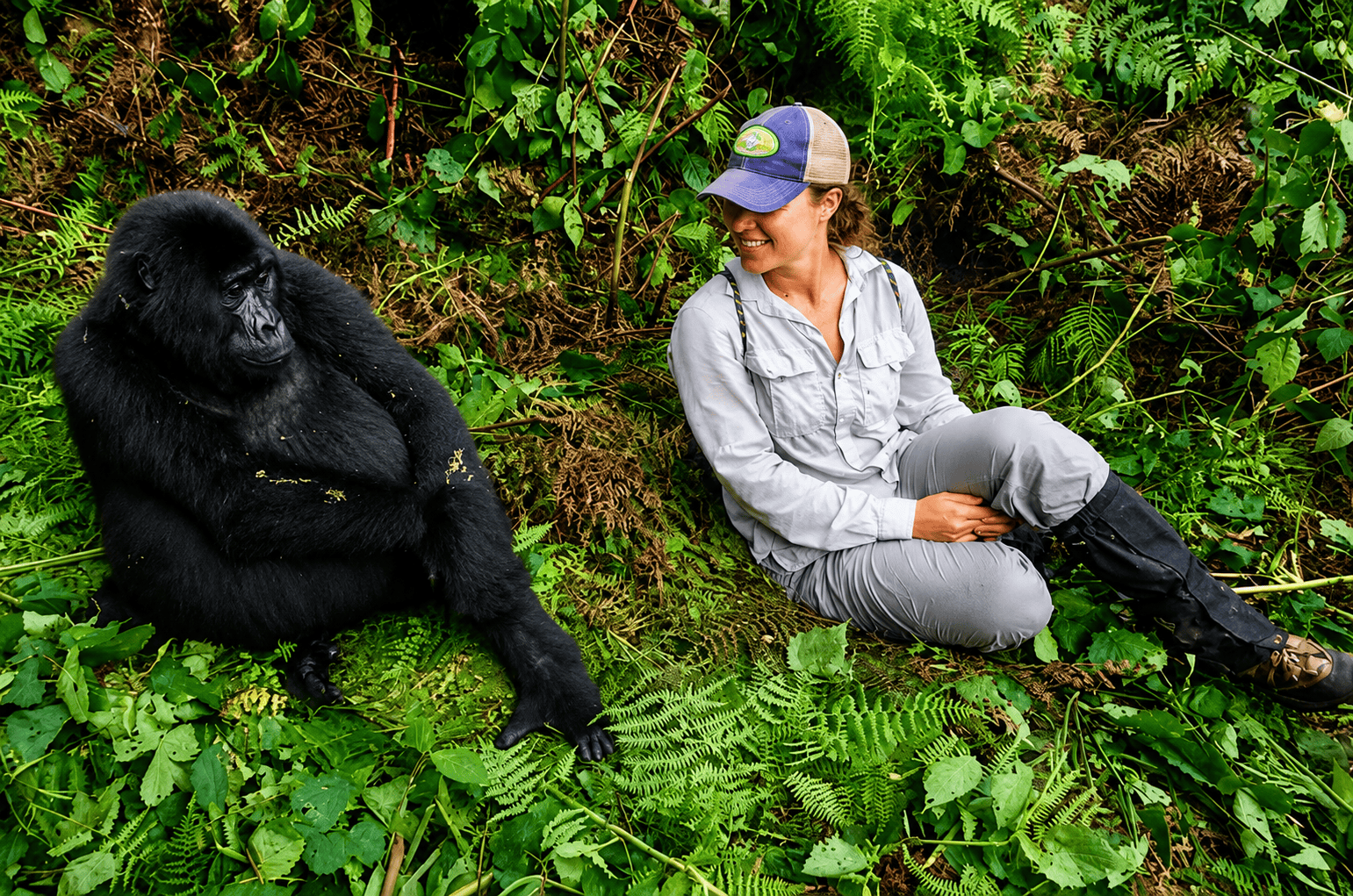

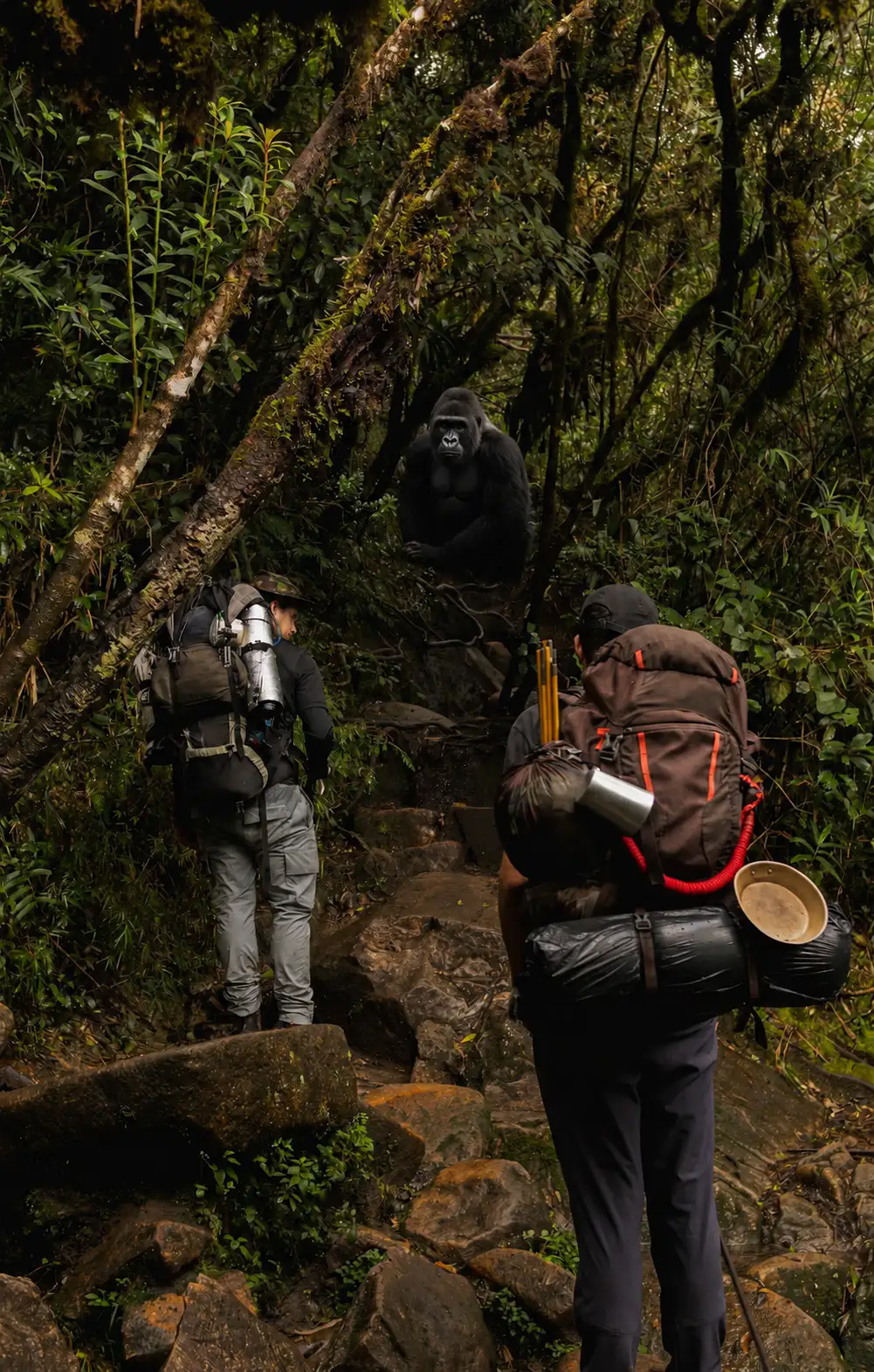
Gorilla Habituation in Bwindi takes place because Bwindi Impenetrable National Park combines a large population of wild mountain gorillas with protected rainforest habitat, experienced conservation teams, long-term research programmes and an established system for carefully managed gorilla tourism. The park has supported mountain gorilla conservation for decades, giving researchers, trackers and Uganda Wildlife Authority staff the knowledge and infrastructure needed to gradually familiarise selected gorilla families with controlled human presence while allowing them to remain completely wild. Gorilla Habituation in Bwindi is therefore not simply a tourism activity; it is part of a wider conservation process that supports scientific monitoring, responsible visitor access, community benefits and the long-term protection of mountain gorillas and their forest habitat.
Bwindi is especially suited to this work because conservation here extends far beyond allowing tourists to see gorillas. The park has been protected for decades, supports long-term scientific monitoring and has an established system through which researchers, trackers, rangers, veterinary partners, local communities and tourism managers contribute to protecting mountain gorillas and their habitat. Uganda Wildlife Authority reported in September 2026 that Bwindi’s last completed gorilla census recorded 459 mountain gorillas in 2018, compared with approximately 300 during the first census in 1992. Results from the newer 2025–2026 genetic analysis were still pending at that time, showing that monitoring remains an active and continuing process rather than a historical exercise.
The Gorilla Habituation Experience therefore takes place in a forest where both the animals and the conservation systems needed to protect them already exist. Bwindi provides suitable habitat, experienced field teams, research history, community partnerships and carefully controlled visitor infrastructure. These factors make it possible to gradually familiarise selected gorilla families with human observers while keeping the animals wild and allowing tourism to contribute to conservation rather than replacing it.
Bwindi Is One of Uganda’s Main Mountain Gorilla Strongholds
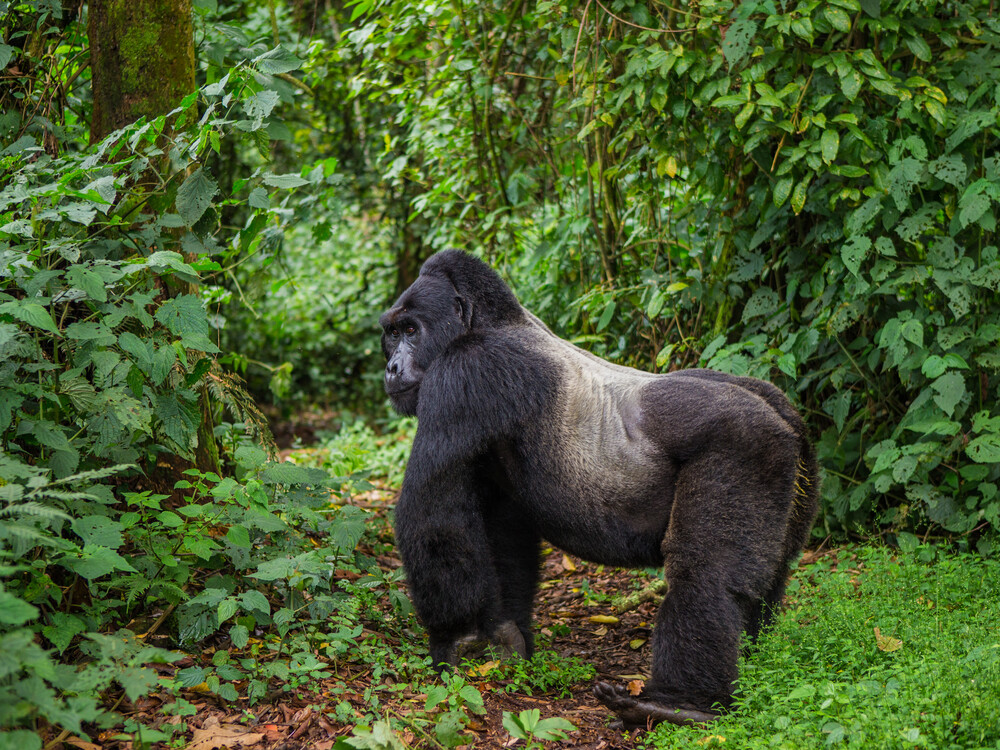
The most fundamental reason Gorilla Habituation is done in Bwindi is simple: this is one of the most important natural habitats for mountain gorillas anywhere in the world. Mountain gorillas in Uganda occur in Bwindi Impenetrable National Park and Mgahinga Gorilla National Park, according to Uganda Wildlife Authority. Bwindi, however, contains a particularly significant population distributed across a much larger forest landscape.
Uganda Wildlife Authority‘s September 2026 conservation update stated that 459 mountain gorillas were recorded in Bwindi during the 2018 census. That figure remains the most recent completed population benchmark while genetic analysis from the 2025–2026 census work continues. The presence of such a substantial gorilla population creates the biological foundation for long-term monitoring, research, carefully regulated tourism and, where conservation managers determine it appropriate, habituation.
The existence of many gorillas does not mean that every family is habituated or available for tourists. That would contradict the purpose of conservation. Some animals remain entirely outside tourism, while particular families may be designated for different forms of monitoring or controlled visitor access. Gorilla Habituation allows selected families to gradually become familiar with predictable human observers without requiring the entire population to be exposed to tourism.
This balance is important because Bwindi’s role is not simply to maximise the number of gorillas tourists can see. The broader goal is to maintain a viable wild population while using carefully managed tourism to generate support for conservation. Habituation therefore happens selectively within a much larger population and protected forest system.
Bwindi Has a Long History of Gorilla Habituation
Another major reason Bwindi is suitable for Gorilla Habituation is its long institutional experience with the process. Uganda Wildlife Authority‘s historical Bwindi material records that the Mubare gorilla group in Buhoma was the first Bwindi family habituated for tourism, with the process leading to tourism access in 1993.
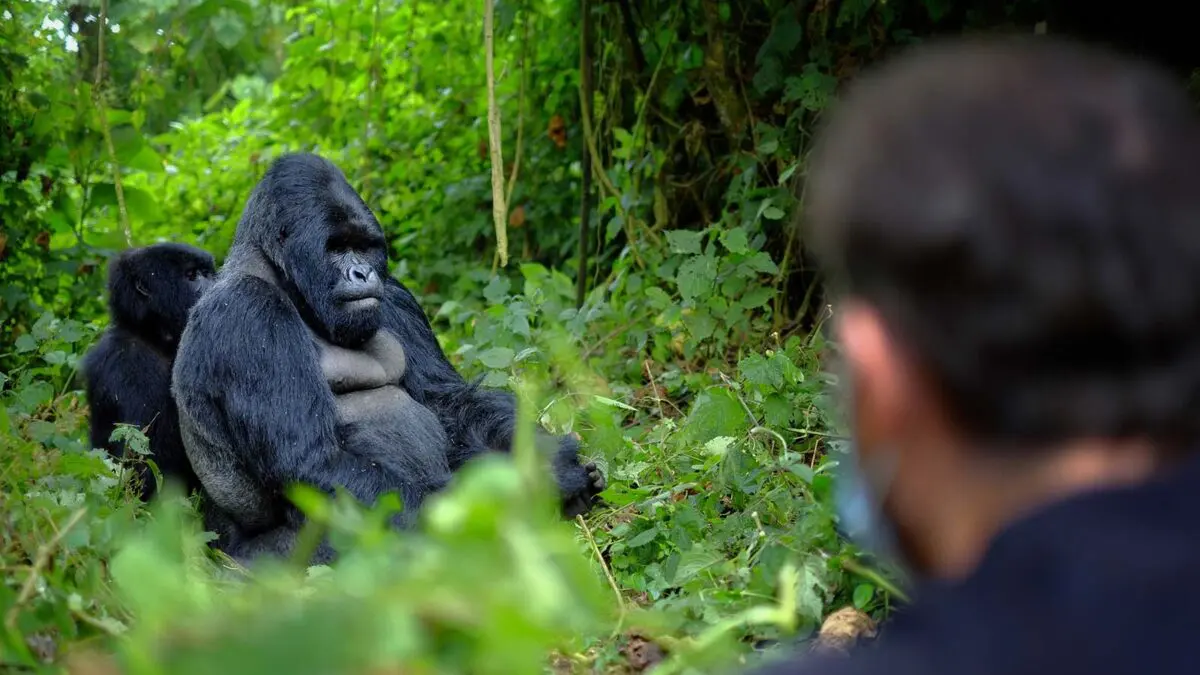
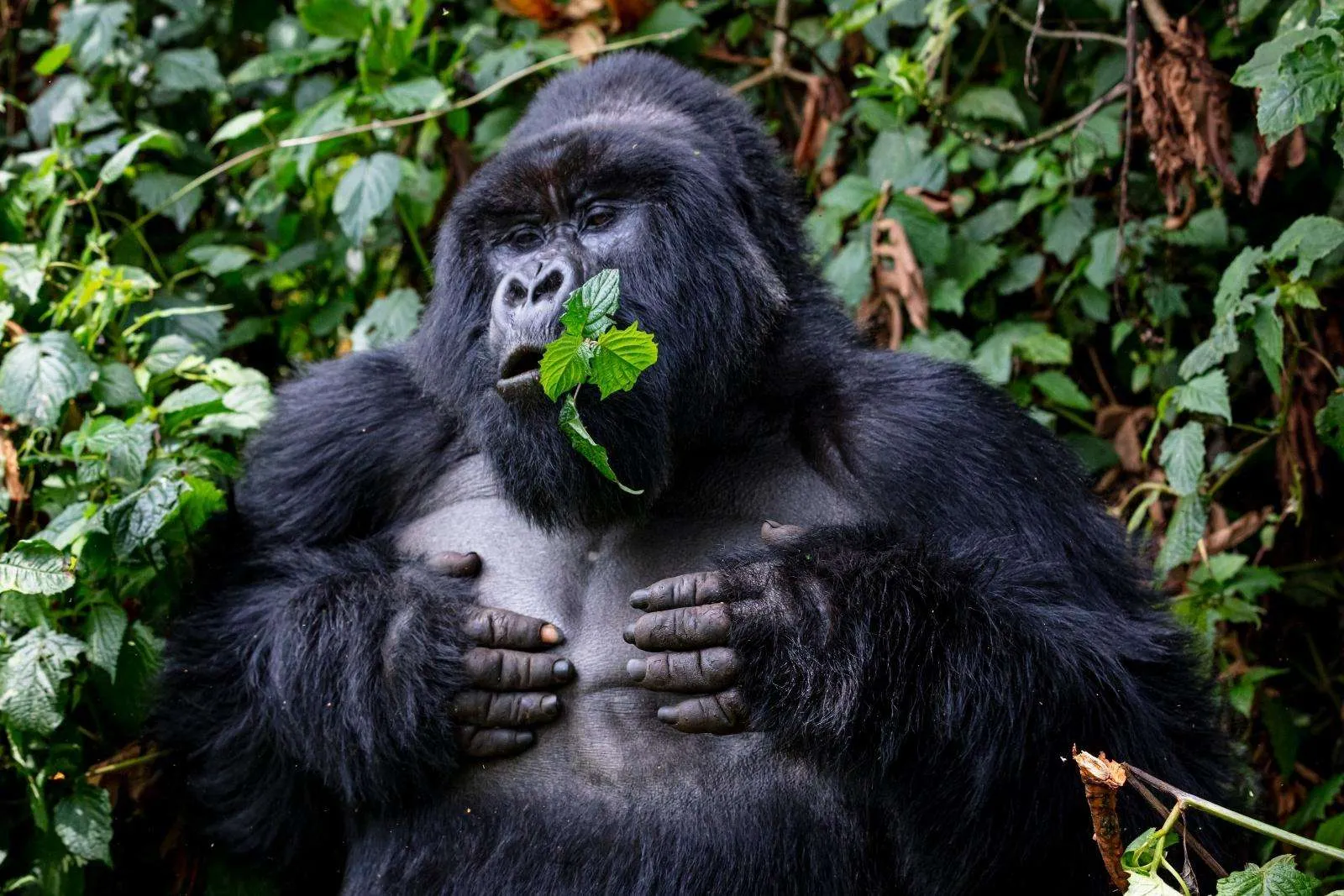
This history matters because gorilla habituation requires far more expertise than simply locating gorillas and standing near them. Researchers and field teams need to understand individual animals, family composition, behaviour, movement patterns and responses to human presence. Progress has to be gradual because forcing wild gorillas into close human contact would create unnecessary stress and could undermine the conservation objective.
Decades of field experience in Bwindi have allowed Uganda’s conservation teams and partners to develop practical knowledge about how gorilla families can be monitored and how tourism can eventually be introduced under controlled circumstances. The experience gained since the early 1990s provides a strong foundation for today’s Gorilla Habituation Experience.
This long history also explains why Bwindi has become one of the best-known gorilla destinations internationally. Tourism did not appear overnight. It developed alongside research, conservation, law enforcement and gradual habituation of selected families.
The Gorilla Habituation Experience available today is therefore connected to more than three decades of learning about how humans can observe mountain gorillas without turning them into domesticated animals.
Bwindi Provides the Natural Forest Habitat Gorillas Need
Gorilla Habituation has to occur where the gorillas actually live because the process is about familiarising wild animals with controlled human presence within their natural environment. Bwindi provides exactly that setting.
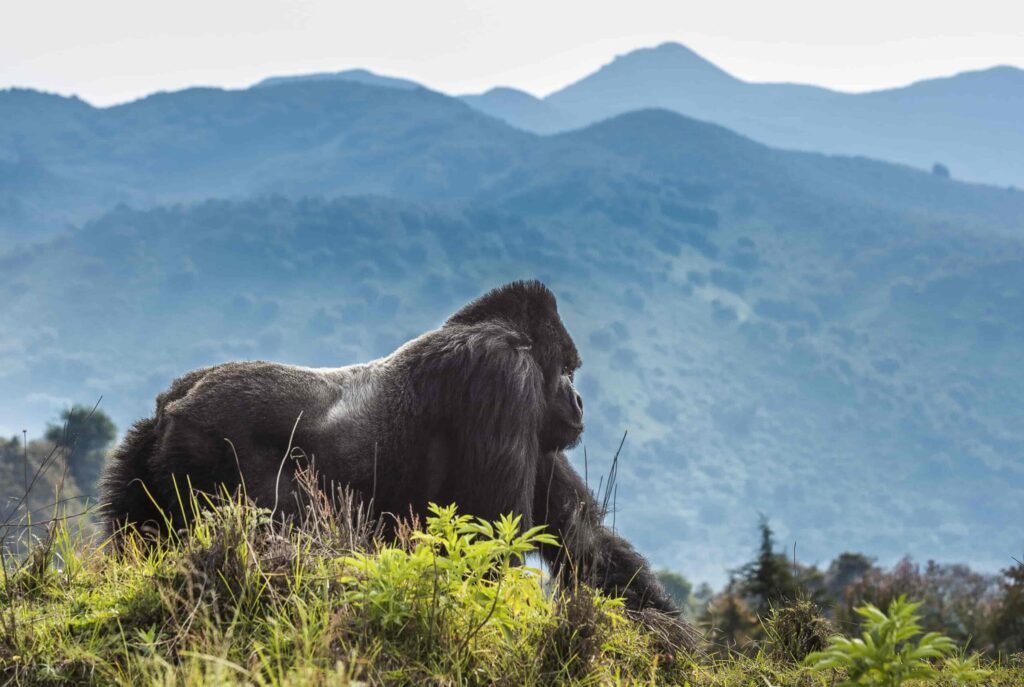
Uganda Wildlife Authority describes the park as covering approximately 321 square kilometres with elevations ranging from about 1,160 to 2,607 metres above sea level. The landscape is composed of steep hills, narrow valleys and dense vegetation that supports mountain gorillas and many other species.
UNESCO describes Bwindi as lying at the meeting point between lowland and montane forests and identifies it as an exceptionally important biodiversity area. The World Heritage property covers approximately 32,092 hectares and contains extraordinarily diverse plant and animal communities.
For gorillas, this forest provides natural food resources, nesting locations, movement corridors and the environmental conditions necessary for family groups to live independently of human support.
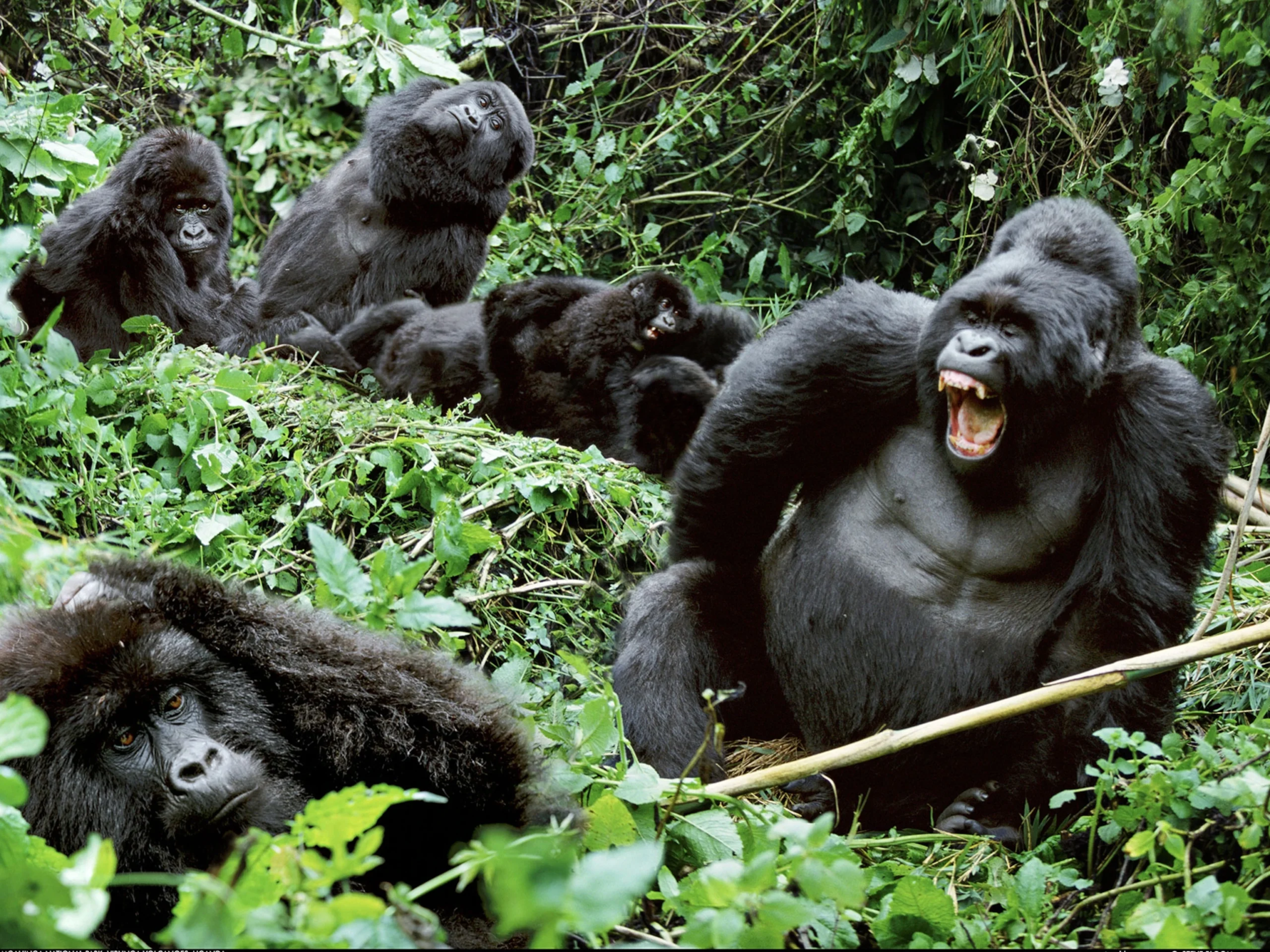
Habituation therefore takes place while gorillas continue feeding naturally, selecting their own resting areas and travelling according to their normal behaviour. Researchers do not bring the animals to a permanent tourism platform. Instead, field teams follow the gorillas through the forest.
This is one of the most important reasons the experience feels authentic. You are participating in conservation within genuine mountain gorilla habitat rather than observing animals whose daily movements have been arranged around visitors.
The Forest Allows Gorillas to Remain Completely Wild
The term habituation is sometimes misunderstood. It can sound as though gorillas are being trained to interact with people, but that is not what happens.
Habituation is the gradual process through which wild gorillas become familiar with predictable, non-threatening human observers. The gorillas are not domesticated, fed to encourage tourism or trained to perform certain behaviours.

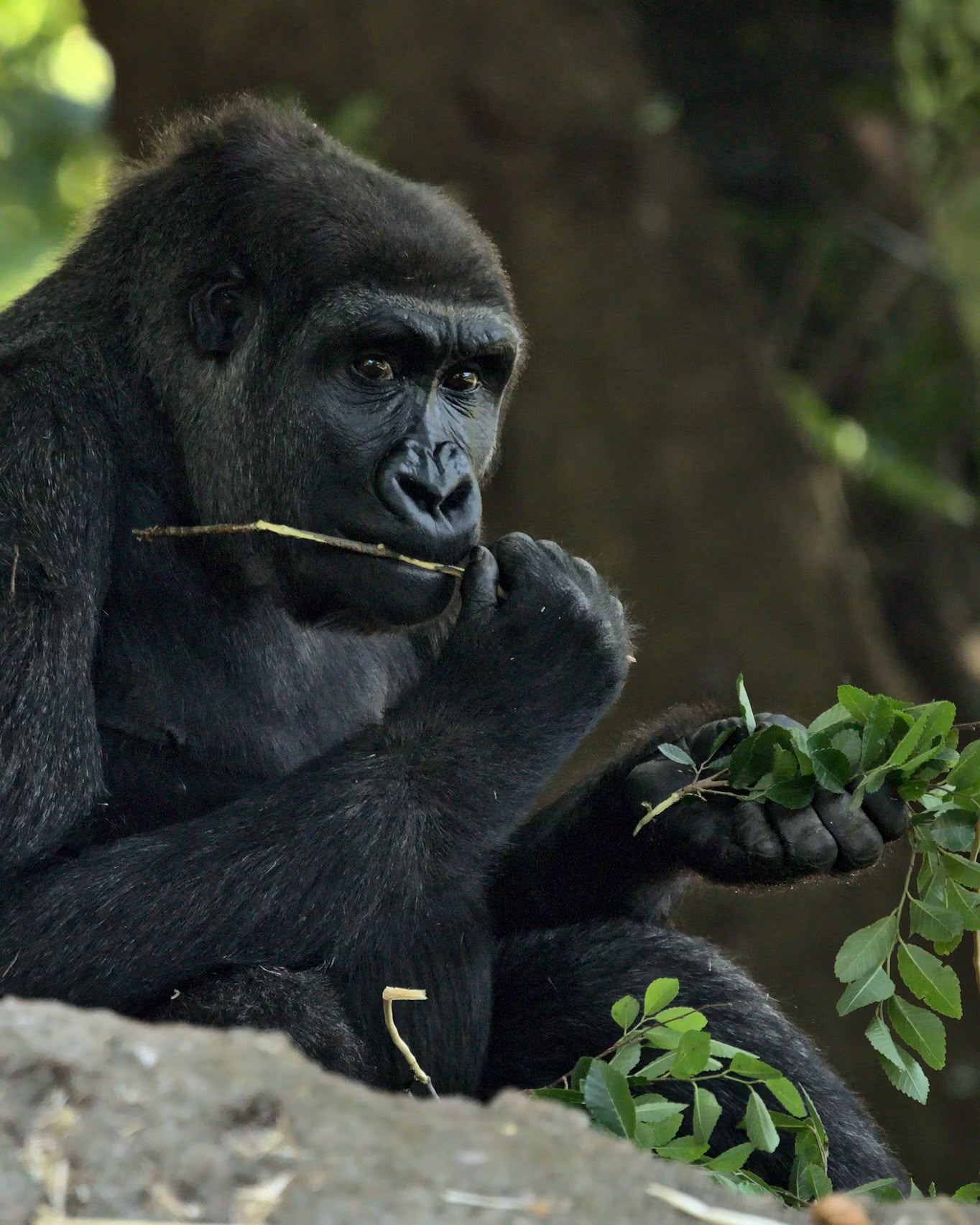
Bwindi’s protected forest makes this possible because the animals can continue living naturally while researchers gradually introduce controlled human presence.
A gorilla family may move several kilometres through the forest according to food availability and its own social behaviour. Researchers and habituators follow the gorillas rather than controlling where they go.
This is why a visitor participating in Gorilla Habituation may have a very different trek from somebody visiting the same area on another day. The gorillas decide where they are located. The forest, weather, terrain and the family’s movements determine the route.
Bwindi therefore provides something essential to authentic habituation: enough protected habitat for gorillas to remain free-ranging throughout the process.
Bwindi Has an Established Research Culture
Scientific research is another major reason Bwindi has become such an important location for Gorilla Habituation.
Uganda Wildlife Authority‘s 2025 census announcement described the Institute of Tropical Forest Conservation in Ruhija as a long-established hub for ecological research and primate monitoring. The sixth Bwindi–Sarambwe mountain gorilla census involved UWA and numerous conservation partners, including the Greater Virunga Transboundary Collaboration, International Gorilla Conservation Programme, Gorilla Doctors and other scientific organisations.
This research environment is crucial because habituation is not simply a tourism process. Scientists need to understand gorilla numbers, family composition, health, genetics, movement and behaviour.
The more accurately conservation managers understand the population, the better they can determine which families should remain unhabituated, which can support routine tourism and which may be appropriate for a controlled habituation process.
Bwindi’s research infrastructure therefore allows tourism decisions to be linked with scientific monitoring rather than being made only according to visitor demand.
This is a major strength of the park.
Gorilla Habituation Supports Long-Term Monitoring
One important benefit of gradually familiarising selected gorilla families with controlled human presence is that researchers can monitor individual animals more effectively.
Recognising particular gorillas helps conservation professionals understand births, deaths, injuries, family changes and social relationships. Over time, this creates valuable records that can contribute to understanding population trends.
Uganda Wildlife Authority has repeatedly used systematic censuses to evaluate Bwindi’s mountain gorilla population. The number recorded increased from approximately 300 animals in 1992 to 459 in the 2018 census.
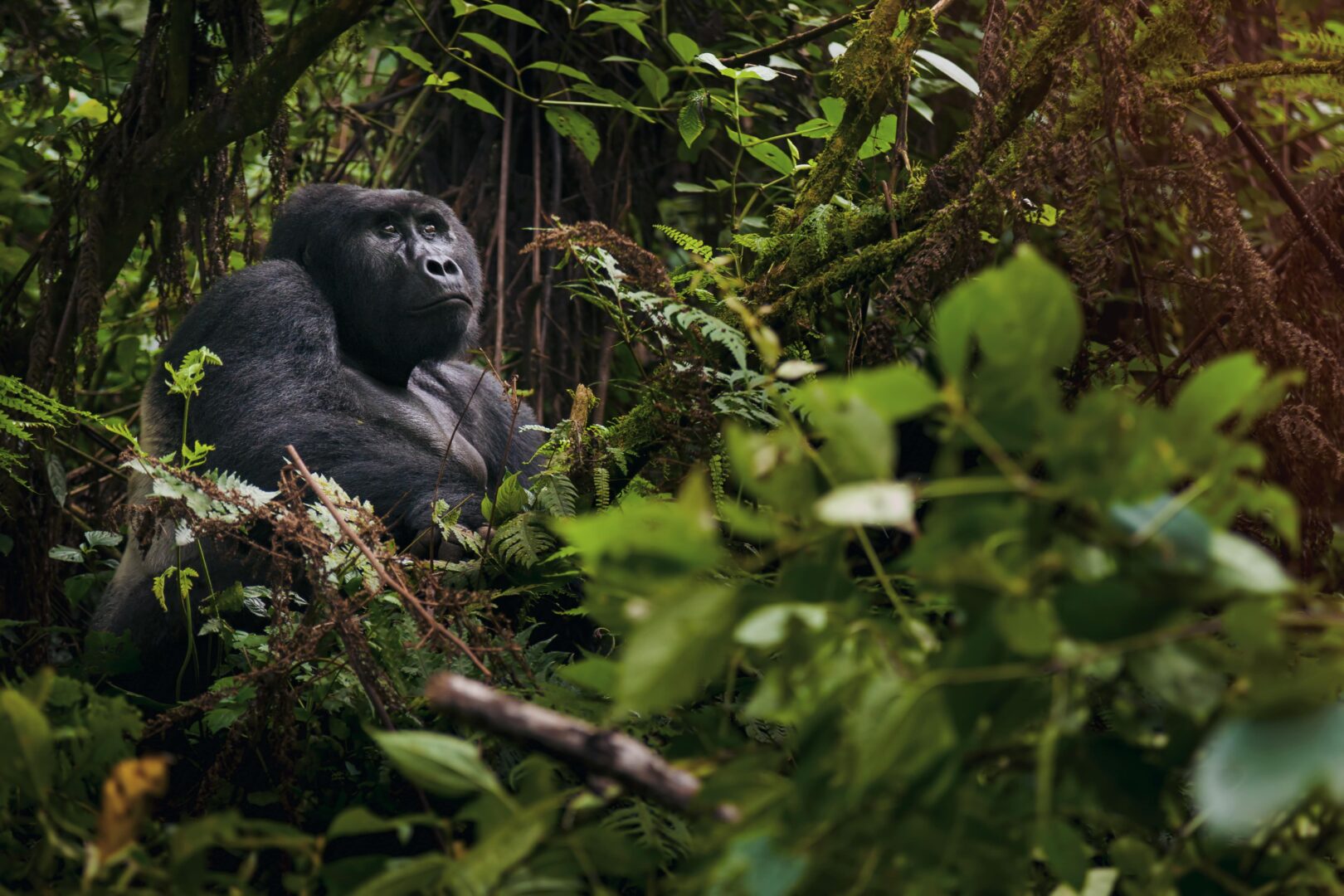
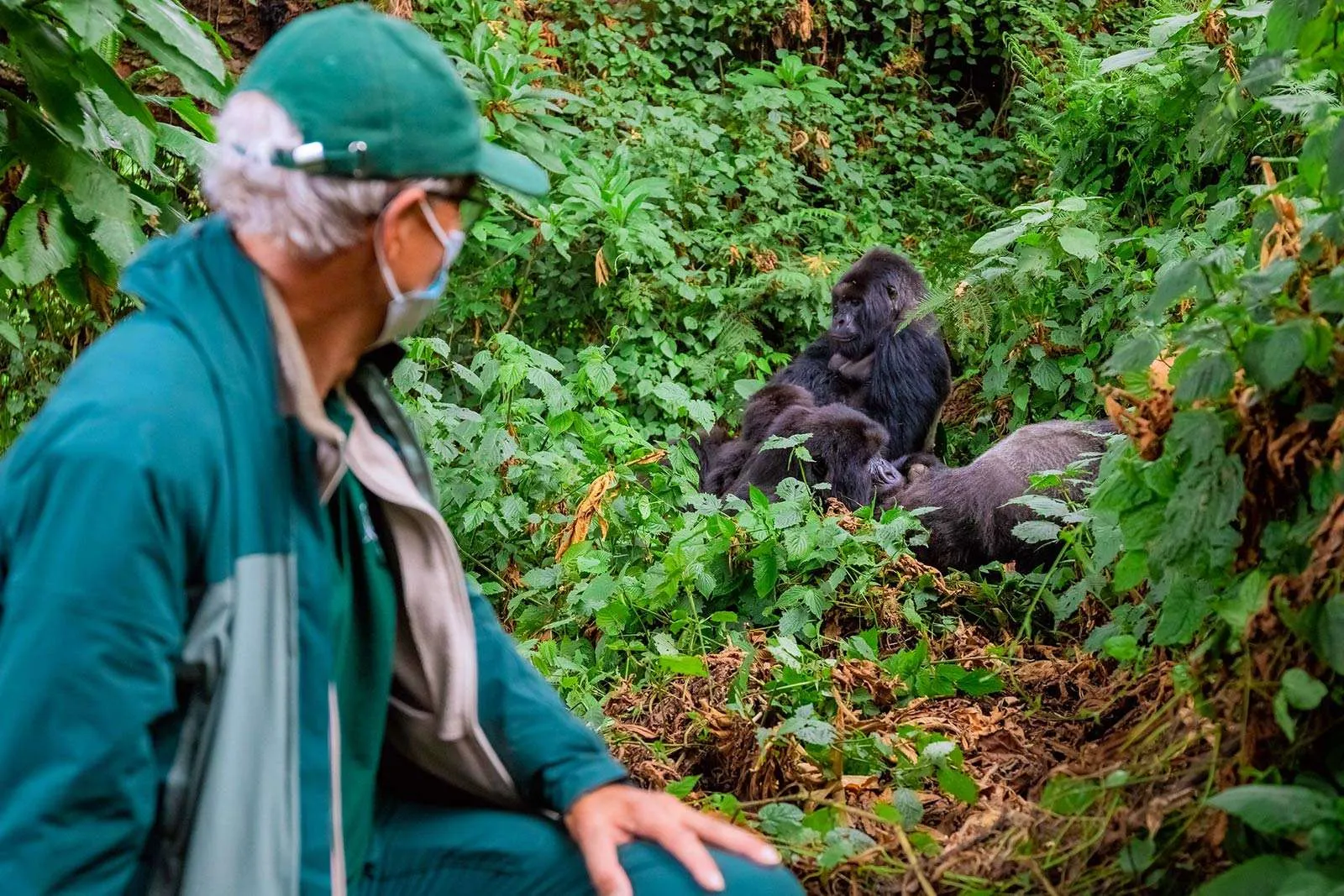
A new census was carried out in 2025–2026, using genetic analysis to improve population understanding, with final gorilla results still awaited as of September 2026.
The continuity of this work demonstrates why Bwindi is a logical location for a specialised experience linked to research. The forest already supports extensive scientific monitoring, so habituation exists within a conservation system that collects and evaluates information over decades.
Bwindi Has Proven That Conservation and Tourism Can Work Together
Gorilla Habituation is done in Bwindi partly because the park has a long history of integrating carefully controlled tourism with wildlife protection.
Tourism generates money that helps protected areas operate, but tourism can also create pressure if visitor numbers, viewing time and human behaviour are not controlled.
Bwindi has developed a high-value, tightly regulated model in which gorilla permits provide access to limited numbers of visitors rather than opening the forest to unrestricted crowds.
The Gorilla Habituation Experience follows the same principle. Visitors receive substantially more time with a selected gorilla family than during standard trekking, but access is deliberately limited and professionally managed.
The objective is to generate meaningful conservation value without allowing the tourism experience to overwhelm the animals.
Bwindi’s history has demonstrated that mountain gorillas can become a powerful economic reason for preserving an intact forest while still remaining wild.
The Park Has Clearly Defined Gorilla Tourism Sectors
Bwindi is also suited to Gorilla Habituation because its tourism system has been organised into established sectors and designated entry points.
Uganda Wildlife Authority identifies Buhoma, Ruhija, Nkuringo and Rushaga as designated gorilla entry points within Bwindi, while Ntebeko/Muhavura serves Mgahinga. UWA explains that permits are booked according to dates and designated entry points, after which visitors are allocated to particular gorilla families according to approved procedures.
This structure allows tourism activity to be managed geographically rather than concentrating all visitors in one part of the forest.
It also gives conservation teams greater control over which families receive visitors and how tourism pressure is distributed.
For Gorilla Habituation, current tourism operations are particularly associated with Rushaga in southern Bwindi.
The wider sector system means that habituation exists inside an already organised framework of ranger posts, guides, trackers, permit management and tourism logistics.
Without that infrastructure, bringing visitors into an active habituation process would be much more difficult to manage responsibly.
Why Rushaga Has Become Important for Gorilla Habituation
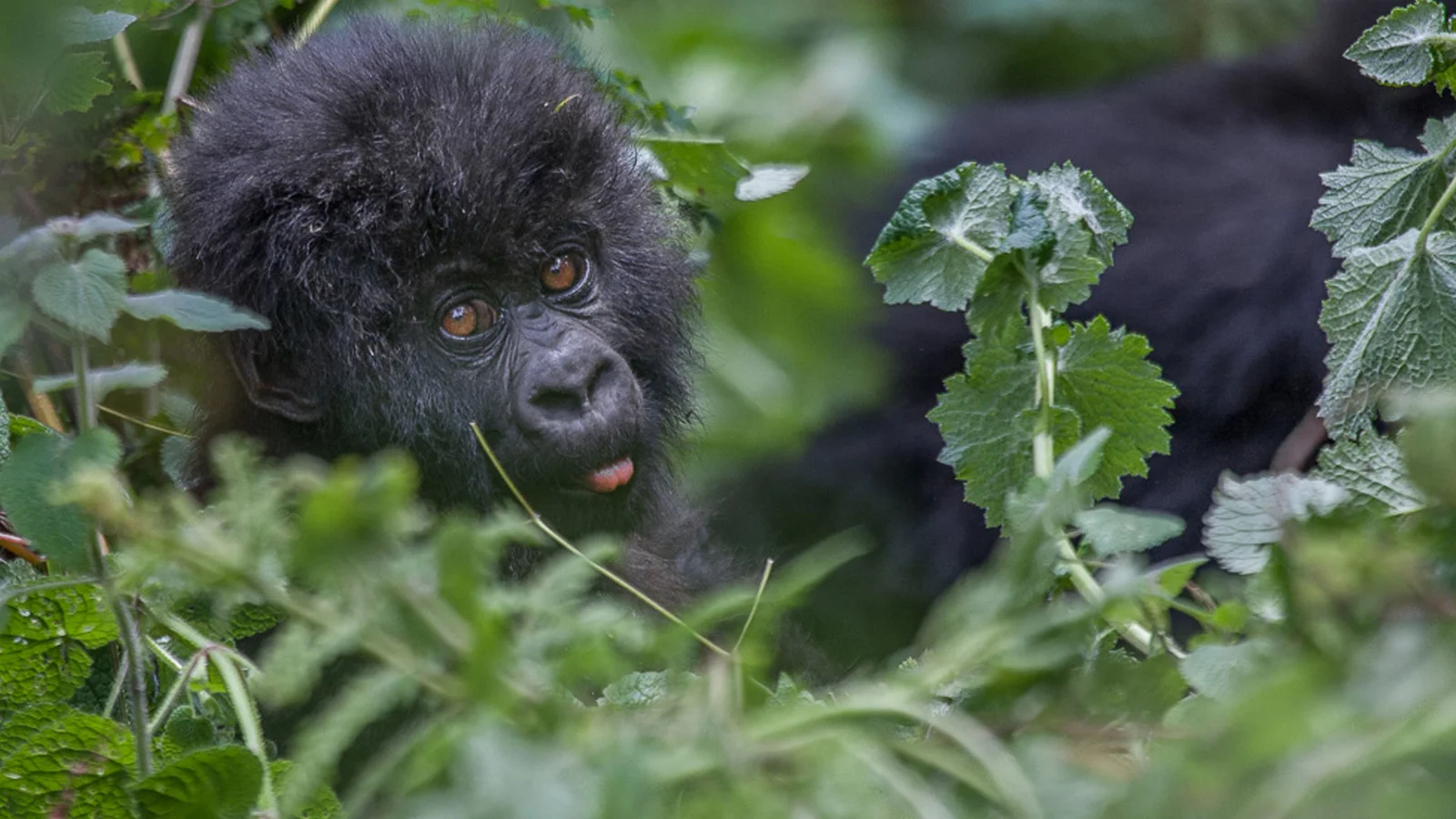
Although Bwindi as a whole provides the conservation foundation, Rushaga in southern Bwindi has become particularly associated with the visitor Gorilla Habituation Experience.
Rushaga has extensive gorilla habitat and is already a major centre for conventional gorilla trekking. This means ranger operations, accommodation, transport access and guiding infrastructure are well established around the sector.
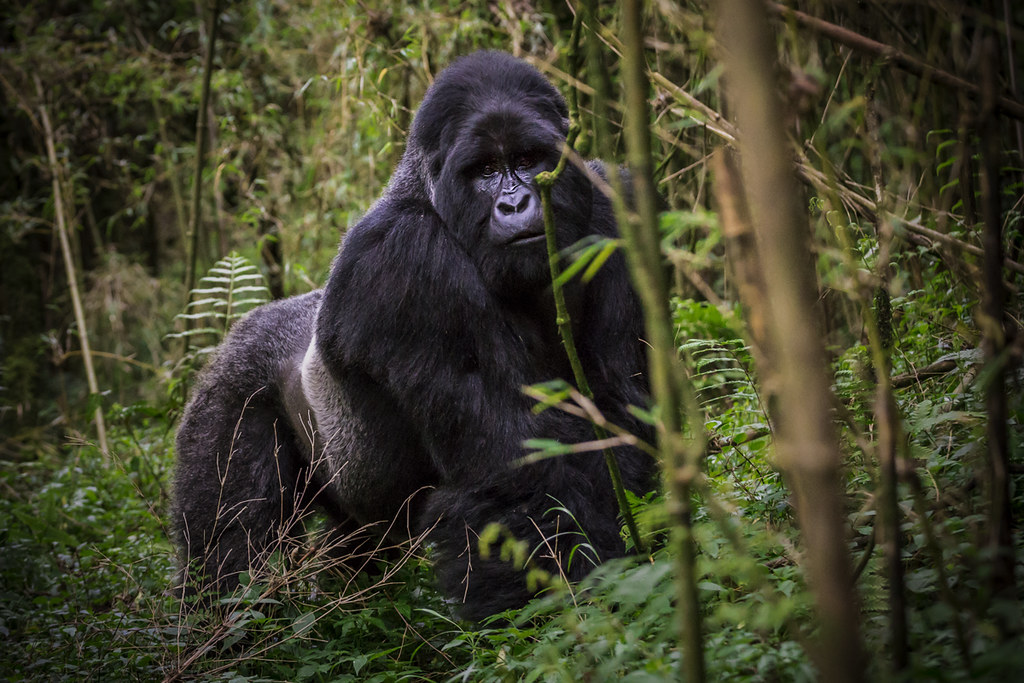
The presence of these systems makes it possible to manage a specialised activity requiring very early starts, extended forest time and particularly small visitor groups.
The important point is that Rushaga did not become a habituation destination simply because tourism businesses wanted another product to sell. Gorilla family status changes over time, and UWA manages permits according to conservation and operational requirements.
The specific family visited during habituation can therefore change as families complete the process or management priorities evolve.
For this reason, travellers should focus on the confirmed UWA permit and entry point rather than relying on old online lists of habituation family names.
Bwindi Is Large Enough to Maintain Different Levels of Human Exposure
One of Bwindi’s conservation strengths is that the entire gorilla population does not need to experience the same level of human contact.
The park contains multiple sectors, many gorilla families and extensive forest habitat.
Some families can support tourism, others may be undergoing a controlled habituation process and still others can remain outside routine tourism entirely.
This is environmentally important because conservation should never depend on exposing every animal to visitors.
By keeping different levels of human interaction across the wider population, managers can balance tourism revenue with the need to preserve genuinely wild behaviour.
Bwindi’s size and gorilla population make this kind of differentiated management more practical.
Bwindi’s Biodiversity Makes Gorilla Conservation More Meaningful
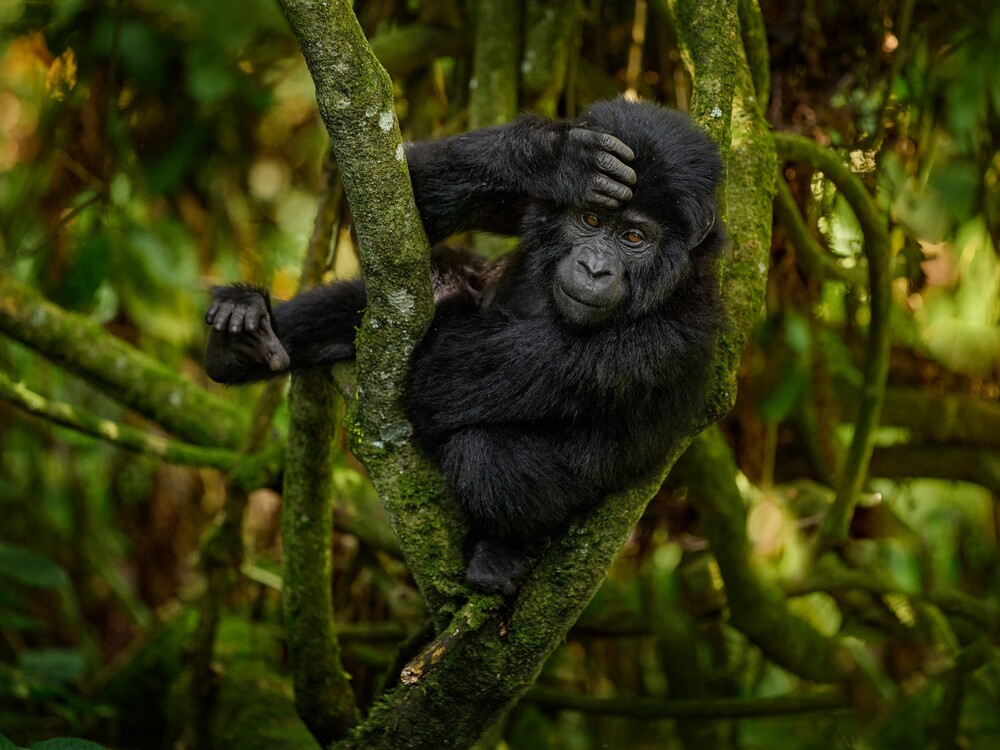
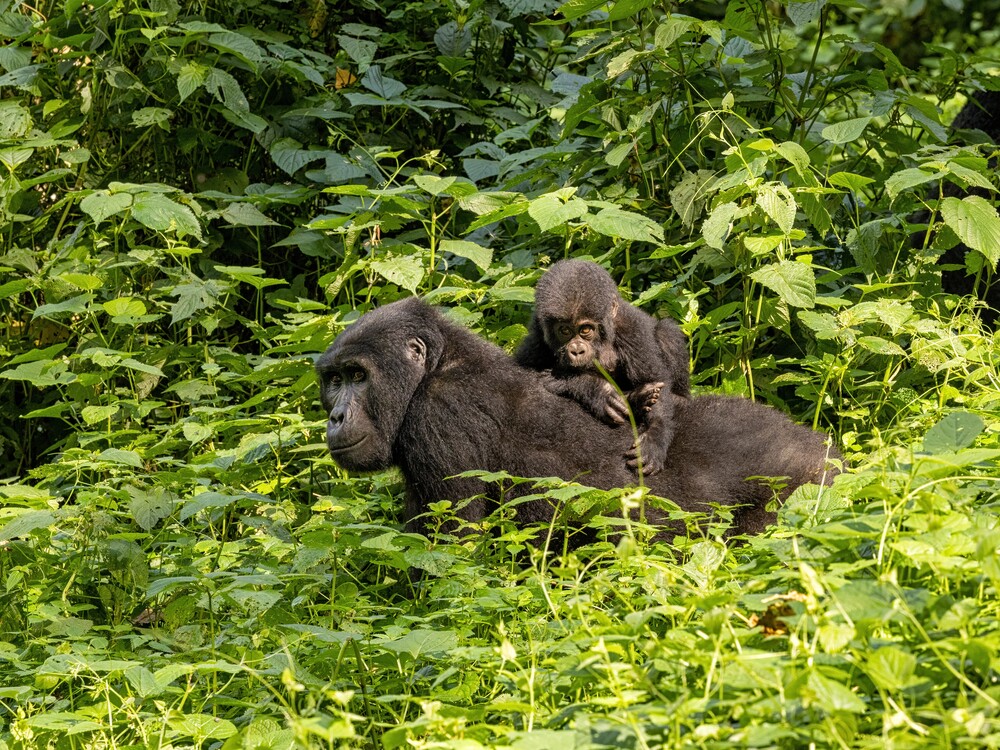
Another reason Gorilla Habituation belongs in Bwindi is that mountain gorillas are part of a much larger ecological system.
UNESCO describes Bwindi as an exceptional biodiversity hotspot containing more than 160 species of trees, more than 100 species of ferns and remarkable numbers of birds, butterflies and mammals.
The park is important precisely because protecting mountain gorillas also protects an entire forest ecosystem.
Visitors participating in Gorilla Habituation therefore contribute economically to the conservation of much more than one famous primate species.
Every intact section of forest protected for gorillas also supports countless other plants and animals.
This wider ecological value strengthens the argument for keeping tourism tightly controlled.
The forest is not a stage created for gorillas. Gorillas are one part of a highly complex ecosystem.
Bwindi Is a UNESCO World Heritage Site
Bwindi’s international conservation significance was formally recognised when it was inscribed as a UNESCO World Heritage Site in 1994.
UNESCO highlights the park’s exceptional biodiversity, important mountain gorilla population and position at the intersection of several ecological zones.
World Heritage status does not itself create Gorilla Habituation, but it reflects why Bwindi deserves such intensive conservation management.
The forest is globally significant.
Tourism activities therefore need to be designed in ways that support rather than undermine that significance.
Habituation works within this conservation framework by limiting visitor access and allowing professional researchers and habituators to determine how selected gorilla families are exposed to people.
The Park Has a Permanent Research Presence
UNESCO notes that Bwindi has a permanent research institute and ongoing monitoring systems that support the site’s long-term protection.
This is especially relevant to Gorilla Habituation because the process requires continuity.
A family cannot be responsibly habituated by researchers visiting occasionally.
Professionals need repeated contact over a long period to understand whether the animals are becoming comfortable with controlled human presence and how individual members respond.
A permanent research culture creates the institutional consistency required for such work.
That consistency is one of Bwindi’s major advantages.
Bwindi Is Managed Through Science-Based Conservation
Recent conservation activities demonstrate that Bwindi continues to be managed using scientific information.
In February 2026, Uganda Wildlife Authority announced results from the first systematic Bwindi chimpanzee census, which estimated 426 chimpanzees distributed throughout the park. The census was conducted alongside the broader mountain gorilla census work and involved UWA, the Jane Goodall Institute and the Greater Virunga Transboundary Collaboration.
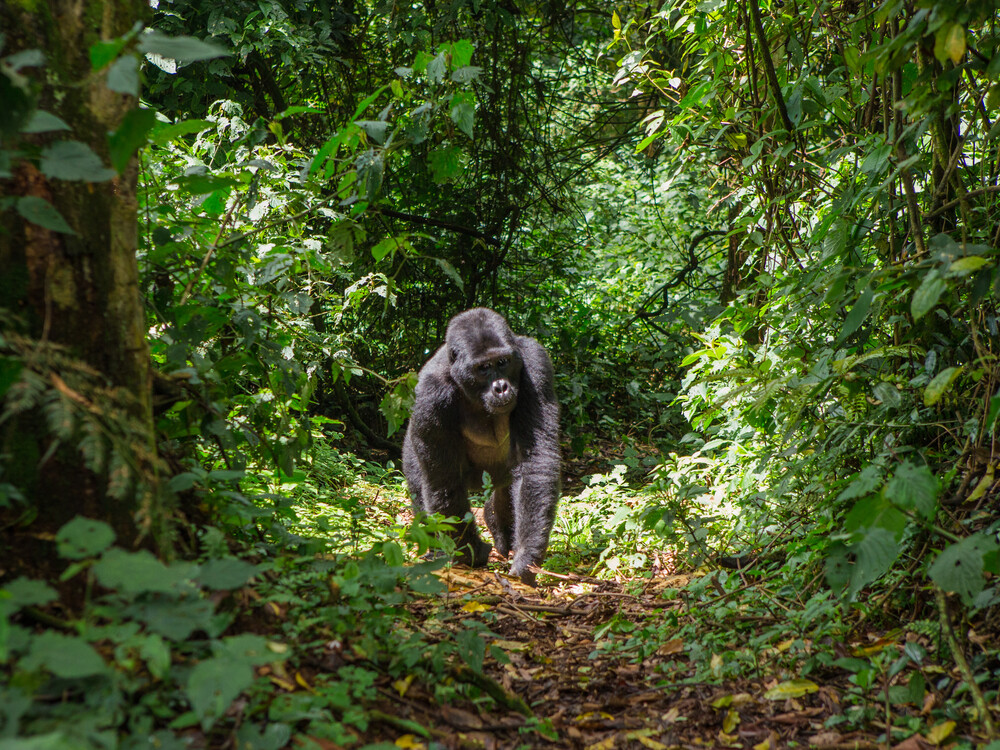
Although chimpanzees are separate from Gorilla Habituation, this work shows the depth of scientific monitoring taking place across the forest.
Managing mountain gorillas within such an environment allows habituation decisions to sit within broader ecological research rather than existing as isolated tourism products.
Bwindi Has Experienced Rangers and Trackers
Another essential factor is human expertise.
Gorilla Habituation requires people who know the forest and the gorillas exceptionally well.
Trackers need to recognise signs such as feeding remains, nests, broken vegetation and movement patterns. Researchers need to identify individual gorillas and interpret behavioural responses. Rangers need to protect the forest and manage wildlife tourism safely.
Bwindi has developed this human expertise through decades of gorilla conservation.
Tourists see only a small part of the system during the four-hour experience. Behind the encounter are years of knowledge accumulated by people who spend much of their working lives inside the forest.
This expertise makes controlled habituation possible.
Gorilla Habituation Allows Better Understanding of Behaviour
One reason selected families are gradually habituated is that controlled observation allows researchers to understand gorilla behaviour more closely.
Individual animals can be recognised.
Researchers can monitor relationships between silverbacks, adult females, juveniles and infants.
Changes in family composition become easier to document.
Health concerns may also be recognised more quickly when animals are monitored consistently.
For visitors, this scientific context turns Gorilla Habituation into something deeper than an extended photographic opportunity.
You are observing animals within a system designed to understand and protect them.
Habituation Helps Create Responsible Future Tourism Groups
Standard gorilla trekking depends on families that have already become sufficiently accustomed to controlled human presence.
Gorilla Habituation is therefore part of the process that makes future tourism possible.
Without habituation, suddenly introducing tourists to a completely unfamiliar wild gorilla family could create excessive stress and unpredictable reactions.
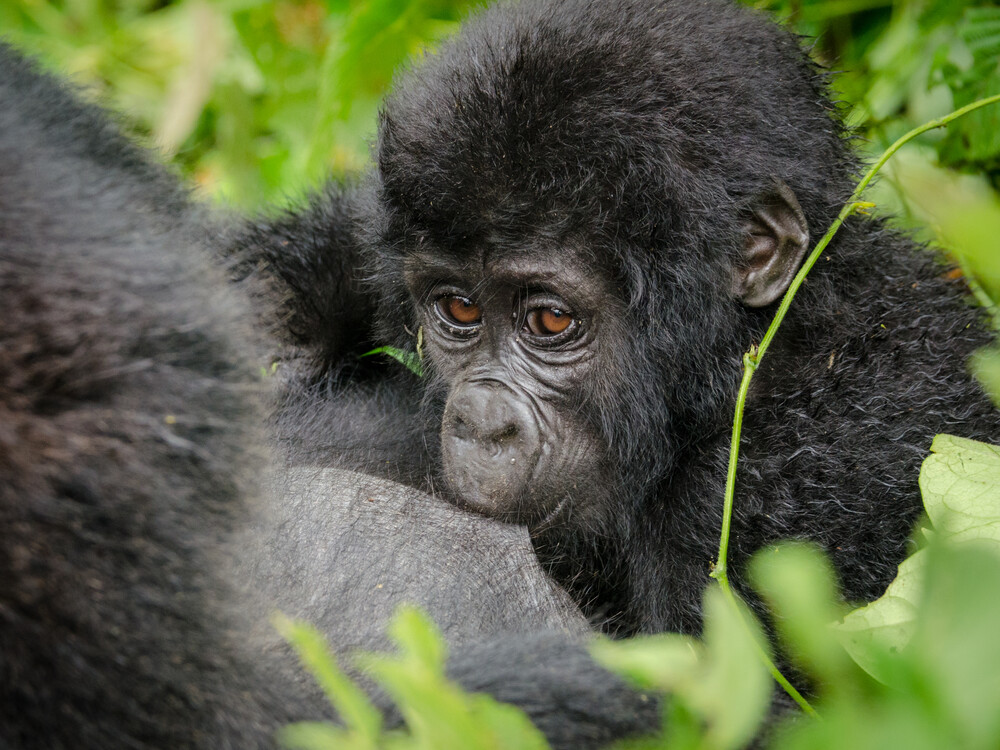
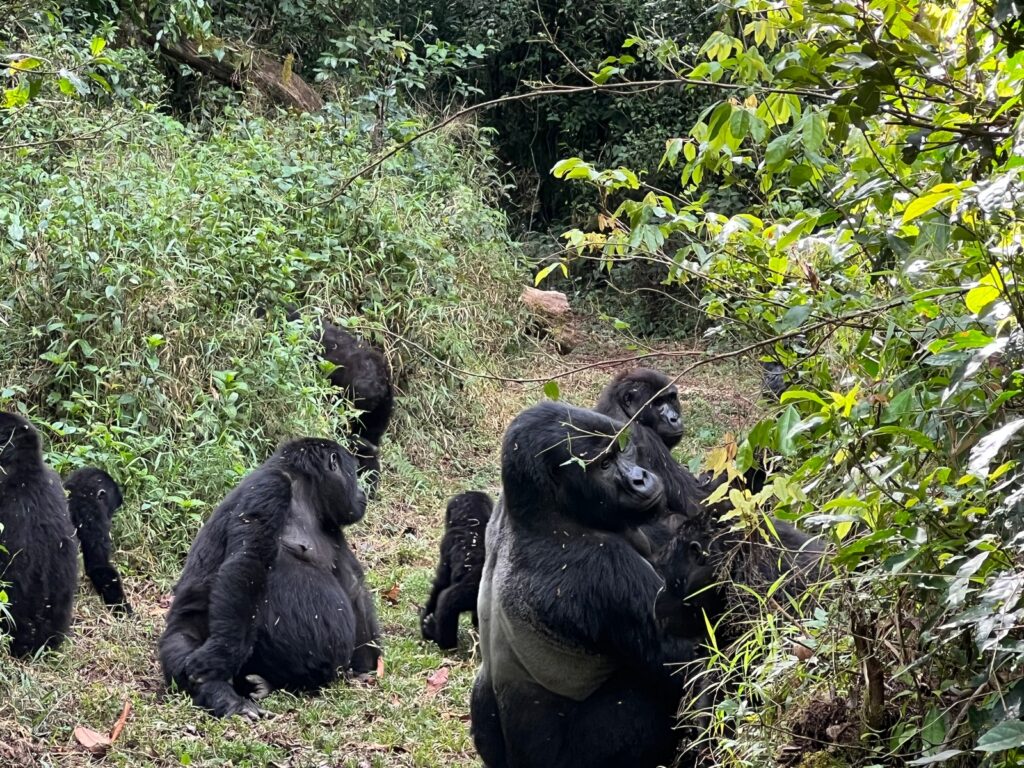
The gradual process allows professional teams to evaluate how the family responds before routine tourism exposure is considered.
Bwindi’s long experience with this transition is another reason the park remains central to Uganda’s Gorilla Habituation programme.
Gorilla Habituation Is Not Done Simply to Increase Tourism Numbers
It is important to avoid the idea that new families are habituated merely so that more permits can be sold.
Gorilla conservation involves balancing tourism, research and the welfare of wild animals.
UWA decides how gorilla families are managed according to conservation and operational priorities.
Habituation is therefore controlled rather than automatic.
Even in a park with substantial tourism demand, not every gorilla family should necessarily become a tourism family.
The existence of a specialised Gorilla Habituation Experience allows visitors to learn about the process while keeping access extremely limited.
Bwindi’s Terrain Encourages Authentic Tracking
The steep terrain and dense vegetation that give Bwindi its name can make habituation physically demanding, but those same features help keep the experience authentic.
Visitors have to enter the gorillas’ environment rather than expecting the animals to come to them.
The route changes according to the family’s location.
On some days trackers may locate the gorillas relatively quickly, while on others visitors may spend hours climbing through the forest.
The difficult terrain also reinforces why visitor numbers must remain limited.
A small group is far easier to manage through dense vegetation than a large tourism crowd.
Bwindi Offers Enough Time and Space for Extended Observation
The Gorilla Habituation Experience permits a maximum of four hours of viewing once visitors reach the gorillas, according to UWA guidelines.
Offering this amount of time requires careful management.
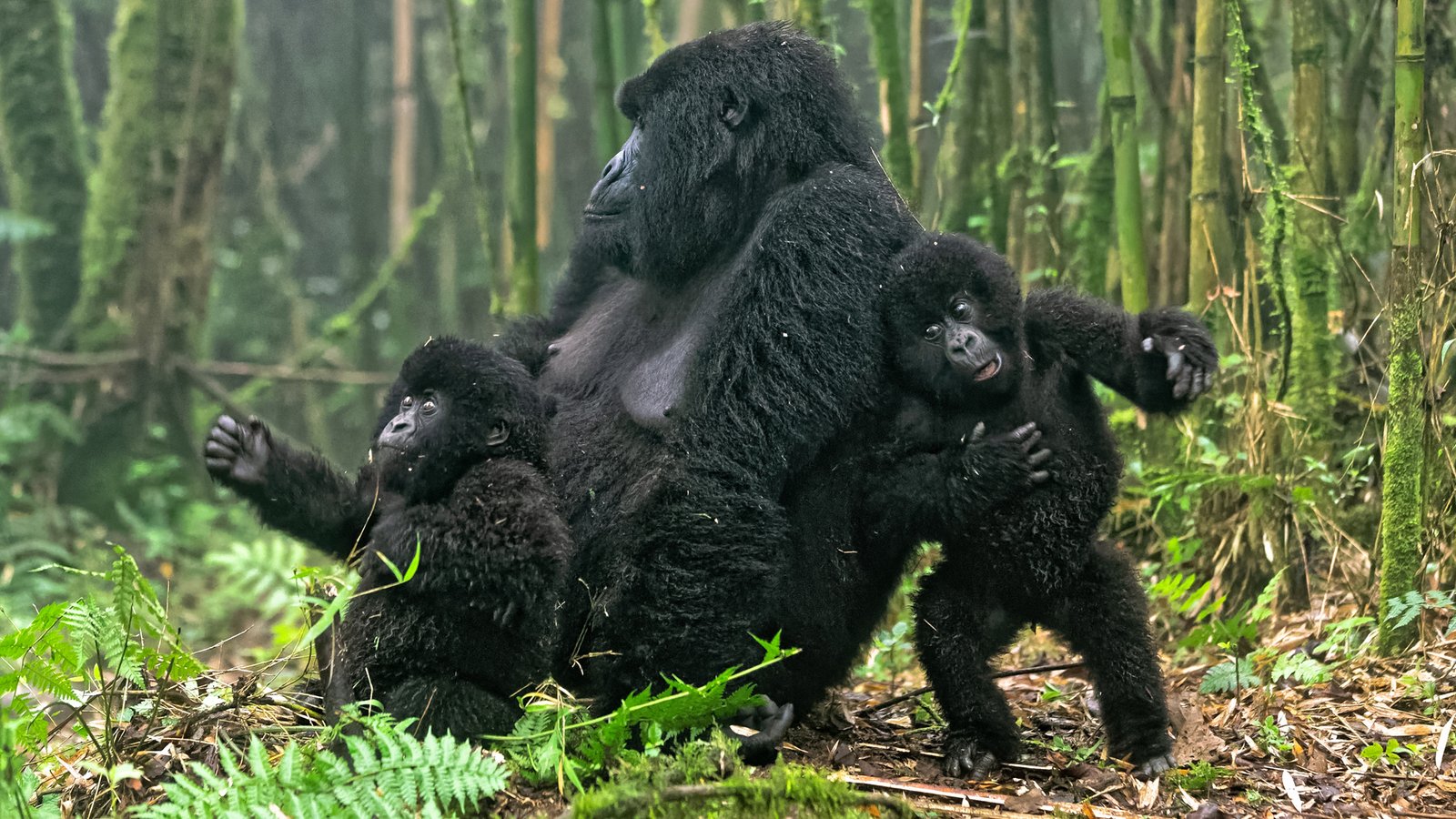
A family undergoing habituation cannot simply be surrounded by large numbers of people for four hours.
The park’s sector structure, professional teams and permit system make it possible to regulate extended observation.
The result is a high-value, low-volume wildlife experience.
Community Conservation Is Central to Bwindi’s Success
Bwindi is surrounded by densely populated communities, which makes local support particularly important.
UNESCO describes the park as an isolated forest surrounded by a heavily cultivated rural landscape and emphasises the importance of community benefits for long-term conservation.
People living near Bwindi experience both the benefits and costs of conservation.
They may gain employment and tourism opportunities, but they may also experience crop damage and restrictions connected with protected-area management.
For gorilla conservation to remain successful, communities need tangible reasons to value the forest.
Tourism provides one mechanism for creating those benefits.
Gorilla Tourism Revenue Reaches Surrounding Communities
Uganda Wildlife Authority operates a revenue-sharing programme that directs part of park revenue to neighbouring communities.
UWA states that 20% of annual park revenue is shared with communities surrounding protected areas and that a specific amount from each Bwindi gorilla tracking permit has historically been added to local benefit-sharing arrangements.
In June 2025, UWA announced the distribution of more than UGX 2.19 billion in revenue-sharing funds to communities around the Bwindi–Mgahinga Conservation Area, supporting projects including schools, health facilities, water infrastructure and livelihoods.
This connection between tourism and community development helps explain why carefully managed gorilla experiences are important.
Habituation generates visitor interest and conservation revenue while remaining tightly controlled.
Local Support Helps Protect Gorilla Habitat
People living around Bwindi are essential partners in conservation because they are closest to the protected area.
Community involvement can help reduce illegal hunting, improve reporting of wildlife-related problems and build support for protecting forest boundaries.
UWA’s community conservation programmes explicitly recognise that local people can provide valuable information about illegal activities and that tourism benefits can strengthen cooperation.
Gorilla Habituation therefore sits inside a social conservation system as well as an ecological one.
Protecting gorillas requires protecting relationships between the park and the people who live around it.
Bwindi Has Strong Conservation Partnerships
Gorilla conservation in Bwindi is not carried out by Uganda Wildlife Authority alone.
Recent census and conservation programmes have involved organisations and institutions working across research, veterinary medicine, community conservation and transboundary management.
The 2025–2026 census effort involved UWA together with partners such as the Greater Virunga Transboundary Collaboration, International Gorilla Conservation Programme, Gorilla Doctors and research institutions.
These partnerships provide additional scientific expertise and long-term institutional support.
A specialised activity such as Gorilla Habituation benefits from operating within this wider conservation network.
Veterinary Monitoring Is Important
Mountain gorillas are vulnerable to injury and disease, which makes professional health monitoring extremely important.
Habituated or partially habituated families can often be observed more closely by conservation professionals than completely unhabituated groups.
This does not mean every natural event is medically managed. Gorillas remain wild animals.
However, the ability to recognise individuals and monitor their condition can help professional teams identify unusual health concerns.
Bwindi’s established conservation partnerships strengthen this ability.
Disease Risk Makes Controlled Habituation Essential
Humans and gorillas share enough biological similarity that disease transmission is a serious conservation concern.
UNESCO specifically identifies human disease transmission associated with tourism as a threat requiring continued monitoring.
This is one reason habituation has to be carefully controlled.
The purpose is not to create ever-closer contact between people and gorillas.
It is to make predictable observation possible while maintaining strict health and behaviour rules.
Bwindi’s experienced management system makes it possible to integrate disease precautions with tourism.
Why Gorilla Habituation Is Not Simply Done Anywhere Gorillas Live
Mountain gorillas occur across a very limited geographical range in Uganda, Rwanda and the Democratic Republic of Congo.
But the presence of gorillas alone does not automatically make a forest suitable for a tourism habituation programme.
Responsible habituation requires long-term protection, scientific monitoring, experienced personnel, visitor-control systems, community support and the ability to maintain families that remain outside tourism.
Bwindi has developed all of these components.
This is why the question “Why is Gorilla Habituation done in Bwindi?” cannot be answered only by saying “because gorillas live there.”
Many additional systems are required.
Why Not Simply Habituate Every Gorilla Family?
Doing so would unnecessarily increase human exposure across the entire population.
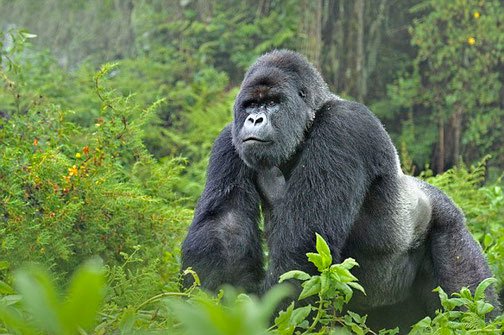
Maintaining some families outside routine tourism preserves a greater range of natural conditions and reduces the number of gorillas regularly exposed to visitors.
A conservation programme therefore needs selectivity.
Bwindi’s sizeable population and extensive habitat allow managers to maintain different categories of family exposure.
This creates a healthier balance between research, tourism and truly wild gorilla populations.
Why Bwindi Rather Than Only Mgahinga?
Uganda’s mountain gorillas also occur in Mgahinga Gorilla National Park, and UWA offers standard gorilla tracking there.
Mgahinga is an exceptional gorilla destination in its own right.
However, Bwindi has a much larger forest area, a substantial resident gorilla population, multiple established tourism sectors and decades of extensive gorilla research and habituation experience.
These characteristics have allowed Bwindi to support the specialised visitor Gorilla Habituation Experience alongside conventional trekking.
The distinction should not be interpreted as meaning Mgahinga is less valuable for conservation.
The two parks form part of Uganda’s broader mountain gorilla protection system and are managed together within the Bwindi–Mgahinga Conservation Area framework. UNESCO material on Mgahinga notes that UWA manages the two parks under this broader conservation structure because of their proximity and related management challenges.
Habituation Helps Visitors Understand Conservation Better
One of the strongest reasons for allowing a limited tourism component within habituation is education.
A standard trek shows travellers the result of years of conservation work: a gorilla family that is accustomed to controlled human observers.
The Gorilla Habituation Experience gives visitors a closer view of the process itself.
You can understand that researchers do not simply walk into the forest one morning and decide a family is ready for tourism.
The process requires patience, repeated observation and careful interpretation of behaviour.
Seeing this work can change the way travellers understand wildlife tourism.
Instead of thinking of gorillas as attractions, visitors begin seeing them as individual wild animals whose tolerance of humans has developed gradually.
Bwindi Allows Tourists to See Conservation in Practice
Many conservation messages are communicated through signs, presentations and documentaries.
Gorilla Habituation gives visitors the unusual opportunity to observe conservation work in the field.
You see trackers interpreting signs in the forest.
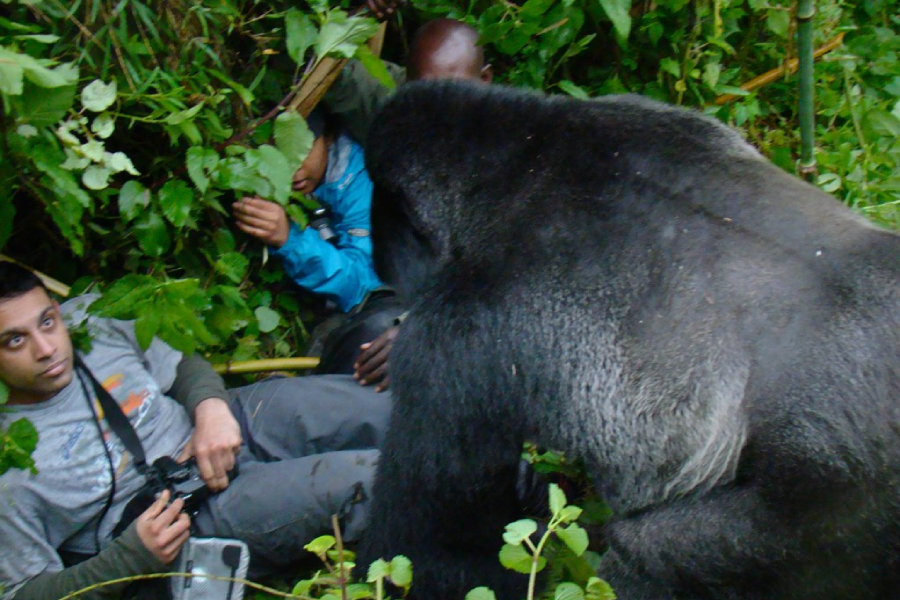
You watch researchers and habituators recognise individual animals.
You witness how visitor behaviour is controlled to minimise disturbance.
This direct experience can make conservation principles more memorable than reading about them after returning home.
Bwindi is particularly well suited to this because the research and tourism systems operate side by side.
Habituation Supports High-Value, Low-Volume Tourism
Mountain gorilla tourism cannot sustainably operate like mass tourism.
The animals are endangered, the habitat is sensitive and prolonged exposure to large visitor numbers would create unacceptable risks.
Uganda’s approach therefore relies on restricted permits rather than unrestricted entry.
Gorilla Habituation takes this concept even further by allowing a very small number of tourists to spend extended time with the field team.
The financial value generated from limited access helps support the conservation system while preventing crowds from surrounding the animals.
Bwindi’s established permit structure makes this type of high-value, low-volume model possible.
The Park’s Conservation Success Provides Confidence in the Approach
Bwindi’s mountain gorilla population trend provides important context for evaluating its conservation model.
UWA reports that the population increased from approximately 300 gorillas recorded in 1992 to 459 in the 2018 census.
No single factor can be credited for that improvement.
The progress reflects protection of habitat, ranger work, research, veterinary support, community involvement, tourism management and international conservation cooperation.
Gorilla Habituation exists within that larger system.
It is therefore not an isolated tourism experiment.
The Forest’s Protection Status Supports Long-Term Habituation Work
Bwindi became a national park in the early 1990s and was inscribed as a UNESCO World Heritage Site in 1994.
Long-term legal protection matters because habituation requires confidence that gorilla habitat will continue to be protected.
There would be little conservation value in gradually familiarising a family with researchers if the surrounding forest were being rapidly cleared or fragmented.
Protected-area status provides the framework within which long-term gorilla monitoring and tourism management can operate.
Bwindi’s Isolation Makes Conservation Particularly Important
UNESCO notes that Bwindi survives as an isolated forest surrounded by one of Uganda’s most densely populated rural landscapes.
This creates challenges because the forest cannot simply expand indefinitely into neighbouring farmland.
Protecting what remains is therefore extremely important.
Gorilla tourism gives the forest economic value that can compete with pressures for alternative land use.
The Gorilla Habituation Experience contributes to that model by creating another carefully managed way for visitors to financially support conservation while learning about the animals.
Gorilla Habituation Helps Make the Forest Economically Visible
Forests provide ecological benefits that can be difficult to translate into immediate household income.
Tourism changes this by connecting protected wildlife with employment, lodge businesses, transport services, guiding, porter work, food supply chains and community revenue sharing.
When neighbouring communities see tourism income associated with gorillas, protecting the forest can produce visible economic benefits.
This does not eliminate every conservation challenge, but it gives Bwindi an important economic argument for remaining intact.
Why the Experience Must Remain Controlled
The success of Gorilla Habituation depends on restraint.
Allowing more people, longer unlimited visits or uncontrolled approaches might increase tourism revenue temporarily, but it could undermine the behaviour and health of the gorillas that make the experience possible.
Bwindi’s tourism system therefore depends on limits.
Permits restrict access.
Professional guides control movement.
Viewing times are regulated.
Health precautions reduce disease risk.
Families are selected rather than exposing every gorilla to tourists.
These restrictions are not obstacles to the experience. They are what make the experience possible responsibly.
Gorilla Habituation Reflects Bwindi’s Conservation Philosophy
Bwindi’s broader conservation story shows a repeated pattern: wildlife protection, research, community participation and controlled tourism are treated as interconnected rather than separate activities.
Gorilla Habituation fits naturally within that philosophy.
Research provides knowledge.
Habituation allows selected families to gradually tolerate controlled observation.
Tourism generates financial support.
Community programmes distribute some of the benefits.
Rangers and conservation partners continue protecting the forest.
Each component strengthens the others when properly managed.
Why Travellers Benefit From Habituation Being Done in Bwindi
For visitors, Bwindi’s conservation infrastructure means the Gorilla Habituation Experience is far more than simply receiving additional viewing time.
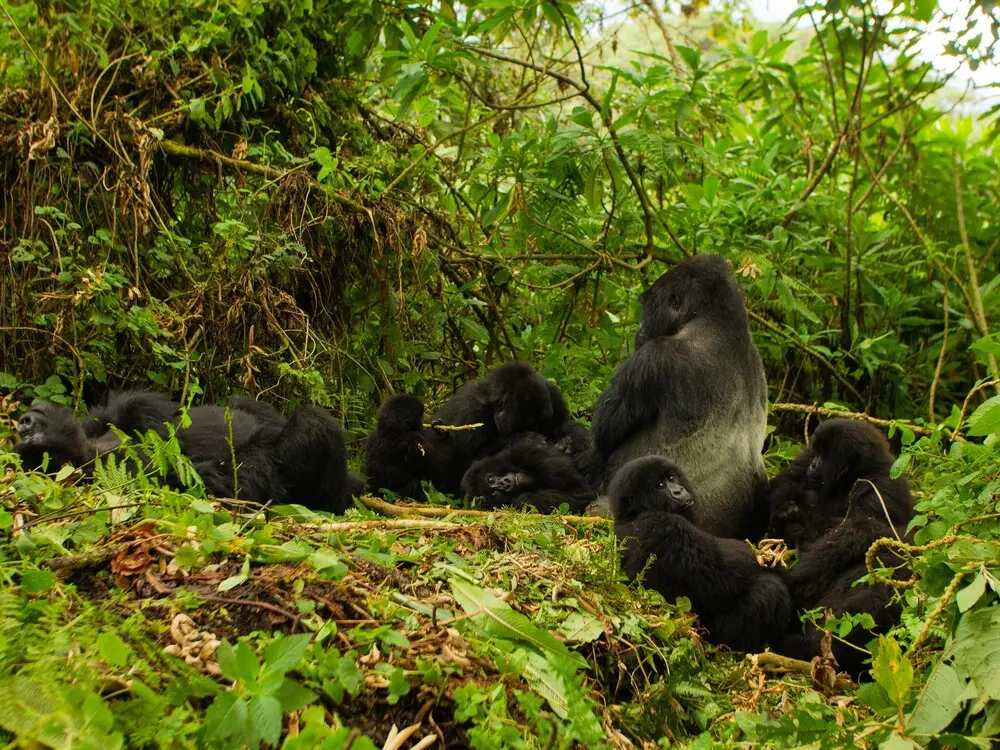
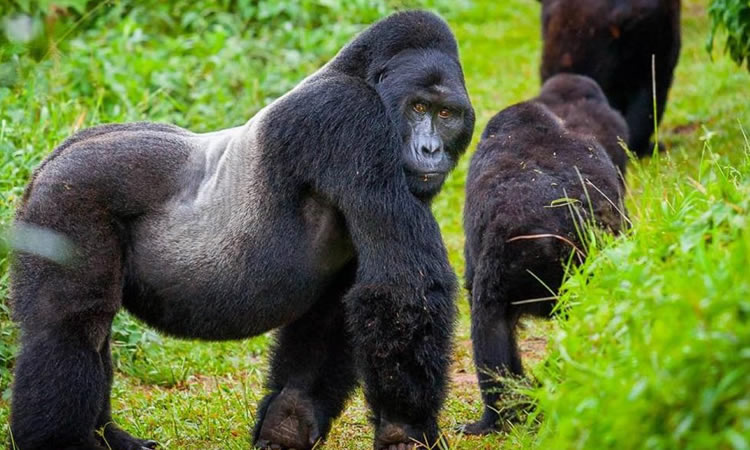
You enter a forest that has been the focus of decades of mountain gorilla research.
You accompany people whose work continues after tourists leave.
You observe a family within genuine habitat rather than an artificially controlled enclosure.
You also contribute financially to a conservation and tourism system that supports protected-area management and surrounding communities.
This deeper context is what makes Gorilla Habituation different from simply booking a longer wildlife excursion.
Why Is Gorilla Habituation Done in Bwindi Impenetrable National Park? Final Answer
Why Is Gorilla Habituation Done in Bwindi Impenetrable National Park? The experience is carried out in Bwindi because the park combines one of the world’s most important mountain gorilla populations with extensive protected habitat, decades of habituation experience, long-term scientific research, trained trackers and rangers, established visitor-management systems and strong community conservation programmes.
Bwindi’s mountain gorilla population provides the biological foundation. Uganda Wildlife Authority’s last completed census recorded 459 mountain gorillas in the park in 2018, up from approximately 300 in 1992, while analysis from the newer 2025–2026 genetic census work was still pending as of September 2026. This substantial population allows conservation managers to maintain different levels of human exposure among gorilla families rather than making every animal part of tourism.
The forest itself provides another essential reason. Bwindi protects approximately 321 square kilometres of exceptionally diverse rainforest across a mountainous landscape. UNESCO recognises it as a World Heritage Site because of its extraordinary biodiversity and importance for threatened wildlife, including mountain gorillas. The gorillas can therefore continue feeding, nesting, travelling and raising their young naturally while researchers gradually introduce controlled human presence.
Bwindi also has decades of practical habituation experience. Gorilla tourism began after early families such as Mubare underwent the habituation process in the early 1990s, creating a long history from which conservation teams have learned how to monitor gorilla responses and manage visitors responsibly.
Scientific infrastructure makes the park particularly suitable for continued habituation work. Researchers and conservation partners regularly conduct gorilla censuses, genetic monitoring and wider ecosystem studies. Bwindi also has permanent research capacity and partnerships involving organisations specialising in great ape conservation, veterinary care and transboundary wildlife management.
The park’s organised tourism sectors provide another advantage. Uganda Wildlife Authority uses designated entry points including Buhoma, Ruhija, Nkuringo and Rushaga and allocates visitors to specific gorilla families according to operational conservation procedures. This makes it possible to control where tourists enter the forest and how visitor pressure is distributed.
Community involvement is equally important. Bwindi sits within a densely populated rural landscape, so long-term conservation depends on local residents seeing real benefits from the continued existence of the park. Uganda Wildlife Authority shares tourism revenue with neighbouring communities, and more than UGX 2.19 billion was distributed around the Bwindi–Mgahinga Conservation Area in June 2025 for community development and livelihood programmes.
Gorilla Habituation therefore works in Bwindi because conservation, research, tourism and community participation have developed together over many years.
The experience is not simply done there because mountain gorillas happen to live in the forest. It is done there because Bwindi has the ecological conditions, gorilla population, scientific knowledge, experienced field staff, protected status and management systems required to carry out habituation responsibly.
That distinction matters. Habituation should never be understood as making gorillas tame for tourists. The animals remain wild throughout the process. Researchers and habituators gradually familiarise selected families with predictable human presence while allowing them to continue moving freely through the forest.
Bwindi makes this possible because the forest remains large enough and sufficiently protected for gorillas to maintain their natural lives.
For the traveller, this is what gives the Gorilla Habituation Experience its depth. You are not merely entering Bwindi to spend four hours taking photographs of mountain gorillas. You are stepping into a conservation programme that has developed through decades of research, habitat protection, community partnership and carefully regulated tourism.
The forest, the gorillas, the scientists, the trackers, the rangers and surrounding communities are all part of the reason Gorilla Habituation can exist.
Bwindi Impenetrable National Park is therefore not simply the location where Gorilla Habituation happens. It is the conservation system that makes the experience possible.