

Can You Take Photos During Gorilla Habituation? Complete Uganda Gorilla Photography Guide
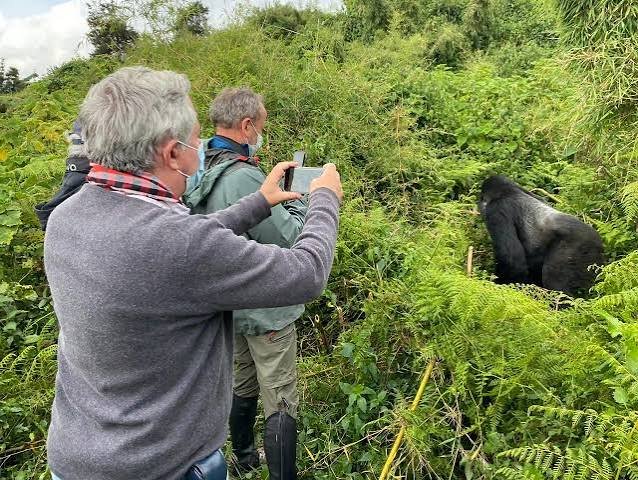
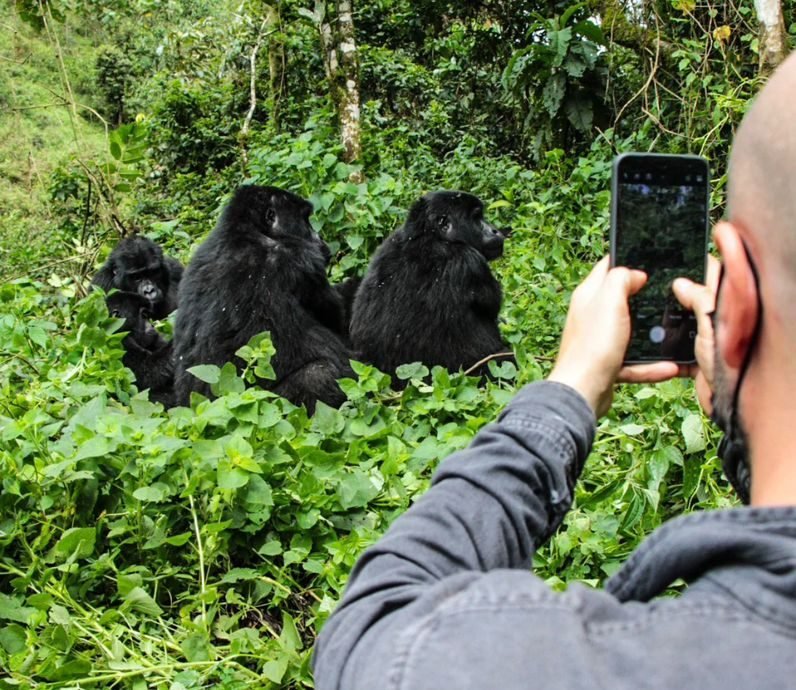
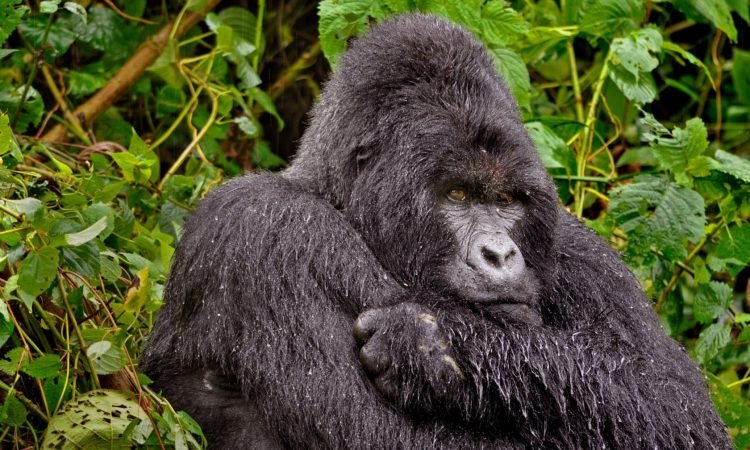
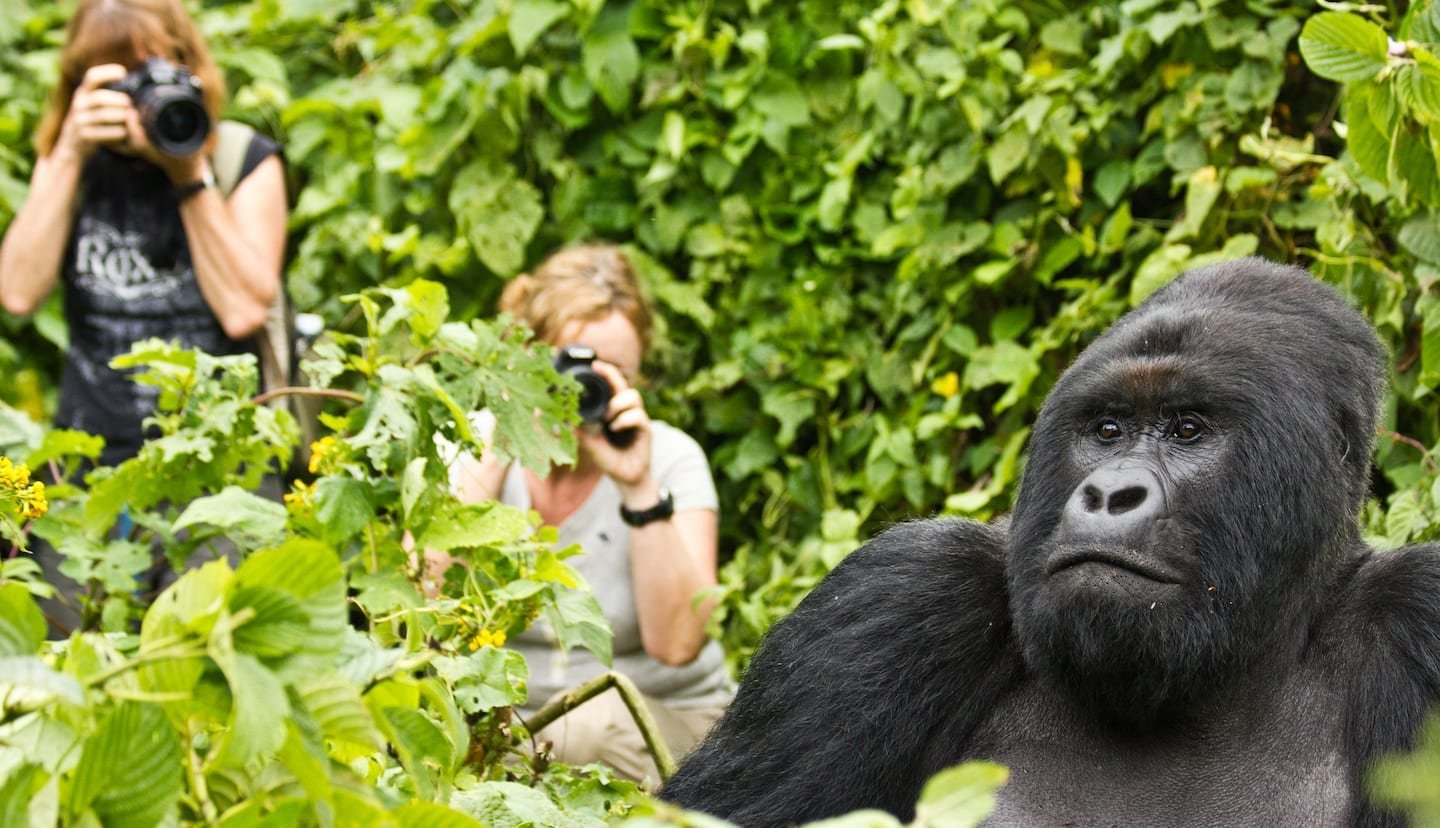
Yes, you can take photos during gorilla habituation in Uganda, provided you follow Uganda Wildlife Authority’s photography and conservation regulations. Visitors are welcome to photograph mountain gorillas in their natural rainforest habitat, but flash photography is strictly prohibited. Photographers must also maintain the required viewing distance, avoid disturbing the animals, and follow instructions from the authorised conservation personnel accompanying the experience.
Taking Photos During Gorilla Habituation is one of the most rewarding aspects of visiting Bwindi Impenetrable National Park. Unlike conventional gorilla trekking, which permits a maximum of one hour of observation, the specialised gorilla habituation experience allows visitors to observe a participating mountain gorilla family for up to four hours after the family has been located. This extended period creates valuable opportunities for photographing gorilla behaviour, family relationships, forest scenery, and memorable wildlife encounters.
The experience takes place in the Rushaga sector of Bwindi, where visitors accompany researchers, trackers, and other authorised personnel involved in habituating mountain gorillas to carefully managed human presence. Although photography is permitted, the activity remains a conservation experience rather than a private photography session. The welfare of endangered gorillas always takes priority over camera positioning, photographic compositions, or individual requests.
This guide explains everything you need to know about taking Photos During Gorilla Habituation, including photography restrictions, cameras, lenses, mobile phones, lighting conditions, camera settings, wildlife behaviour, and practical equipment preparation. Travellers can also explore our Gorilla Habituation Experience in Uganda and Bwindi gorilla habituation guide for additional information.
Are Photos Allowed During Gorilla Habituation in Uganda?
Photography is permitted during the authorised gorilla habituation experience, provided visitors comply with the park’s conservation and safety requirements. You may bring a suitable camera or smartphone and photograph mountain gorillas when the ranger allows photography to proceed. The experience offers opportunities to document natural behaviour without interfering with the animals or the ongoing conservation work.
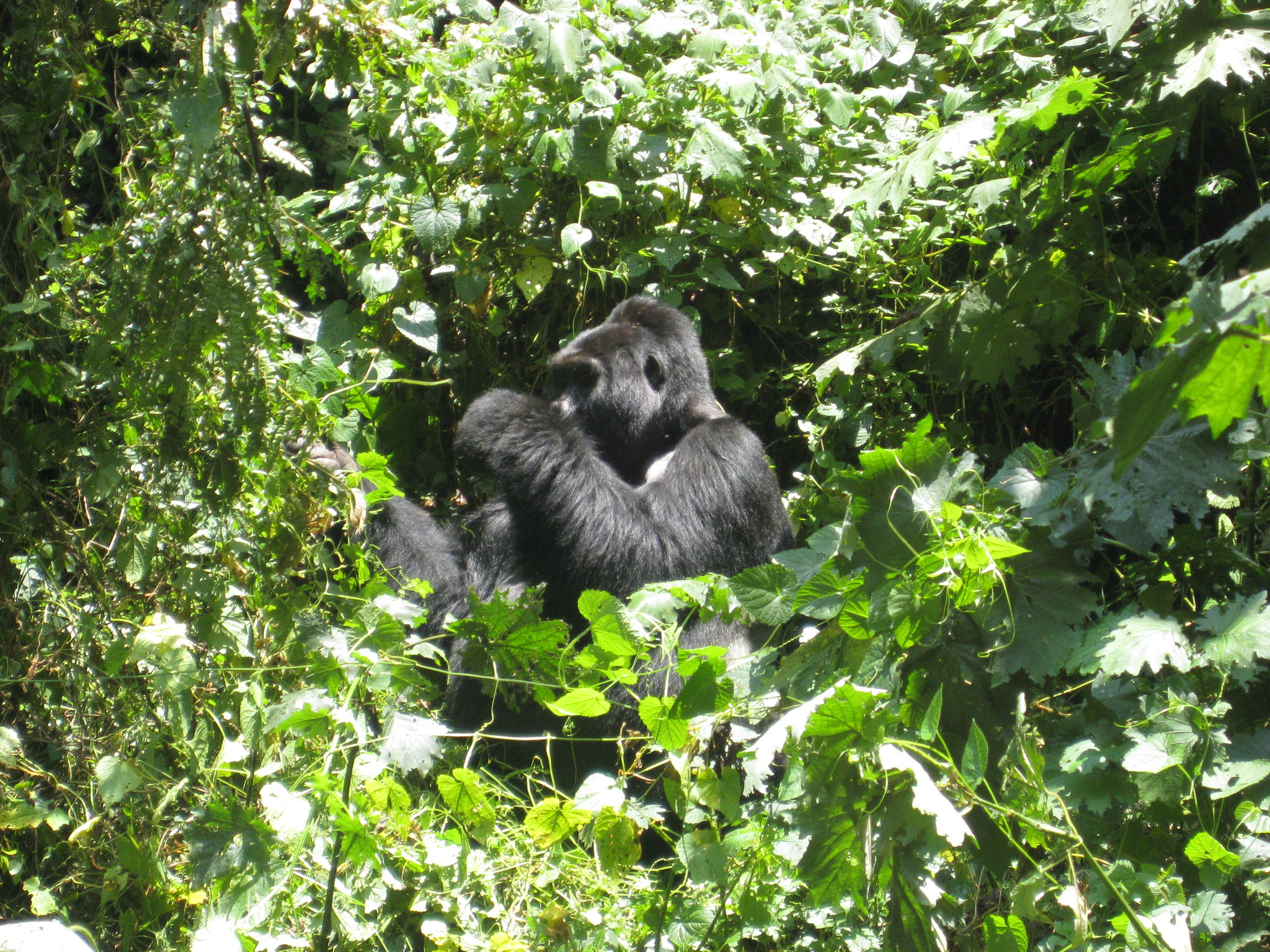
Taking Photos During Gorilla Habituation requires patience because the gorillas are not positioned for visitors. They may be feeding behind vegetation, resting under dense foliage, or moving through the forest. Photographers cannot ask rangers to move the animals, clear vegetation unnecessarily, or approach beyond the permitted distance simply to improve their photographs. Visitors should respect the instructions of the habituation team throughout the encounter. Our gorilla habituation trekking tours provide further information about how the experience operates.
Why Is Gorilla Habituation Excellent for Photography?
Gorilla habituation provides an extended observation period compared with traditional gorilla trekking. Visitors can spend up to four hours observing the participating family after locating it, whereas standard gorilla trekking allows a maximum of one hour. This additional time can help photographers study animal behaviour, adjust their exposure settings, and respond to changing conditions without feeling the same pressure to capture everything immediately.
The opportunity to take Photos During Gorilla Habituation can be particularly attractive to wildlife photographers interested in documenting mountain gorilla family life. An extended encounter may offer opportunities to observe grooming, feeding, resting, playful interactions, and the behaviour of dominant silverbacks. However, no specific activity or clear photographic viewpoint is guaranteed. Visitors who want to understand the duration of the complete experience can consult our gorilla habituation trek duration guide.
Can You Use Flash When Taking Photos During Gorilla Habituation?
No. Flash photography is prohibited during gorilla habituation in Uganda. Mountain gorillas are sensitive wildlife, and sudden flashes can disturb their natural behaviour. Because habituation involves animals that are still becoming accustomed to controlled human presence, avoiding unnecessary disturbances is especially important.
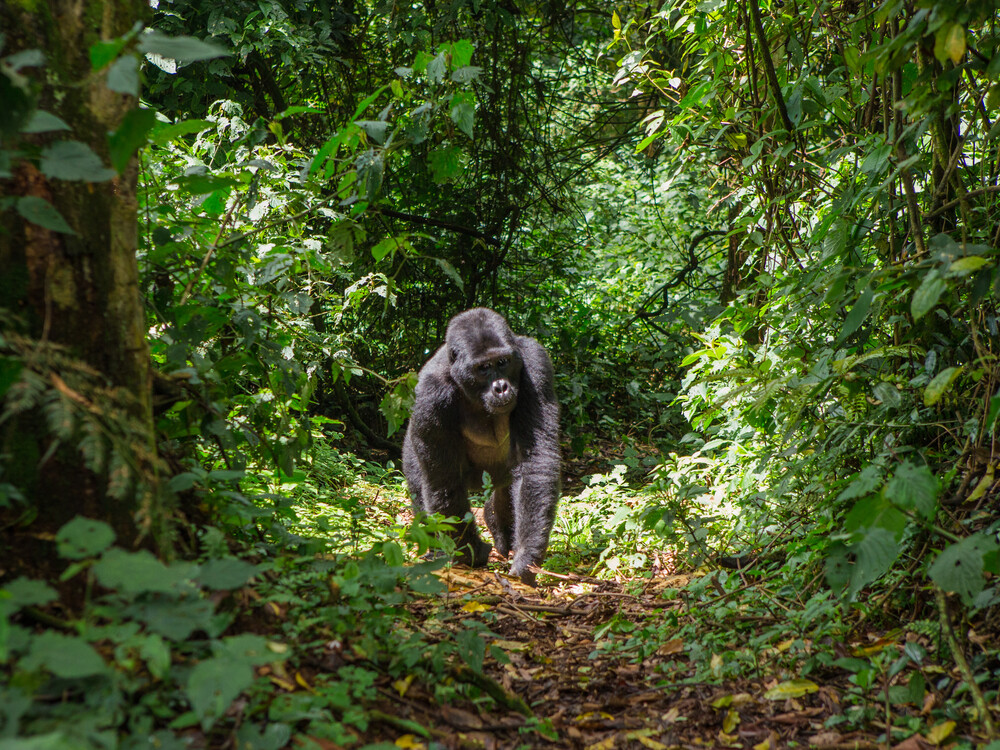
Before taking Photos During Gorilla Habituation, photographers should disable the flash on their cameras and smartphones. Some devices automatically activate flash in low-light conditions, making it important to check the settings before approaching the gorillas. Visitors should rely on available natural light and appropriate exposure settings instead. The Uganda Wildlife Authority gorilla habituation permit guide provides additional background about the regulated nature of this wildlife activity.
How Close Can You Get to Mountain Gorillas for Photography?
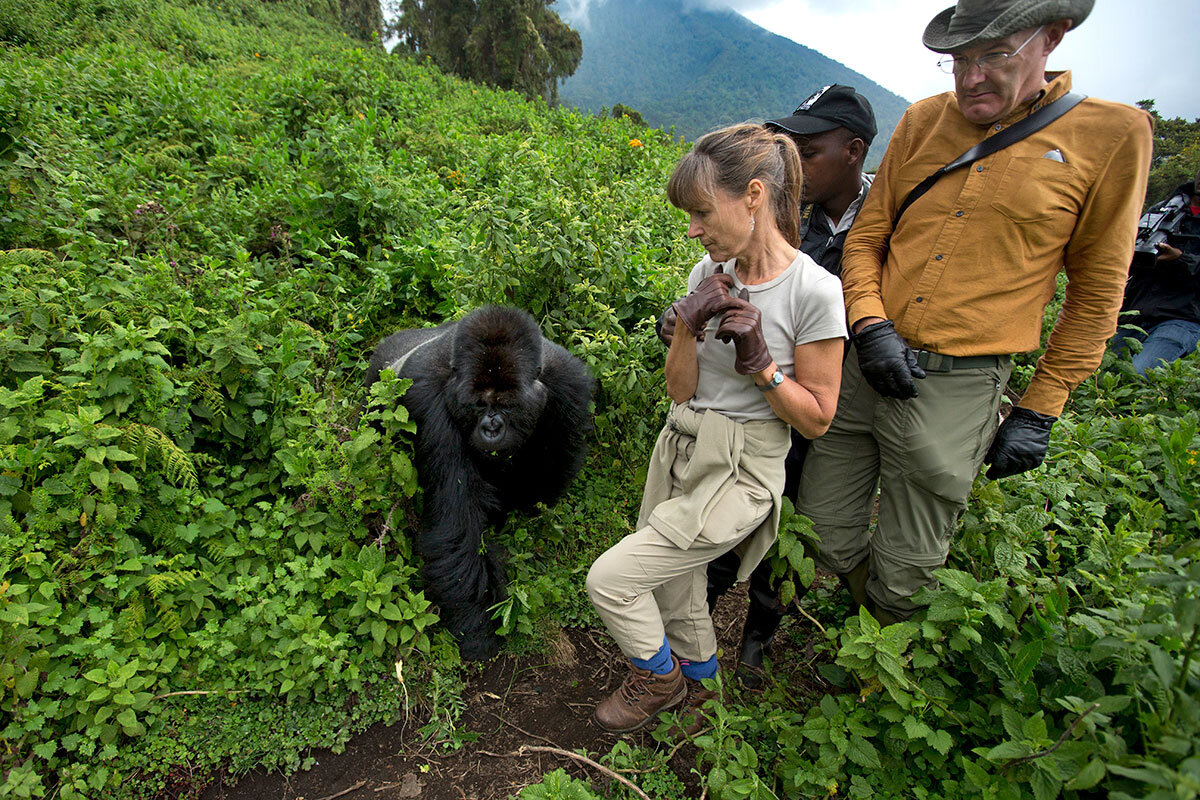
Visitors must maintain the viewing distance required by Uganda Wildlife Authority and follow the instructions given during the activity briefing. UWA’s published gorilla tracking rules specify a distance of 10 metres. Photographers should never move forward independently in an attempt to obtain a close-up portrait or a more attractive composition.
When capturing Photos During Gorilla Habituation, a suitable zoom lens can help photographers frame gorillas without violating distance requirements. If an animal moves towards visitors, the conservation team will provide instructions on how to respond. Visitors should remain calm and must never touch a gorilla. Understanding these requirements is essential because photography must not interfere with the gorillas’ welfare or the safety of the group.
What Camera Is Best for Gorilla Habituation Photography?
A DSLR or mirrorless camera with reliable autofocus and good low-light performance is an excellent option for photographing mountain gorillas. Bwindi’s thick forest canopy often creates shaded environments, making it useful to have a camera capable of producing clear images at higher ISO settings. Cameras that allow manual adjustment of shutter speed, aperture, and exposure compensation provide additional flexibility.
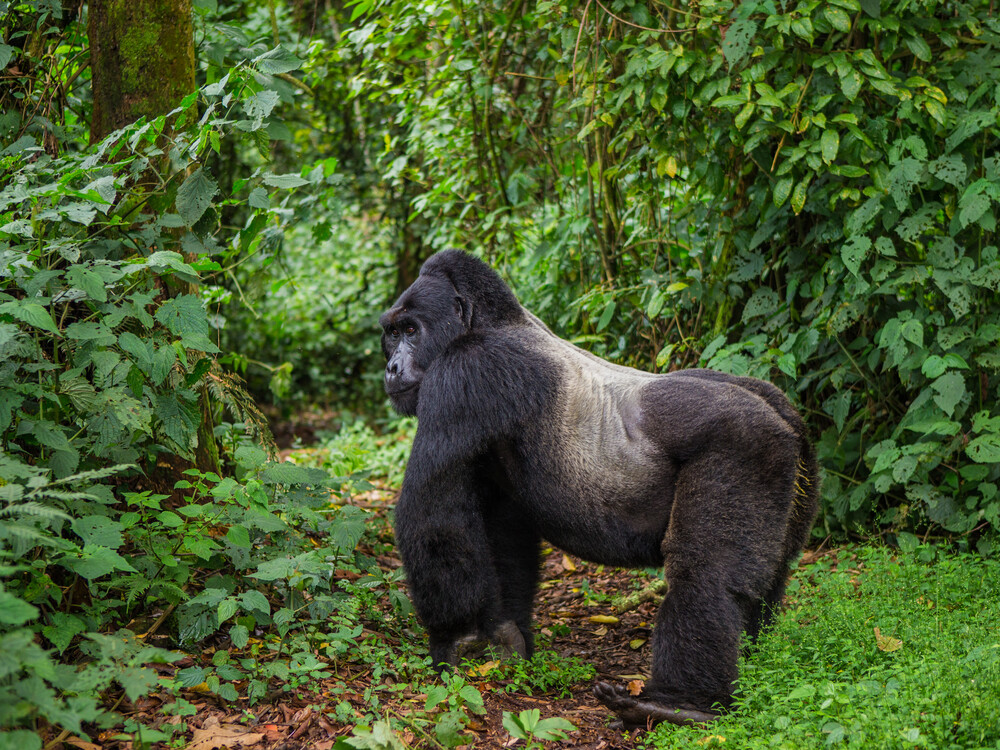
Taking Photos During Gorilla Habituation does not require the most expensive professional equipment. A photographer who understands their camera and can adjust its settings confidently may achieve better results than someone using unfamiliar equipment. Weight and portability are also important because the trek can involve steep slopes and difficult terrain. Our best camera for gorilla habituation safari guide explains equipment considerations in greater detail.
Which Camera Lenses Are Recommended for Mountain Gorilla Photography?
A versatile telephoto zoom lens is often useful for gorilla photography because it allows visitors to photograph animals from the required viewing distance. Depending on the camera and conditions, a 70–200mm or 100–400mm lens may provide useful framing flexibility. A lens with a relatively wide maximum aperture can also be advantageous in the forest’s frequently subdued lighting.
For Photos During Gorilla Habituation, photographers should balance magnification with weight and usability. An excessively heavy lens may become difficult to manage during a prolonged forest trek, while a very narrow field of view may make it harder to photograph groups or environmental scenes. A versatile setup that supports both portraits and wider compositions is often preferable. Our luxury Bwindi gorilla photography safari provides inspiration for visitors organising a photography-focused itinerary.
Can You Take Photos During Gorilla Habituation With a Smartphone?
Yes. Smartphones can be used to photograph mountain gorillas, provided the visitor follows all park photography rules. Modern smartphones are capable of producing attractive wildlife images, particularly when the gorillas are clearly visible and the surrounding light is favourable. However, limited optical zoom and challenging rainforest lighting can make smartphone photography more difficult than using a dedicated camera with a suitable lens.
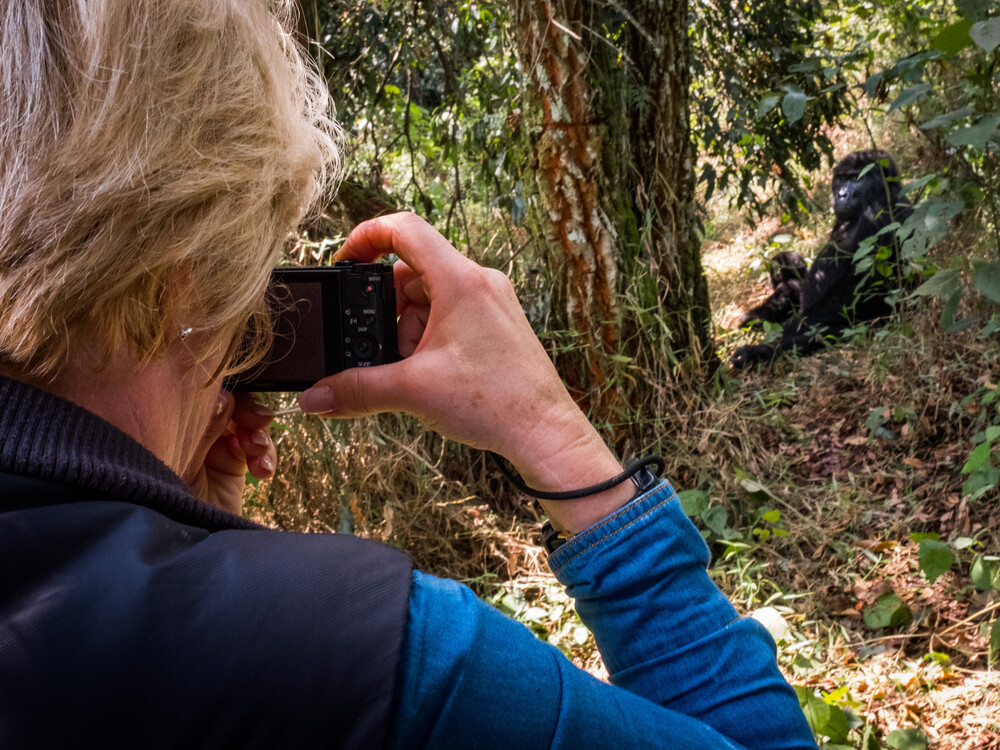
When taking Photos During Gorilla Habituation with a smartphone, visitors should switch off the flash and avoid stepping closer to the animals to compensate for limited zoom. Holding the phone steadily, selecting an appropriate exposure, and taking advantage of naturally brighter viewpoints can improve results. Smartphones can also be useful for photographing forest scenery during the trek where permitted. Photographers should never compromise conservation rules simply to obtain a closer image.
What Camera Settings Work Best in Bwindi’s Rainforest?
Bwindi’s dense vegetation creates challenging lighting conditions, especially when photographing dark-furred gorillas against brighter leaves or patches of sunlight. A wide aperture can help admit more light, while a sufficiently fast shutter speed reduces the risk of blurred images when gorillas move. Auto ISO can be useful for responding quickly to changing light without constantly adjusting exposure manually.
Photographers taking Photos During Gorilla Habituation should select their settings according to the actual conditions. For a relatively still gorilla, a shutter speed around 1/250 second may be a useful starting point, while active movements may require considerably faster speeds. These are photographic suggestions rather than park rules or guaranteed settings. Photographing dark fur also requires care to preserve detail without overexposing bright backgrounds.
What Gorilla Behaviours Can You Photograph?
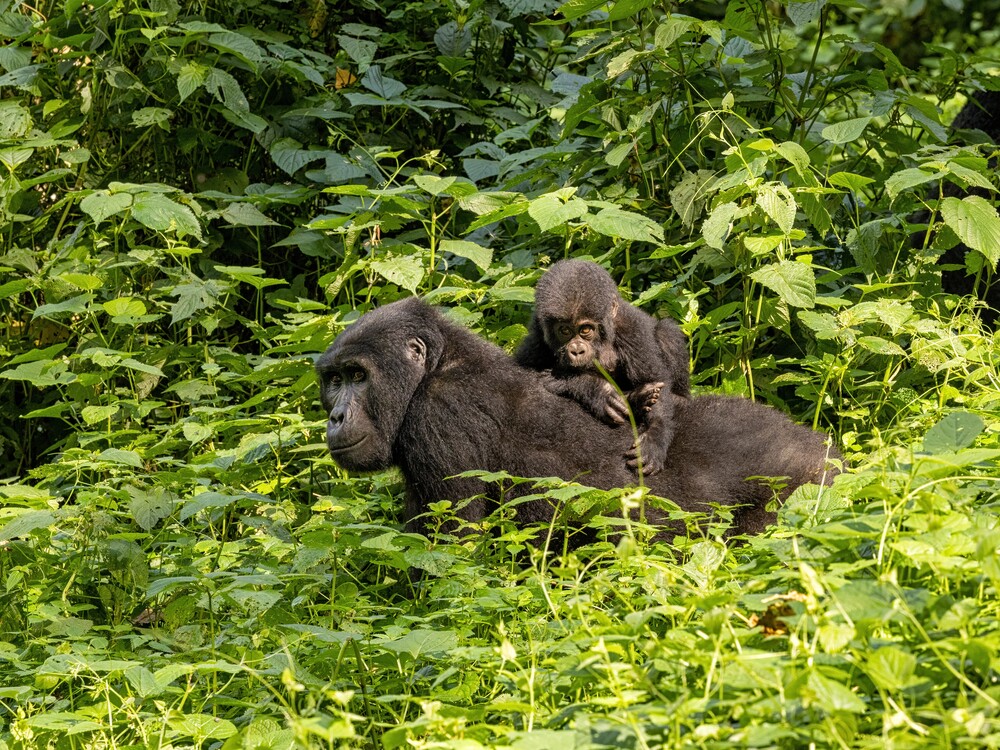
Gorilla habituation may provide opportunities to document feeding, grooming, resting, social interaction, and movement through the forest. Mothers sometimes carry infants, younger gorillas may play, and silverbacks may display interesting expressions or interactions with other family members. These naturally occurring behaviours can create memorable images that communicate the complexity of mountain gorilla social life.
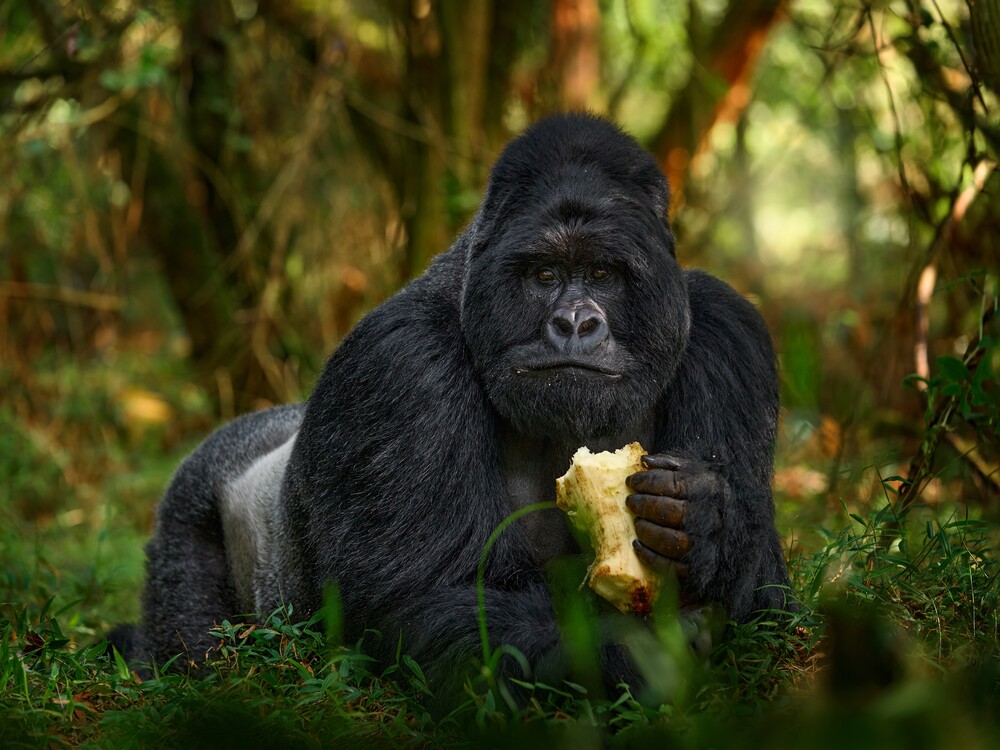
The most compelling Photos During Gorilla Habituation often result from careful observation rather than constant shooting. Photographers who watch the animals patiently may notice subtle interactions, expressive gestures, and opportunities to include the surrounding forest in their compositions. Because gorillas are wild, no particular behaviour can be promised. Travellers interested in this specialised encounter can read more about gorilla habituation in Rushaga and the conservation setting in southern Bwindi.
Can You Record Videos During Gorilla Habituation?
Visitors may be able to record personal video footage during the supervised encounter, subject to the ranger’s instructions and applicable park regulations. Video can document movements, interactions, and natural sounds that still photographs cannot communicate. However, recording equipment must not disturb the animals or interfere with the conservation team’s work.
When planning Photos During Gorilla Habituation alongside video recording, visitors should distinguish ordinary personal recordings from professional filmmaking or commercial productions. Additional authorisation may be necessary for specialised filming activities, professional crews, or equipment requiring separate approval. Photographers planning commercial productions should confirm the relevant requirements with Uganda Wildlife Authority before travelling. A standard tourist permit should not automatically be treated as unrestricted permission for every type of production.
How Does Rain Affect Gorilla Habituation Photography?
Rain is common in Bwindi Impenetrable National Park because the area is a tropical rainforest. Wet conditions can create atmospheric photographs featuring mist, lush vegetation, and soft natural lighting. However, rainfall may also make trails slippery, reduce visibility, and increase the risk of moisture damaging photographic equipment.
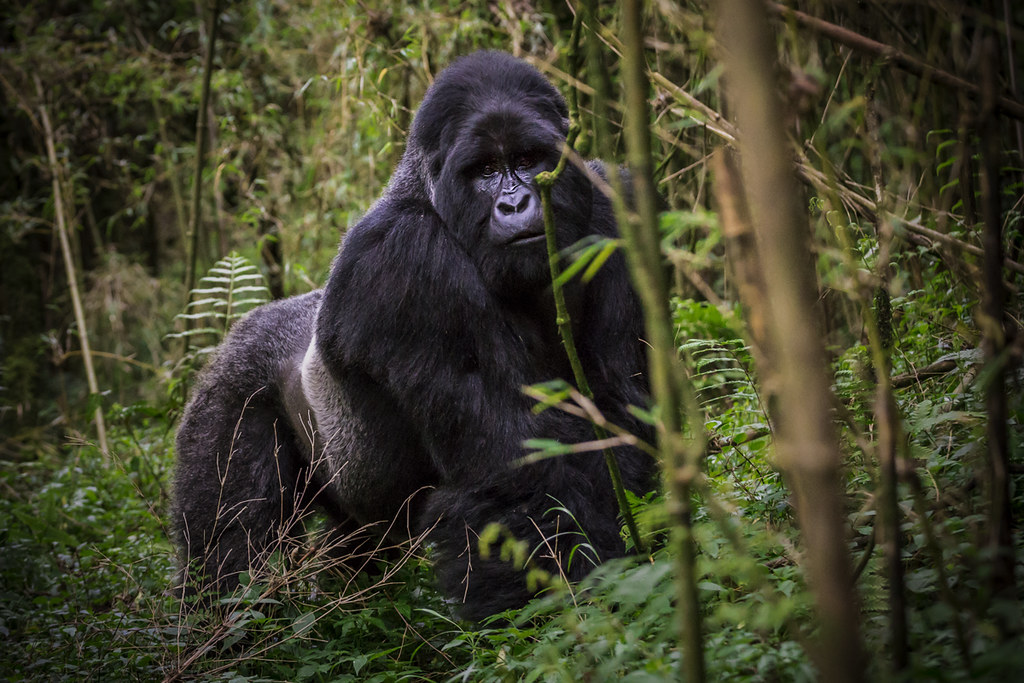
Taking Photos During Gorilla Habituation in wet weather requires appropriate preparation. A waterproof camera cover, dry bag, suitable lens cloth, and protective backpack are useful accessories. Photographers should avoid changing lenses unnecessarily during heavy rainfall and should protect equipment while moving through dense vegetation. Visitors can learn more about the forest environment through our Bwindi National Park guide and gorilla habituation safari routes.
Can Solo Travelers Take Photos During Gorilla Habituation?
Yes. Solo visitors can participate in gorilla habituation with a valid individual permit and take photographs during the authorised encounter. Travelling alone does not prevent visitors from using cameras or obtaining memorable wildlife images. Solo photographers may join other permit holders during the activity, while their accommodation and transport arrangements can be organised independently.
For travellers interested in Photos During Gorilla Habituation, an individual safari can offer flexibility when planning the wider journey. However, private transport does not guarantee exclusive access to the gorillas or separate photographic positions. All participants must respect the conservation team’s instructions and the requirements governing the activity. Our three-day gorilla habituation itinerary offers ideas for arranging a focused visit to Bwindi.
Do You Need a Special Permit to Photograph Mountain Gorillas?
Visitors taking ordinary personal photographs during an authorised gorilla habituation experience generally use their valid gorilla habituation permit. The permit allows participation in the regulated activity, which includes permitted wildlife photography under the established conservation rules. It does not guarantee exclusive photographic access or allow visitors to disregard restrictions.
Anyone planning commercial photography, organised filming, or specialised equipment use should confirm whether additional permission is required. When arranging Photos During Gorilla Habituation, photographers should first secure their standard participation permit and then clarify any unusual equipment or production requirements. Our gorilla habituation permit booking guide explains the importance of confirming reservations before travelling.
What Should Photographers Pack for Gorilla Habituation?
Photographers should carry sufficient supplies for a potentially demanding forest excursion without overloading themselves. Comfortable waterproof hiking boots, protective clothing, a rain jacket, drinking water, and personal necessities are important. For photography, useful accessories may include charged batteries, spare memory cards, a waterproof camera cover, and a suitable cleaning cloth.
Preparing to take Photos During Gorilla Habituation also means ensuring that equipment can be carried safely over uneven terrain. A comfortable backpack and a reliable camera strap can make a significant difference. Local porter assistance may be arranged to reduce the weight visitors carry, although valuable photographic equipment should remain appropriately protected. Travellers can explore our Rushaga gorilla habituation access guide before planning their trek.
Frequently Asked Questions About Photos During Gorilla Habituation
1. Can You Take Photos During Gorilla Habituation in Uganda?
Yes. Photography is permitted during gorilla habituation, provided visitors follow park regulations and do not disturb the animals.
2. Is Flash Photography Allowed During Gorilla Habituation?
No. Flash photography is prohibited during gorilla encounters in Uganda.
3. Can You Use a Smartphone to Photograph Gorillas?
Yes. Smartphones are permitted for ordinary photography, but the flash must remain disabled and viewing distances must be respected.
4. How Much Time Do You Have to Take Gorilla Photos?
The maximum permitted observation period during gorilla habituation is four hours after the participating family has been located.
5. What Is the Best Camera for Gorilla Habituation?
A mirrorless or DSLR camera with reliable autofocus and good low-light performance is a practical choice.
6. Can You Use a Telephoto Lens?
Yes. A suitable telephoto lens can help photograph mountain gorillas without approaching beyond the required viewing distance.
7. Can You Record Videos of Mountain Gorillas?
Personal video recording may be permitted under ranger instructions. Professional or commercial productions should confirm any additional authorisation requirements.
8. Is Gorilla Habituation Better Than Gorilla Trekking for Photography?
It provides a longer maximum observation period, although actual photographic opportunities depend on visibility, gorilla behaviour, and forest conditions.
9. Can You Photograph Gorilla Babies?
Yes, when young gorillas are visible and photography is permitted. Visitors must never move closer or disturb the family to obtain photographs.
10. Can You Photograph Gorillas During Rainy Weather?
Yes, subject to normal activity conditions. Waterproof protection is advisable because rainforest weather can change quickly.
11. Are Beginners Allowed to Take Gorilla Photographs?
Yes. Both amateur and professional photographers may participate, provided they meet the eligibility requirements and follow conservation regulations.
12. Do You Need a Gorilla Habituation Permit for Photography?
Yes. Every eligible visitor participating in the gorilla habituation experience requires an appropriate permit.
Book Your Gorilla Habituation Photography Safari in Uganda
Capturing extraordinary mountain gorilla photographs begins with choosing the right experience and planning your journey carefully. Bwindi Impenetrable National Park offers opportunities for wildlife enthusiasts, amateur photographers, and professionals to observe mountain gorillas in a natural environment where conservation remains the central priority.
If your main interest is taking Photos During Gorilla Habituation, consider an itinerary that allows sufficient time in Rushaga, comfortable accommodation near the briefing point, dependable transport, and appropriate preparation for the forest. You can explore our gorilla habituation trekking tours, luxury gorilla photography safari, and five-day Uganda gorilla habituation safari.
For travellers entering Uganda through Entebbe or arriving through Kigali, we also provide itinerary inspiration through our three-day gorilla habituation safari from Entebbe and three-day gorilla habituation safari from Kigali.
Before making reservations, confirm permit availability, preferred travel dates, and any special photography requirements. An appropriately planned safari allows you to concentrate on your encounter while respecting the regulations protecting endangered mountain gorillas.
Conclusion: Can You Take Photos During Gorilla Habituation?
Yes, taking Photos During Gorilla Habituation is permitted and can be one of the most memorable aspects of a Uganda gorilla safari. The extended observation allowance provides valuable opportunities to photograph mountain gorillas feeding, resting, grooming, and interacting in their natural rainforest habitat.
However, successful photography requires much more than a good camera. Visitors must disable flash, maintain the required distance, follow ranger instructions, and avoid disturbing the animals. Photography should always support responsible wildlife appreciation rather than interfere with conservation.
Whether you are using a professional camera or a smartphone, Photos During Gorilla Habituation can preserve extraordinary memories of Bwindi’s endangered mountain gorillas. With careful preparation, suitable equipment, and respect for wildlife regulations, your photographs can become a lasting reminder of one of Africa’s most remarkable conservation experiences.